From Decline to Debate: Bose’s swadeshi vision resurfaces
June 8, 2026
  • Read Ecopy
  • Circulation
  • Advertise
  • Careers
  • About Us
  • Contact Us
Android AppiPhone AppArattai
Organiser
  • ‌
  • Bharat
    • Assam
    • Bihar
    • Chhattisgarh
    • Jharkhand
    • Maharashtra
    • View All States
  • World
    • Asia
    • Europe
    • North America
    • South America
    • Africa
    • Australia
  • Editorial
  • International
  • Opinion
  • RSS @ 100
  • More
    • Op Sindoor
    • Analysis
    • Sports
    • Defence
    • Politics
    • Business
    • Economy
    • Culture
    • Special Report
    • Sci & Tech
    • Entertainment
    • G20
    • Azadi Ka Amrit Mahotsav
    • Vocal4Local
    • Web Stories
    • Education
    • Employment
    • Books
    • Interviews
    • Travel
    • Law
    • Health
    • Obituary
  • Subscribe
    • Subscribe Print Edition
    • Subscribe Ecopy
    • Read Ecopy
  • ‌
  • Bharat
    • Assam
    • Bihar
    • Chhattisgarh
    • Jharkhand
    • Maharashtra
    • View All States
  • World
    • Asia
    • Europe
    • North America
    • South America
    • Africa
    • Australia
  • Editorial
  • International
  • Opinion
  • RSS @ 100
  • More
    • Op Sindoor
    • Analysis
    • Sports
    • Defence
    • Politics
    • Business
    • Economy
    • Culture
    • Special Report
    • Sci & Tech
    • Entertainment
    • G20
    • Azadi Ka Amrit Mahotsav
    • Vocal4Local
    • Web Stories
    • Education
    • Employment
    • Books
    • Interviews
    • Travel
    • Law
    • Health
    • Obituary
  • Subscribe
    • Subscribe Print Edition
    • Subscribe Ecopy
    • Read Ecopy
Organiser
  • Home
  • Bharat
  • World
  • Operation Sindoor
  • Editorial
  • Analysis
  • Opinion
  • Culture
  • Defence
  • International Edition
  • RSS @ 100
  • Magazine
  • Read Ecopy
Home Bharat

From Industrial Decline to Revival Debate: Pramatha Nath Bose’s swadeshi vision back in focus in Bengal

Under Chief Minister Mamata Banerjee, West Bengal has witnessed a sharp industrial decline, with over 6,600 companies exiting since 2011, signalling a deep economic slowdown. Amid this downturn, the visionary legacy of Pramatha Nath Bose and Bengal’s Swadeshi-era industrial thought offers a powerful reminder of the path toward self-reliance and revival

Vishal GhoshDr Atrayee SahaVishal GhoshandDr Atrayee Saha
Apr 8, 2026, 09:30 pm IST
in Bharat, Special Report, West Bengal
Follow on Google News
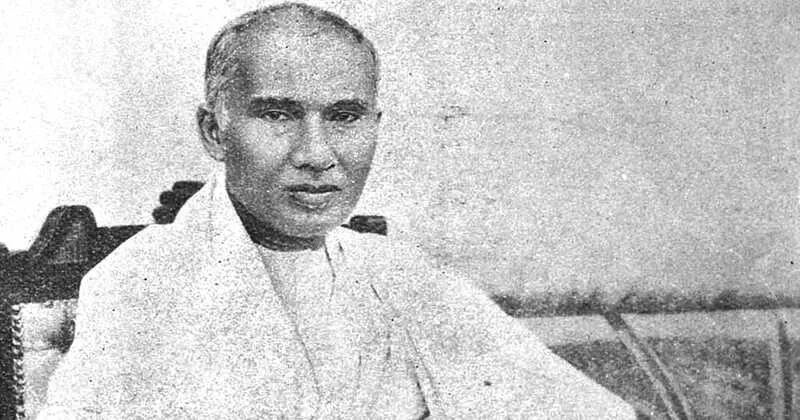
Pramatha Nath Bose

Pramatha Nath Bose

FacebookTwitterWhatsAppTelegramEmail

The grim landscape of industries and investment is not new to the citizens of Bengal. For the last five decades, and especially in the last decade, there has been a major exodus of industries and economic downfall of the state. In response to a question raised in the Rajya Sabha during the Monsoon Session by Shri Samik Bhattacharya, the Ministry of Corporate Affairs informed that between 2011–12 and 2024–25, a total of 6,688 companies have exited West Bengal. These data point to a concerning trend in the state’s industrial and investment climate in recent years, particularly under the leadership of Chief Minister Mamata Banerjee. This industrial shift has been a major hit for the economic condition of the state. Since 2011, the people of the state have been yearning for some development in terms of empowerment, education and economic change. The situation has only worsened. This major economic downfall has taken place in a state where industry and development were at peak during and after colonial rule.

Pramatha Nath Bose’s vision for industrial self-reliance

Prominent figures like Dr Shyamaprasad Mookerjee, Rajnarayan Basu, Pramatha Nath Bose and many others have engaged in dialogues and debates in bringing about industrial development in the state since the colonial rule.  At this juncture, it’s necessary to reflect back and delve into the life of an individual who hailed from this same soil of Bengal and was one of the first visionaries to develop a routemap for the industrial development of India during the colonial rule itself, Pramatha Nath Bose. The contribution of Bengal to the evolution of the idea of Swadeshi is both significant and enduring. What began as an intellectual and ideological articulation gradually developed into a powerful mass movement in pre-independence Bharat. The well-known observation of Gopal Krishna Gokhale, “What Bengal thinks today, India thinks tomorrow”, captures the spirit of intellectual awakening and nationalist consciousness that emanated from the region during this period. This intellectual climate found a compelling expression in the ideas and initiatives of Shri Pramatha Nath Bose, a distinguished thinker who was among the earliest in colonial India to emphasise the importance of economic self-reliance. Bose advocated the establishment of indigenous industrial enterprises and strongly emphasised the need for technical education among the youth, believing that such measures were essential for strengthening India’s economic foundations.

Bose’s scientific vision, industrial initiatives and educational legacy

Bose, who remained a lifelong proponent of these ideals, reflected in his Essays and Letters on the early efforts that sought to revive indigenous cultural and economic life. In this context, he acknowledged the significance of the Hindu Mela, founded by Nabagopal Mitra. The Mela, organised during the 1860s and 1870s, played an important role in encouraging the revival of national culture, arts, and indigenous industries. By promoting a sense of cultural pride and economic self-reliance, it helped shape the intellectual and cultural milieu that would later nourish the broader Swadeshi movement. Pramatha Nath Bose’s sustained efforts, grounded in scientific and practical reasoning, culminated in the convening of the first Industrial Conference in 1891. Bose sought to align the cause of indigenous industrial development with the emerging spirit of the Swadeshi movement, emphasising the protection and promotion of native industries. His vision was not merely ideological but deeply institutional. It played a crucial role in establishing the Bengal Technical Institute in 1906, where he strongly advocated technical and skills-based education for India’s youth.

Also Read: Pakistan: Five policemen injured as IED explodes in Lakki Marwat of Khyber Pakhtunkhwa; TTP rebels responsible

Bose was also instrumental in the later amalgamation of the institute with the Bengal National College, a development that gave rise to one of the most significant educational institutions to emerge from the Swadeshi movement.

Pramatha Nath Bose was an Indian Geologist and Paleontologist who graduated in 1877 and went to study at the Royal School of Mines in London. He was one of the early Indians to join the Geological Survey of India. He was the first to discover petroleum in Assam, the first person to set up a soap factory in India and also among the first to introduce micro-sections in petrological work. In 1891, he organised the first Industrial Conference, which later became the Indian Industrial Association, which was meant to help fund the struggling industry and technical education. Under the active involvement of Shri Tarak Nath Palit and the able guidance of Bose, the Bengal Technical Institute (BTI) was first introduced in 1906. This institute was established to educate and train labourers, first to become skilled labourers. Subsequently, the skilled labourers were further trained to become Engineers. The BTI was mainly introduced as one of the important principles of the Swadeshi Movement and as part of the National Education. Some of his important contributions towards the study of earth sciences have been carrying out surveys in Narmada, Central India; discovering iron ores in Gurumahisini and Mayurbhanj State, which led to the stones for Tata Iron Works; discovering coal deposits in Assam; discovering petroleum deposits in Khasimar valley; and many other important excavations which helped in the industrial development in the country.

Bose’s enduring vision in contemporary India’s development path

As early as 1914, Bose cautioned his countrymen against excessive dependence on external resources, articulating ideas that resonate with the later concepts of Atmanirbharata and Swavalambita. He emphasised the importance of harmonising what he described as the “positive method” of industrialisation on modern scientific lines with the “negative method” of conserving national energy and resources. This effectively showed Bose’s farsightedness and understanding of the economic strength of the country. In essence, Bose envisioned a synthesis of Western scientific advancement with the civilisational strengths of the East for the greater welfare of the nation. The recent policies on Make in India, call for Self-reliance, Vocal for Local, and Viksit Bharat @2047 have emerged from a long-drawn-out struggle by many such thinkers and prominent figures who paved the way for industrial and economic development in India. As we embark upon a journey of New India, it’s high time we reflect on the life of such prominent figures whose ideas, in many ways, anticipated contemporary calls for economic self-reliance, echoing the spirit of initiatives such as Make in India and Vocal for Local, envisioned by Narendra Modi as part of the broader goal of Viksit Bharat @2047.


 

Topics: Atmanirbhar BharatSwadeshi MovementBengal IndustryPramatha Nath BoseWest Bengal economyindustrial decline IndiaMamata BanerjeeMake In India
ShareTweetSendShareSend
✮ Subscribe Organiser YouTube Channel. ✮
✮ Join Organiser's WhatsApp channel for Nationalist views beyond the news. ✮
Previous News

Buddhism’s Global Odyssey: How Bharat’s ancient wisdom shaped civilisations across Asia & beyond

Next News

‘Love Jihad & Targeted Campaigns Continue to Haunt Christian Families in Kerala,’ Pala BJP Candidate Shon George

Related News

‘TMC Will Not Survive’: Sukhendu Sekhar Ray Warns of Bigger Revolt as Bengal Rebellion Threatens to Reach Parliament

‘TMC will not survive’: MP Sukhendu Sekhar Ray warns MLA revolt could soon engulf parliament

'Stand Up for Abhishek': Expelled TMC MLA Claims Party Was Asked to Applaud Mamata's Nephew After Crushing Election Defeat

West Bengal: Expelled TMC MLA Ritabrata claims party was asked to applaud Mamata’s nephew after crushing defeat

Ritabrata Banerjee, expelled by Mamata Banerjee from TMC, has been appointed as the Leader of the Opposition in Bengal assembly.

TMC House Divided: Mamata’s party battles Itself as LoP row exposes deepening cracks after BJP’s big blow

Will Mamata Accept Her Rebel's Help? Humayun Kabir Offers to Send Ex-Boss Back to House

Need a seat, Didi? Ex-TMC rebel Humayun Kabir offers Mamata Banerjee a route back to West Bengal assembly

Ritabrata Banerjee Claims LoP Post as Revolt Rocks Mamata Banerjee's Party

TMC vs TMC in Bengal: Expelled leader Ritabrata Banerjee stakes claim to LoP post, deepening crisis in Mamata’s party

Firhad Hakim Seeks Resignation as Kolkata Mayor Amid Growing Crisis in Mamata Banerjee's TMC

Another Shock for TMC? Mamata Banerjee’s trusted lieutenant Firhad Hakim seeks to quit as Mayor amid crisis

Load More

Latest News

Pakistan Prime Minister Shehbaz Sharif face the brunt as Punjab draws excess water from Indus basin and Sindh suffers from scarcity

Pakistan: Indus water drifts to Punjab & erupts political rift; Acute crisis in Dadu canal & drought in Sindh

Cobra Commandos land in Manipur to curb insurgency and restore peace

CoBRA Commandos Deployed in Manipur: CRPF draws red line for insurgents, Promises decisive action

North 24 Parganas: A large crowd of Bangladeshis residing in West Bengal gathers at the Hakimpur border crossing in the Basirhat subdivision of North 24 Parganas district to cross over to Bangladesh

Unnatural Demographic Change: Hint that would create a heat

Odisha: RSS Sangh Shiksha Varg concludes in Sambalpur; Dr. Mahapatra cites century-long effort to unite hindu society

‘TMC Will Not Survive’: Sukhendu Sekhar Ray Warns of Bigger Revolt as Bengal Rebellion Threatens to Reach Parliament

‘TMC will not survive’: MP Sukhendu Sekhar Ray warns MLA revolt could soon engulf parliament

Former Chief Minister Siddaramaiah and his wife Parvathi is accused in MUDA site allotment case

Karnataka: Congress govt under fire over Yathindra’s appointment amid pending MUDA-linked controversy

High Level Committee on Demographic Change: Fructification of sustained efforts

Gaurdian Journalist Hannah Ellis-Petersen covering the protest of the Cockroach Janata Party(CJP)

Guardian Journalist Ellis-Petersen amplifies Cockroach Party protest: Exposing anti-India propaganda of western media

A large crowd of Bangladeshis residing in West Bengal gathers at the Hakimpur border crossing in the Basirhat subdivision of North 24 Parganas district to cross over to Bangladesh

Unnatural Demographic Change: Securing Bharat against the silent invasion

Prime Minister Narendra Modi

BJP’s Victory with Vision: An idea of India that is Indian

Load More
  • Privacy
  • Terms
  • Cookie Policy
  • Refund and Cancellation
  • Delivery and Shipping

© Bharat Prakashan (Delhi) Limited.
Tech-enabled by Ananthapuri Technologies

  • Home
  • Search Organiser
  • Bharat
    • Assam
    • Bihar
    • Chhattisgarh
    • Jharkhand
    • Maharashtra
    • View All States
  • World
    • Asia
    • Africa
    • North America
    • South America
    • Europe
    • Australia
  • Editorial
  • Operation Sindoor
  • Opinion
  • Analysis
  • Defence
  • Culture
  • Sports
  • Business
  • RSS @ 100
  • Entertainment
  • More ..
    • Sci & Tech
    • Vocal4Local
    • Special Report
    • Education
    • Employment
    • Books
    • Interviews
    • Travel
    • Health
    • Politics
    • Law
    • Economy
    • Obituary
  • Subscribe Magazine
  • Read Ecopy
  • Advertise
  • Circulation
  • Careers
  • About Us
  • Contact Us
  • Policies & Terms
    • Privacy Policy
    • Cookie Policy
    • Refund and Cancellation
    • Terms of Use

© Bharat Prakashan (Delhi) Limited.
Tech-enabled by Ananthapuri Technologies