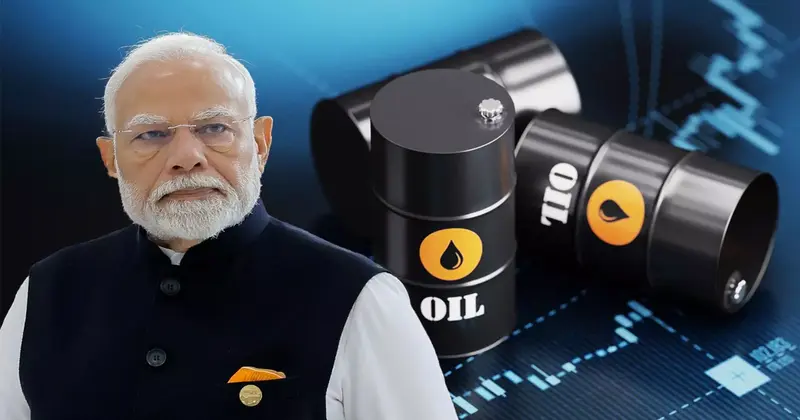
The war in West Asia has jeopardized the global energy paradigm. Oil is indeed the engine of the world economy. However, stimulated by the geopolitical conflict in the gulf, the energy chokepoints are blocked and oil tankers are bombarded. Critical energy facilities and refineries are entangled in massive firing. Energy production is paralysed thus completely disrupting the global supply chain. Cumulatively the oil prices are skyrocketing with nations struggling to fulfill energy priorities to its people at reasonable prices. Amidst such an escalating basket of risks that are decapsulating global energy security, India is marching in the path of consolidating the energy priorities embedded with strategic autonomy, realist approach and overarching diplomatic potential.
The strategic propositions of New Delhi are redefining and securing India’s position in the great energy game which is volatile. While the oil prices across the globe are soaring beyond control, the energy prices in India have remained stable coupled with consistent supply. While the world is witnessing weaponisation of energy to seek hegemonic ambitions, India is fueling oil at fair and reasonable prices to its people. While the oil tankers of world-nations are stuck in the Strait of Hormuz, India has channelized safe passage of tankers and energy import diversification strategy to accelerate national priorities.
Oil prices stable in India as it skyrockets across globe
The geopolitical crisis in the gulf region has had a ripple effect on the global oil prices. Post the blockade of the Strait of Hormuz, world’s most critical energy chokepoint and also as the oil refineries across West Asia being hit, the energy prices have surged in more than 95 countries. The rise in crude prices have significantly had a cascading effect on the retail oil prices as well. For example, the United States, the country which is at the epicentre of West Asia conflict, has increased oil prices by more than 41 per cent. In the Philippines, oil prices have surged by 81.6 per cent.
Similarly, in Nigeria the prices are spiked by more than 70 per cent. In Malaysia it is 57.9 per cent and in Germany it is more than 30 per cent. In Australia, the oil prices have skyrocketed to more than 50 per cent. In Vietnam and Singapore the prices are raised by more than 40 per cent. In Sri Lanka, Canada, Ukraine and Germany the prices have risen by more than 35 per cent. In China the energy prices have spiked more than 25 per cent. In the United Kingdom it is 18 per cent. In Italy and Japan the oil prices have surged by 14 to 15 per cent. In the UAE and Qatar, which are apparently the world’s energy treasure, the oil prices have soared by approximately 8 per cent.
- The perilous case of Pakistan
The state of Pakistan, which is politically and economically disintegrated coupled with high inflation, has spiked oil prices twice in a month. The diesel prices have surged by a massive 54.9 per cent thus costing 520.35 Pakistani Rupees per litre. Meanwhile, per litre petrol costs 458.40 Pakistani rupees, inflated by 42.7 per cent. Unable to bear the massive energy crisis, schools and offices have been shut down. Work from Home is recommended and there is severe cut on transportation facilities as well, due to lack of sufficient fuel. The spiking oil prices thus is an additional burden on the hitherto fragile economy of Pakistan. In regions such as Sindh, people are protesting on the streets unable to bear the brunt of high oil prices.
- Stable oil prices in India
Despite an unprecedented global oil shock and severe spike in the energy prices, the petrol and diesel prices in India have remained stable. The government has not escalated the prices though there is a crunch in the supply chain since the conflict in West Asia broke out. The government is strategically striving to fulfill the energy priorities of its people at those price levels that were prevailing prior to the conflict. India is thus ensuring consistent energy supply at stable prices despite global shrink in oil supply and spiking prices.
Energy import and route diversification strategy of India
The key strategy underlining the energy security of India and the stable prices is the energy import diversification. India is not dependent on a single country or few countries to purchase the oil. Instead, India sources its energy needs from a wide range of nations across continents. For example, India buys oil from Russia and USA, who are in the opposite polls of the geopolitical chessboard. This shows how New Delhi prioritizes its national security, beyond geopolitical binaries. In the latest scenario, a rare scene was witnessed at the Indian port amidst an escalating oil crisis. A crude oil tanker from Russia and an LPG vessel from the US simultaneously arrived in the country.
Also, India imports vast chunks of energy from the gulf nations including Qatar, UAE, Saudi Arabia etc. These nations belong to rival geopolitical camps. Yet, they all fulfill the energy priorities of India. This is not a coincidence. This testifies the calculated diplomatic ability and strategic propositions of India, which indeed helps to evade the basket of risks posed by the unpredictable geopolitical upheavals. Previously, India was importing energy from 27 countries. However, over the past decade, the government has diversified the sources to more than 40 countries. Amidst fractured alliances on the geopolitical mosaic, India ensures unbridled energy inflow with its strategic farsightedness, despite being an import dependent country.
India has not just diversified the energy import nations, but also the strategic routes through which oil is imported into the country. Majority of the oil come from the energy chokepoints apart from the Strait of Hormuz. For example, the oils imported from Russia, West Africa, USA and Latin American countries take maritime passages other than the Hormuz Strait, thus they are not entangled in the geopolitical conflict and are not prone to attacks. Oil from Saudi Arabia comes from the Red Sea, oil from UAE gets directly loaded at the Gulf of Oman, surpassing the strait. Oil from Russia comes via the Red Sea or Cape of Good Hope. Oil from Latin America gets supplied through the Atlantic and Indian Ocean. Thus, energy inflow is continous and consistent to India, surpassing the conflict-ridden maritime routes.
Solid forex reserves act as shock absorbers
Another critical factor that has ensured consistent oil supply to India is the sufficient forex reserves that acts as a safe cushion and shock absorber to accommodate the spiking oil prices. In 1991, India encountered a dire balance of payment crisis and was unable to make oil payments when the prices drastically surged as an impact of Iraq’s invasion of Kuwait. However, today India has a sufficient buffer of forex reserves able to make payments despite price rise. The current forex reserves of India stand at USD 706.76 billion, which aids to cover the import bill for 10 to 11months. Thus, India’s forex reserves are resilient to shield the oil supply crisis coupled with price rise.
India’s energy export escalates amid conflict
Amid the West Asia conflict, India’s energy exports have spiked, indicating a strong strategic and economic momentum. In the month of March, the diesel exports have increased drastically by 20 per cent, indicating India’s role as a key export destination for refined oil. India is consistently bridging the gap between the availability of crude oil and refined energy, even amidst the West Asia crisis. This reflects New Delhi’s strategic vision to escalate the export benchmark amidst geopolitical conflict which indeed aids to achieve a greater forex buffer.
Apart from the sale of refined oil, India is also fulfilling the energy priorities of neighbouring countries amid shrink in the supply as an impact of the conflict in West Asia. Recently, India sent 38,000MT of petroleum products to Sri Lanka based on the request of the country’s President. India is also sending large quantities of energy to Maldives, Bangladesh, Nepal and Bhutan. This reflects India’s persistent humanitarian aid to the adjacent countries which is rooted in its Neighbourhood First Policy and the aim to ensure the priorities of the Global South, while not compromising with domestic security.
Driving the energy engine with domestic production
Not just exhibiting strategic smartness in terms of energy import, India also has scaled up the indigenous production of LPG to meet the energy demands. Since the conflict broke out in West Asia and there are skirmishes in LPG imports, domestic production has risen by 38 per cent. Accordingly, in the month of February India’s daily LPG consumption was 90,000 tonnes on an average. Out of this 55,000 tonnes were imported and remaining 35,000 tonnes were domestically produced. However, since the crisis in the gulf region, domestic production has spiked to more than 48,000 tonnes on a day-to-day basis. In this way, India indigenously consolidates energy security apart from sound import strategy.
India’s energy diplomacy is thus a carefully calibrated approach to secure national security and economic growth momentum despite geopolitical fallout. India aims to shield the country from the energy crisis with a diversified set of strategies from import diversification to retaining healthy diplomatic outreach with all stakeholders. For example, despite the war, Iran has ensured safe passage of India-bound vessels in the Strait of Hormuz and has not targeted it. This is indeed a direct impact of India’s pragmatic foreign policy and diplomatic capabilities. India also has a strategic petroleum reserve of 5.33 million metric tonnes which aids energy security as a last resort. These aspects cumulatively fortify India’s energy priorities amidst geopolitical frictions and supply chain contractions. These factors infact, aid New Delhi to keep the oil prices stable amid the crisis, unlike many other countries.