Saraswati River once flowed from current two districts of Rajasthan i.e. Ganganagar and Hanumangarh. Two most important sites Tarkhanewala Dera and Kalibanga lies in Ganganaar and Hanumangarh district respectively. A total of 39 sites of the ancient civilization had been reported in Rajasthan till now. Among these 30 are located in Ganganagar and 09 are located in Hanumangarh district. The newly discovered site is located in Jaisalmer district which is the first one found here.
Ratadiya Ri Dheri
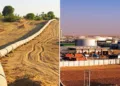
The site of Ratadiya Ri Dheri is located in north western part of Jaislamer district. The site is located in Thar Desert and is just 4 km away from international border of Bharat and Pakistan. The site covers an area of 1.5 acre and the aerial distance of site from Jaisalmer is 118 km. To reach the site one has to reach Sadhewala post of BSF. From Sadhewala a road run towards international border, after travelling for 13 km on the road one has to turn towards north. The next stretch towards north is of sand dunes and one has to travel 10 km to reach the site. The site is in a no men land and thus is secured from illegal digging. The mound has a height of 1 m above the ground. The site was first discovered by Parth Jagani and Dilip kumar of Jaisalmer town.
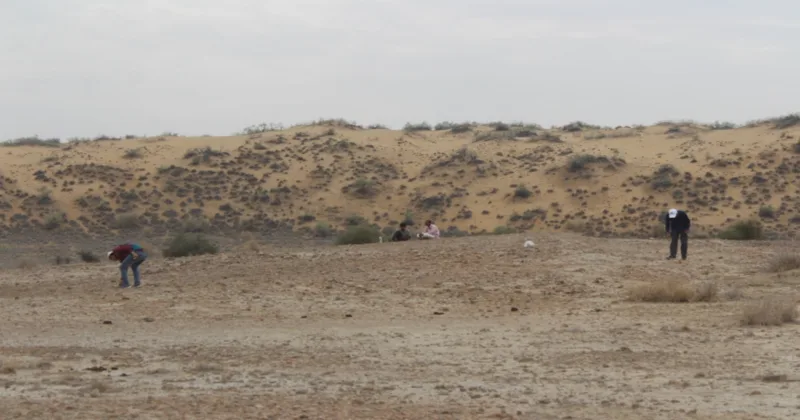
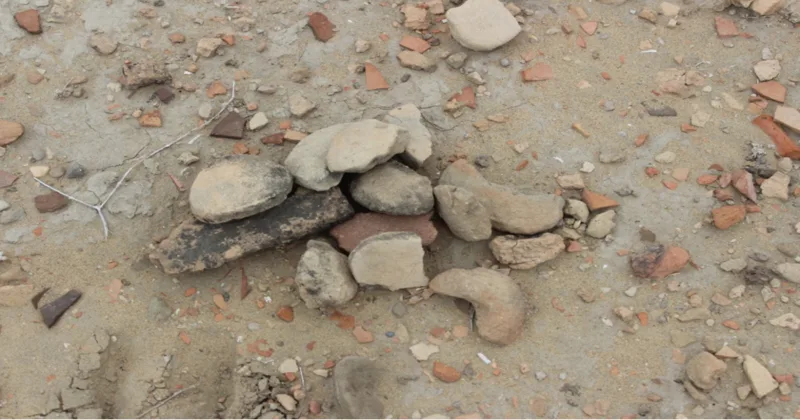
Mound at Ratadiya Ri Dheri
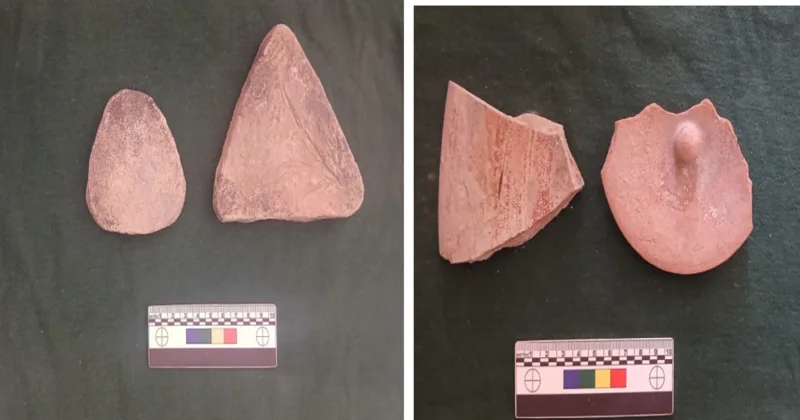
The exploration of the mound at Ratadiya Ri Dheri resulted in finding of huge pottery assemblage. It mainly includes red ware of mature phase of Saraswati Indus civilization. Sherds of perforated jars, broken pots with prominent disc base, pieces of shallow dish treated with red slip, lids, nail headed rims, beaked and beaded rims, pieces of dish on stand, pieces of storage jars etc. The pottery is well baked as seen in the section. Some sherds have paintings; it mainly includes parallel lines of black colour. It is quite interesting that painted pottery is very rare here. The clay of pottery has a good amount of sand in it. No intact pottery was encountered on the surface.
A good amount of terracotta cakes are also present on the surface. It mainly includes triangular shape, oval shape and idli shape. Some idli shape terracotta cakes have finger marks on the centre. It seems like it was pressed from both the side before firing. A good amount of sand is mixed with the clay in terracotta cakes too.
Broken pieces of copper implements are scattered all over the mound at Ratadiya Ri Dheri. Most of the parts are unidentified. A broken piece of copper chisel was found from the mound. Broken pieces of copper sheets were also recovered from the surface. The amount of copper pieces seen during exploration of the mound indicates that they were using it in good quantity.
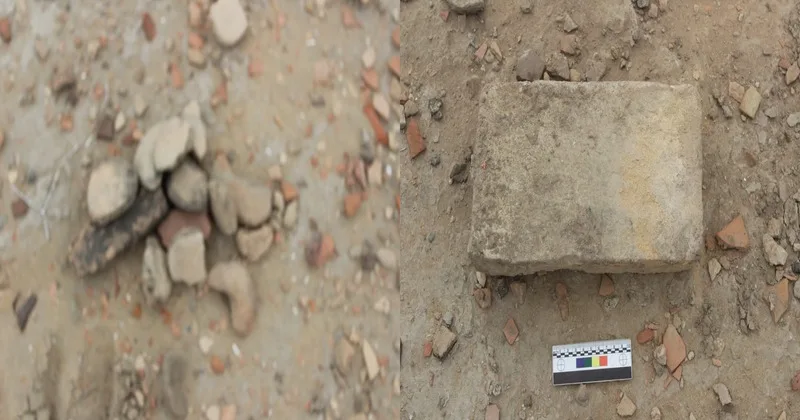
Bricksbats and intact bricks are also scattered on the surface. No remains of structures were encountered during exploration. It is quite interesting that a good amount of wedge shape bricks are present on the site. Generally these wedge shaped bricks were used in wells by Saraswati Indus people. It is important to note that all the bricks encountered during exploration are burnt bricks. No mud bricks were seen. A rectangular shaped brick was measured by the authors at the mound itself. Interestingly the brick had a ratio of 4:2:1. It measures 28cm x 14cm x 7cm. This size confirms that the site of Ratadiya Ri Dheri is a mature phase site.
A good amount of chert blades were also found during exploration. It seems like the chert was brought from Rohri hills in sindh of current Pakistan. The chert was of pink and dark brown colour. Cores (?), finished blades, broken blades and debitage were found on the surface. The blades found at the site are both single ridged and double ridged. The assemblage includes parallel sided blade, notched blade and oblique truncated blade.
Apart from the above mentioned remains, some other antiquities of shell and terracotta were also found during our exploration. It includes broken pieces of shell bangles and broken pieces of terracotta bangles. It is important to note that raw shells were also found at the mound which indicates riverine activity in the vicinity. It needs mention here that dried up bed of vedic Sarasawati is not far away from the mound. The findings from Ratadiya Ri Dheri indicates that it was a site of mature phase of the civilization and could be dated tp 2300-2000 BCE. It is also an important aspect that the palaeo channel of vedic Saraswati is less than 10 km away from the site. Till now the number of sites reported on the banks of Saraswati is 2378 but the discovery of the above site increase the tally to 2379. Also the pottery shapes assigned to late phase of the civilization were not encountered during exploration. It clearly indicates that the site was occupied during mature phase only.
The pottery of early phase was also not seen on the surface. The discovery of this site also raises a question that is it possible that only a single site was located in the said area? Previous exploration has also yielded an early phase site in Pakistan which is not far away from Ratadiya Ri Dheri. The site of Pakistan is located on the right bank of Saraswati whereas Ratadiya Ri Dheri is located on the left bank. The chert of Rohri hills indicates that these people were brining it from Sindh. Also, excessive copper remains from the surface are also quite interesting. To know more about the site and its nature archaeological excavation is the need of time as the site is undisturbed by any human intervention till now.