“Yogena chittasya padena vacham,
Malam sharirasya cha vaidyakena;
Yo’pakarottam pravaram muninam,
Patanjalim pranjaliranato’smi.”
“I bow with folded hands to Sage Patanjali, the noblest among sages, who purified the mind through Yoga, speech through grammar, and the body through Ayurveda.”
At six in the morning, the city is stirring to life in two very different ways.
In one apartment, a young professional is already scrolling through emails, sipping coffee, anxious about deadlines that have not even begun. Notifications are arriving faster than his thoughts. His day has started in a race.
A few floors above, another resident sits quietly on a mat near the window. There is no dramatic pose, no complicated stretch, and no social media reel being filmed. Her eyes are closed. She takes a deep breath, then another. For twenty minutes, she simply sits, aware of her breath, her body, and the morning light.
Both will face the same traffic, the same meetings, and the same pressures. Yet their days may unfold differently.
The difference is not flexibility. It is not fitness. It is not the ability to touch one’s toes.
Somewhere in that difference lies the essence of yoga.
And perhaps that is the biggest misunderstanding about yoga in our times.
Is Yoga Just Exercise?
Ask someone what yoga means and chances are they will describe a series of postures, breathing exercises, or perhaps a fitness class. But yoga is far more than that.
The word Yoga comes from the Sanskrit root Yuj, meaning “to join,” “to unite,” or “to yoke.” At its heart, yoga is about integration: the union of body and mind, action and awareness, individual consciousness and universal consciousness.
At its deepest level, yoga is a journey from fragmentation to integration, from restlessness to equanimity, and from merely existing to living with awareness.
In a world that constantly fragments our attention, yoga teaches wholeness. The ancients never viewed yoga merely as physical exercise. The postures, or asanas, are only one part of a much larger philosophy that seeks harmony within oneself and with the world.
Yoga, in its truest sense, is less about touching your toes and more about touching your inner centre.
Yoga: A Journey Through Time
Yoga is among humanity’s oldest living traditions. Its origins stretch back thousands of years. Archaeological discoveries from the ancient Indus Valley Civilisation reveal seals depicting figures in meditative postures, offering intriguing glimpses into practices that bear striking similarities to yoga as we understand it today. The Vedas and Upanishads speak of contemplation, discipline, and the quest for self-realisation.
The sages of ancient India were not merely interested in external prosperity. They asked questions that continue to challenge humanity:
Who am I?
Why do I suffer?
What is the nature of consciousness?
How can the human mind find peace?
Yoga emerged as a practical method to explore these questions. It evolved not in gyms or studios but in forests, mountains, and hermitages where seekers experimented with breath, meditation, discipline, and awareness.
Long before wellness became a global industry and mindfulness a modern buzzword, yoga had already evolved into a sophisticated science of inner well-being.
Patanjali and the Science of the Mind
No discussion on yoga can be complete without Sage Patanjali. Around two thousand years ago, Patanjali compiled the wisdom of yogic traditions into the Yoga Sutras, a collection of 195 concise aphorisms that remains one of the world’s greatest manuals on understanding the human mind.
Perhaps his most famous definition is:
“Yogah Chitta Vritti Nirodhah”
“Yoga is the stilling of the fluctuations of the mind.”
Few definitions from the ancient world sound as contemporary as this in an age of constant notifications and fractured attention.
According to Patanjali, yoga is not primarily about physical prowess. It is about learning to navigate the turbulence of the mind: the endless stream of thoughts, worries, desires, fears, and distractions.
Remarkably, this ancient insight sounds strikingly relevant today. Never before have human beings been so connected and yet so mentally scattered. We switch between screens, tabs, and conversations with astonishing speed, but often struggle to remain present even for a few moments.
In an age increasingly shaped by algorithms and artificial intelligence, the uniquely human capacities for awareness, attention, and inner balance have perhaps become more valuable than ever.
In yoga, the breath is not merely a biological function. It is a bridge between the body and the mind. The ancients observed that when the breath becomes calm, the mind too begins to settle.
Patanjali’s wisdom reminds us that true well-being begins with mastering attention.
The Eightfold Path: Yoga as a Way of Living
Patanjali described yoga as an eightfold path known as Ashtanga Yoga:
- Yama: Ethical restraints
- Niyama: Personal disciplines
- Asana: Physical postures
- Pranayama: Regulation of breath
- Pratyahara: Withdrawal of the senses
- Dharana: Concentration
- Dhyana: Meditation
- Samadhi: Profound absorption and inner freedom
Interestingly, asana, the aspect most associated with yoga today is only one of these eight limbs. The broader vision of yoga encompasses ethical living, self-discipline, mastery over the senses, concentration, and meditation.
In other words, yoga was always intended to be a way of life.
Shiva: The Ultimate Yogi
Indian tradition reveres Bhagwan Shiva as the Adiyogi: the first yogi.
Images of Shiva seated in deep meditation atop Mount Kailash are among the most powerful symbols in Indian culture. He is simultaneously still and dynamic, detached yet compassionate, inwardly absorbed yet deeply engaged with creation. The symbolism is profound.
Shiva represents mastery over the restless mind. He reminds us that true power comes not merely from controlling the external world but from understanding the inner one.
The serpent around his neck signifies fearlessness. The crescent moon represents control over time and emotions. The river Ganga flowing from his locks symbolises knowledge and grace.
In many ways, the idea of the Adiyogi remains deeply contemporary. Amid noise, speed, and endless stimulation, the image of Shiva invites us to rediscover stillness.
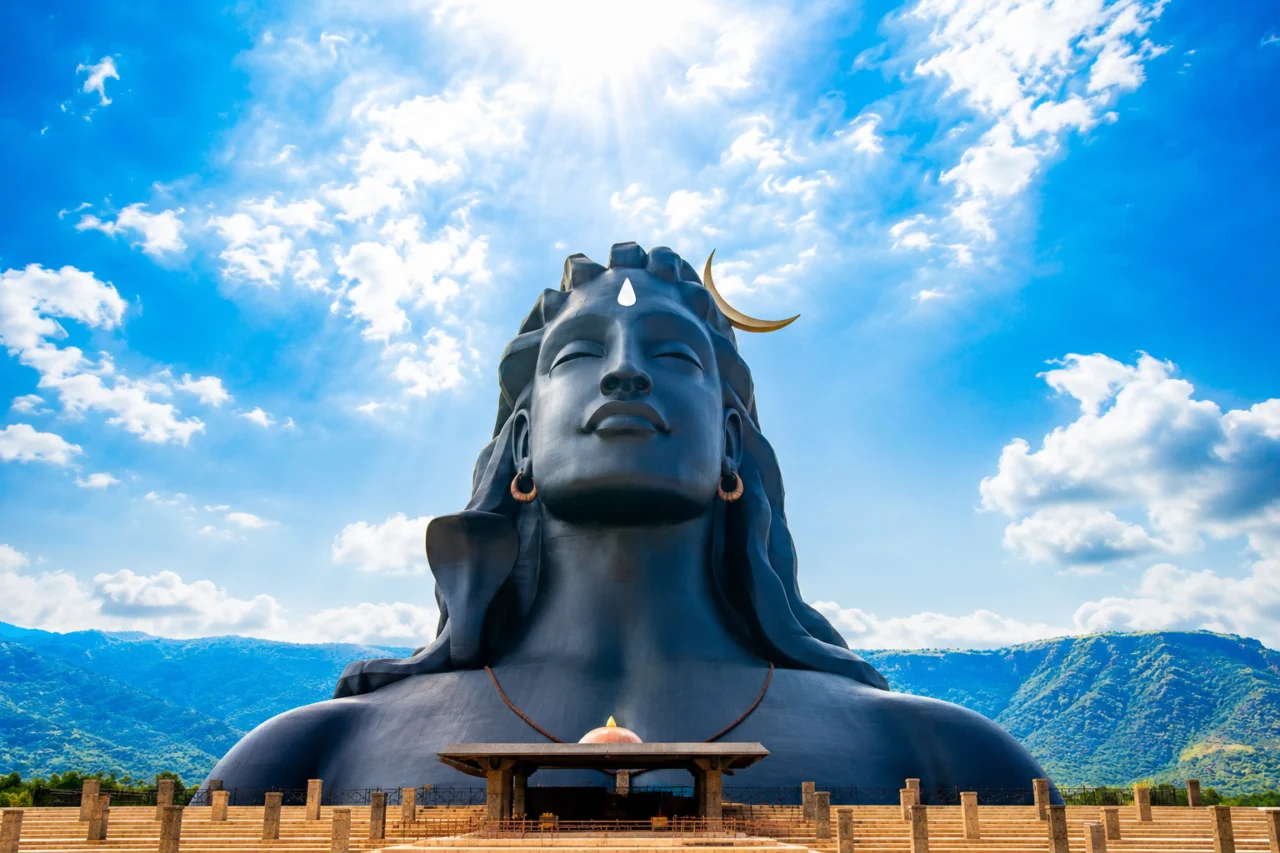
In an age of constant stimulation, perhaps the world needs the Adiyogi’s stillness more than ever.
From Forest Hermitages to Global Studios
Yoga’s journey from ancient India to the global stage is extraordinary.
In the late nineteenth and twentieth centuries, teachers such as Swami Vivekananda, Sri Aurobindo, Tirumalai Krishnamacharya, B.K.S. Iyengar, Pattabhi Jois, and Paramahansa Yogananda helped carry different dimensions of yoga beyond India’s shores. What was once practised in forests and hermitages became a global conversation on health and consciousness.
Today, millions across continents practise yoga. Numerous schools of yoga have flourished: from Hatha and Iyengar to Vinyasa, Ashtanga, Yin, Power, and Kundalini Yoga. This diversity has both advantages and challenges.
On the positive side, yoga has become remarkably accessible. People of different ages, cultures, and fitness levels can find a practice suited to their needs. Scientific research increasingly points to yoga’s benefits for flexibility, stress management, emotional well-being, sleep quality, and overall health.
Perhaps yoga’s global appeal lies in its universality. One need not belong to a particular culture, religion, or philosophy to practise yoga. Breath is universal. Stress is universal. The search for balance is universal. Yoga speaks to a human need that transcends geography and language.
Yet there is another side. Sometimes yoga gets reduced to performance: a series of impressive poses, a lifestyle trend, or social media aesthetics. The emphasis shifts from awareness to appearance.
When yoga becomes merely another item on a fitness checklist, its deeper purpose risks being forgotten.
There is nothing wrong with practising yoga for fitness. In fact, physical well-being is an important doorway. The challenge lies in stopping at the doorway and never entering the house. The physical practice may open the door, but yoga ultimately invites us into a deeper relationship with ourselves.
Yoga invites us to go further.
Trend or Timeless Practice?
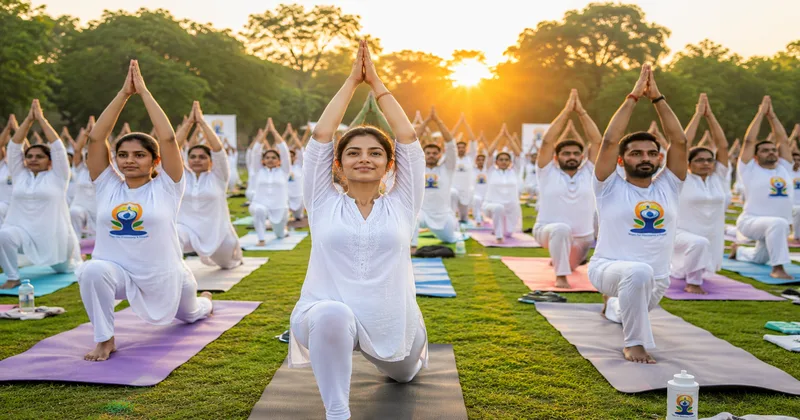
Every International Yoga Day, social media fills with pictures of group sessions, elaborate poses, and wellness slogans. Critics occasionally dismiss yoga as a passing trend.
But can something that has endured for millennia truly be called a fad?
Perhaps the real question is different.
Will yoga remain a once-a-year event or become a daily practice?
The answer lies in understanding its essence.
Yoga does not demand perfection. It does not require extraordinary flexibility or hours of meditation. It asks only for awareness.
It may begin with ten conscious breaths in the morning.
It may be eating a meal without distraction.
It may be pausing before reacting in anger.
It may be listening fully when someone speaks.
Perhaps the greatest promise of yoga is not a stronger body but a quieter, clearer, and more integrated self.
Yoga is not an escape from life. It is learning to inhabit life more completely.
Beyond the Mat
The true test of yoga is not whether one can hold a difficult posture for a minute. It is whether one can remain calm in a difficult conversation, attentive in a distracted world, compassionate in moments of conflict, and centred amid uncertainty.
The yoga mat is merely the practice ground. Life itself is where yoga unfolds.
Yoga does not ask us to become someone else. It asks us to become fully present to who we already are.
The Essence of Yoga
The modern world is facing epidemics of anxiety, loneliness, distraction, and burnout.
Ironically, humanity possesses more technology than ever before but often feels increasingly disconnected; from nature, from community, and even from itself.
This is where yoga’s timeless relevance lies.
Yoga teaches balance in an age of excess.
Stillness in an age of noise.
Presence in an age of distraction.
Connection in an age of fragmentation.
It reminds us that human beings are not machines designed only for productivity. We are also beings capable of awareness, reflection, compassion, and inner peace.
Since its adoption by the United Nations in 2014, International Yoga Day has evolved into a global celebration of a tradition that originated in India and now resonates across cultures and continents.
International Yoga Day, therefore, is not merely an annual celebration of an ancient Indian tradition. It is a reminder that amid accelerating technologies and shrinking attention spans, humanity still yearns for what yoga has always promised: balance, awareness, and inner harmony.
Perhaps the person sitting quietly near the window each morning is not trying to escape the world at all. Perhaps she is simply preparing herself to meet it with greater clarity, balance, and grace.
And maybe that is what yoga has always meant.
Not performing extraordinary postures.
Not escaping the world.
But discovering, breath by breath, that the journey inward can help us live more fully outward.