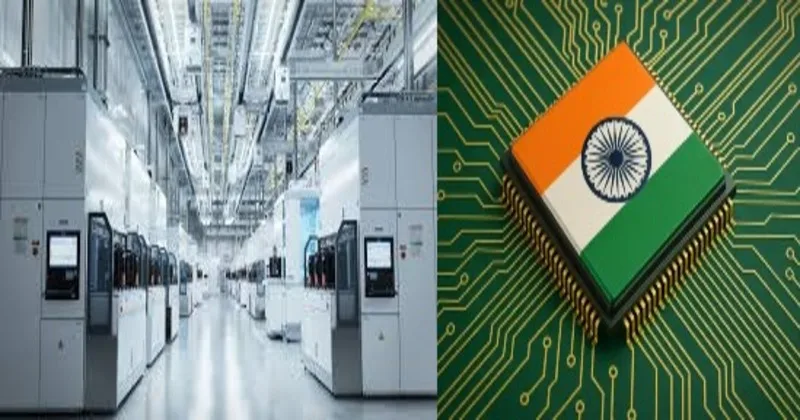
India’s ambitions to become a global semiconductor powerhouse have taken a significant step forward with the inauguration of a new semiconductor facility in Sanand, Gujarat, a development that reflects both urgency and opportunity in the country’s technological journey. The Sanand plant, established as an Outsourced Semiconductor Assembly and Test (OSAT) facility, represents a critical milestone in India’s efforts to reduce dependence on imported chips and to integrate itself into global semiconductor supply chains that are currently undergoing rapid transformation. At a time when semiconductors are central to everything from smartphones and electric vehicles to artificial intelligence and defence systems, India’s push is not merely industrial policy but a strategic necessity tied to economic resilience and national security.
The importance of the Sanand plant lies not just in its production capacity but in what it symbolizes—a transition from aspiration to execution. For decades, India has been recognized for its strengths in semiconductor design and software, with Indian engineers contributing significantly to global chip development. However, manufacturing remained largely absent due to high capital requirements, infrastructure gaps and intense global competition. The Sanand initiative begins to bridge that gap by focusing on the assembly, testing, and packaging segment, which is less capital-intensive than full-scale fabrication but still essential to the semiconductor value chain. By mastering these stages, India can build a foundation for more advanced manufacturing capabilities in the future.
Sanand itself is rapidly emerging as a semiconductor hub, reflecting a deliberate cluster-based approach to industrial development. The region already hosts major electronics and automotive manufacturing units, and the addition of semiconductor facilities creates synergies that can drive efficiency and innovation. The presence of multiple players in close proximity encourages the development of ancillary industries, including logistics, raw materials and specialized equipment services. This clustering model has proven successful in countries like Taiwan and South Korea, where dense ecosystems of suppliers and manufacturers have enabled rapid growth and global competitiveness. India’s attempt to replicate this model in Sanand indicates a strategic understanding of how semiconductor ecosystems evolve.
The broader context of India’s semiconductor push is shaped by global geopolitical and economic shifts that have exposed vulnerabilities in existing supply chains. The COVID-19 pandemic triggered a worldwide chip shortage that disrupted industries ranging from automotive manufacturing to consumer electronics, highlighting the risks of over-reliance on a few geographic regions. At the same time, tensions between major powers have accelerated efforts to diversify supply chains and reduce dependence on any single country. In this environment, India has positioned itself as a stable and reliable alternative, offering a large domestic market, a growing manufacturing base, and strong government support.
Central to this effort is the India Semiconductor Mission, which has been expanded with substantial financial incentives and policy support aimed at attracting both domestic and foreign investment. The government’s approach combines capital subsidies, infrastructure development and design incentives to create an end-to-end ecosystem. This includes encouraging fabless semiconductor startups, supporting research and development and fostering collaboration between industry and academia. By taking a comprehensive approach, India aims to address not only the immediate need for manufacturing capacity but also the long-term goal of technological self-reliance.
The focus on OSAT and ATMP facilities, such as the Sanand plant, reflects a pragmatic strategy that aligns with India’s current capabilities and constraints. Unlike advanced semiconductor fabrication plants, which require billions of dollars in investment and access to cutting-edge technology, assembly and testing operations are more accessible and can generate quicker returns. These facilities also create significant employment opportunities, particularly in regions where industrial development can drive broader economic growth. As India builds expertise in these areas, it can gradually move up the value chain and attract investments in more complex manufacturing processes.
Another important dimension of India’s semiconductor push is its integration into global supply chains. Multinational corporations are increasingly looking to diversify their manufacturing footprints, and India’s policy environment has become more attractive as a result. The Sanand ecosystem, supported by infrastructure and government incentives, could serve as a key destination for companies seeking to establish or expand their presence in Asia outside traditional hubs. This not only brings investment but also facilitates technology transfer, skill development and exposure to global best practices, all of which are crucial for building a competitive domestic industry.
The economic implications of these developments are substantial. The semiconductor industry has strong multiplier effects, creating demand across a wide range of sectors including chemicals, precision engineering, logistics, and education. Each facility generates direct employment while also supporting a network of suppliers and service providers. In the long run, the availability of domestically produced chips can reduce import bills, improve trade balances and enhance the competitiveness of India’s electronics manufacturing sector. As the country continues to expand its production of smartphones, consumer electronics, and electric vehicles, a robust semiconductor ecosystem will become increasingly important.
Despite the progress, significant challenges remain. Semiconductor manufacturing is one of the most complex and capital-intensive industries in the world, requiring not only financial resources but also advanced technology, reliable infrastructure and a highly skilled workforce. India still faces gaps in areas such as semiconductor-grade materials, specialized equipment and technical expertise in manufacturing processes. Addressing these challenges will require sustained investment, policy consistency and collaboration between government, industry and academia. The success of the Sanand plant and similar initiatives will depend on how effectively these issues are managed.
Looking ahead, the trajectory of India’s semiconductor journey will be shaped by its ability to move beyond assembly and testing toward innovation and advanced manufacturing. This includes attracting fabrication plants, strengthening research capabilities and developing indigenous intellectual property in chip design and production. The groundwork laid by facilities like the one in Sanand will play a crucial role in this transition, providing the experience and confidence needed to take on more ambitious projects. If India can maintain momentum and build on its early successes, it has the potential to become a significant player in the global semiconductor industry.
In conclusion, the inauguration of the Sanand semiconductor plant marks a pivotal moment in India’s quest for technological and economic transformation. It reflects a broader shift toward self-reliance, resilience and global integration in a sector that is central to the future of industry and innovation. While challenges remain, the combination of strategic vision, policy support and growing investor interest provides a strong foundation for progress. The Sanand initiative is not just about producing chips; it is about positioning India at the forefront of a critical global industry and shaping its role in the digital economy of the future.