The Malda crisis and Bengal’s administrative collapse
June 10, 2026
  • Read Ecopy
  • Circulation
  • Advertise
  • Careers
  • About Us
  • Contact Us
Android AppiPhone AppArattai
Organiser
  • ‌
  • Bharat
    • Assam
    • Bihar
    • Chhattisgarh
    • Jharkhand
    • Maharashtra
    • View All States
  • World
    • Asia
    • Europe
    • North America
    • South America
    • Africa
    • Australia
  • Editorial
  • International
  • Opinion
  • RSS @ 100
  • More
    • Op Sindoor
    • Analysis
    • Sports
    • Defence
    • Politics
    • Business
    • Economy
    • Culture
    • Special Report
    • Sci & Tech
    • Entertainment
    • G20
    • Azadi Ka Amrit Mahotsav
    • Vocal4Local
    • Web Stories
    • Education
    • Employment
    • Books
    • Interviews
    • Travel
    • Law
    • Health
    • Obituary
  • Subscribe
    • Subscribe Print Edition
    • Subscribe Ecopy
    • Read Ecopy
  • ‌
  • Bharat
    • Assam
    • Bihar
    • Chhattisgarh
    • Jharkhand
    • Maharashtra
    • View All States
  • World
    • Asia
    • Europe
    • North America
    • South America
    • Africa
    • Australia
  • Editorial
  • International
  • Opinion
  • RSS @ 100
  • More
    • Op Sindoor
    • Analysis
    • Sports
    • Defence
    • Politics
    • Business
    • Economy
    • Culture
    • Special Report
    • Sci & Tech
    • Entertainment
    • G20
    • Azadi Ka Amrit Mahotsav
    • Vocal4Local
    • Web Stories
    • Education
    • Employment
    • Books
    • Interviews
    • Travel
    • Law
    • Health
    • Obituary
  • Subscribe
    • Subscribe Print Edition
    • Subscribe Ecopy
    • Read Ecopy
Organiser
  • Home
  • Bharat
  • World
  • Operation Sindoor
  • Editorial
  • Analysis
  • Opinion
  • Culture
  • Defence
  • International Edition
  • RSS @ 100
  • Magazine
  • Read Ecopy
Home Politics

When Governance Fails: The Malda crisis and Bengal’s administrative collapse

The recent developments in Malda, West Bengal, which were sharply criticised by the Supreme Court of India, have once again exposed a deep-rooted administrative failure in the state. What should have been a routine democratic exercise—the verification of voter rolls under the Special Intensive Revision (SIR)—spiralled into chaos, obstruction, and alleged intimidation. The apex court’s characterisation of the incident as “calculated and motivated” is not merely a judicial remark; it is an indictment of a collapsing administrative framework. At the heart of the issue lies a disturbing pattern: the inability—or unwillingness—of the state administration to ensure basic governance, law enforcement, and institutional neutrality. The Malda incident paints a grim picture. Officials, including judicial officers tasked with electoral verification, were reportedly gheraoed, deprived of basic necessities, and obstructed from performing their duties. Even more alarming were reports of police vehicles being vandalised and officials being held hostage for hours. Such incidents are not isolated; they reflect a broader erosion of law and order in the state. When government officials, backed by constitutional authority, cannot perform their duties without fear, it signals a dangerous precedent. The state machinery appears either complicit or incapacitated. The police, instead of acting as neutral enforcers of law, seem hesitant, ineffective, or politically constrained. The intervention of the Supreme Court of India—ordering a detailed probe and questioning the role of senior officials, including the Chief Secretary and Director General of Police—underscores the severity of the crisis. Courts stepping in to ensure basic governance functions is not a sign of judicial activism, but of executive failure. The judiciary has emphasised the need for impartial inquiry and accountability. That such directions are necessary in a functioning democracy is itself troubling. Governance cannot be outsourced to courts; it must originate from a responsible executive. In a striking illustration of administrative inertia, West Bengal’s Chief Secretary, Dushyant Nariala, reportedly refused to share his WhatsApp contact details with the Chief Justice of the Calcutta High Court, effectively blocking any direct communication at a critical moment. Although the Home Secretary and the Director General of Police offered assurances of action, their initial inaction exposed a worrying gap between commitment and execution. The situation deteriorated to such an extent that the Chief Justice of the Calcutta High Court, Sujay Paul, was compelled to personally call officials at their residences to prompt a response. Even more striking was the extent of judicial intervention required at the highest level. Justice Surya Kant of the Supreme Court of India had to remain awake until 2 a.m., closely monitoring the situation. Such extraordinary involvement by the judiciary underscores a deeply troubling reality: when the administrative machinery fails to respond promptly and effectively, the burden of governance increasingly shifts onto the courts—an unsustainable and alarming trend in any functioning democracy. The response from the political leadership, particularly Chief Minister Mamata Banerjee, raises further concerns. Instead of acknowledging administrative lapses, the attempt to shift blame onto opposition parties reflects a pattern of deflection rather than introspection. Blaming political rivals may serve short-term political narratives, but it does little to restore public confidence. Governance demands responsibility, not rhetoric. When the ruling establishment views every administrative failure through a political lens, institutional integrity suffers. One of the most disturbing aspects of the Malda episode is the apparent erosion of neutrality in administrative institutions. Electoral processes, especially voter list revisions, require strict impartiality. Any interference—whether by political actors or administrative negligence—undermines the very foundation of democracy. The reports suggest that officials associated with the SIR process were not only obstructed but also left without adequate security and logistical support. This points to a systemic failure where the administration fails to protect its own officers, thereby discouraging honest governance. West Bengal has, in recent years, witnessed repeated allegations of post-poll violence, administrative bias, and breakdown of civic order. From political clashes to attacks on central agencies and bureaucrats, the pattern is consistent. The Malda incident is merely the latest manifestation of a deeper malaise. When governance becomes reactive rather than proactive, crises become inevitable. The absence of deterrence emboldens lawlessness, while the lack of accountability perpetuates it. The Malda incident is not just a law-and-order issue; it is a reflection of systemic administrative decay. When courts are compelled to intervene, when officials are obstructed in performing their duties, and when political leadership resorts to blame games, the message is clear: governance has faltered. Governance is not about control; it is about responsibility. And in West Bengal today, that responsibility appears to be slipping away. 

Diganta ChakrabortyDiganta Chakraborty
Apr 4, 2026, 07:00 pm IST
in Politics, Bharat, West Bengal
Follow on Google News
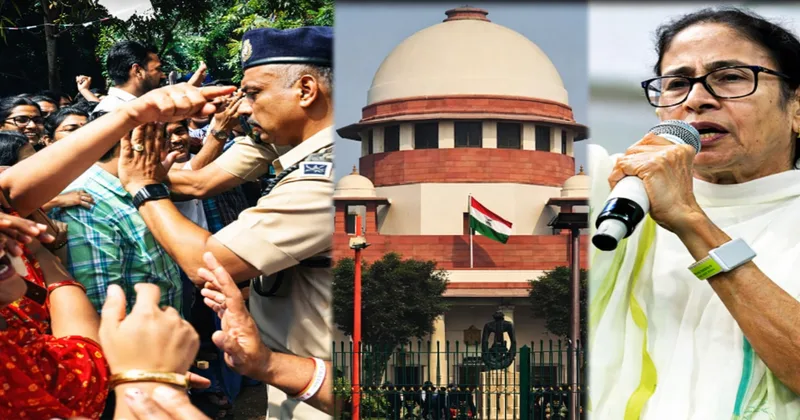
Judicial officers held hostage in Malda

Judicial officers held hostage in Malda

FacebookTwitterWhatsAppTelegramEmail

The recent developments in Malda, West Bengal, which were sharply criticised by the Supreme Court of India, have once again exposed a deep-rooted administrative failure in the state. What should have been a routine democratic exercise—the verification of voter rolls under the Special Intensive Revision (SIR)—spiralled into chaos, obstruction, and alleged intimidation. The apex court’s characterisation of the incident as “calculated and motivated” is not merely a judicial remark; it is an indictment of a collapsing administrative framework. At the heart of the issue lies a disturbing pattern: the inability—or unwillingness—of the state administration to ensure basic governance, law enforcement, and institutional neutrality.

The Malda incident paints a grim picture. Officials, including judicial officers tasked with electoral verification, were reportedly gheraoed, deprived of basic necessities, and obstructed from performing their duties. Even more alarming were reports of police vehicles being vandalised and officials being held hostage for hours. Such incidents are not isolated; they reflect a broader erosion of law and order in the state. When government officials, backed by constitutional authority, cannot perform their duties without fear, it signals a dangerous precedent. The state machinery appears either complicit or incapacitated. The police, instead of acting as neutral enforcers of law, seem hesitant, ineffective, or politically constrained.

Read More: Stealth frigate INS Taragiri & indigenous nuclear submarine INS Aridaman commissioned into Indian Navy

The intervention of the Supreme Court of India—ordering a detailed probe and questioning the role of senior officials, including the Chief Secretary and Director General of Police—underscores the severity of the crisis. Courts stepping in to ensure basic governance functions is not a sign of judicial activism, but of executive failure. The judiciary has emphasised the need for impartial inquiry and accountability. That such directions are necessary in a functioning democracy is itself troubling. Governance cannot be outsourced to courts; it must originate from a responsible executive.

In a striking illustration of administrative inertia, West Bengal’s Chief Secretary, Dushyant Nariala, reportedly refused to share his WhatsApp contact details with the Chief Justice of the Calcutta High Court, effectively blocking any direct communication at a critical moment. Although the Home Secretary and the Director General of Police offered assurances of action, their initial inaction exposed a worrying gap between commitment and execution. The situation deteriorated to such an extent that the Chief Justice of the Calcutta High Court, Sujay Paul, was compelled to personally call officials at their residences to prompt a response. Even more striking was the extent of judicial intervention required at the highest level. Justice Surya Kant of the Supreme Court of India had to remain awake until 2 a.m., closely monitoring the situation. Such extraordinary involvement by the judiciary underscores a deeply troubling reality: when the administrative machinery fails to respond promptly and effectively, the burden of governance increasingly shifts onto the courts—an unsustainable and alarming trend in any functioning democracy.

The response from the political leadership, particularly Chief Minister Mamata Banerjee, raises further concerns. Instead of acknowledging administrative lapses, the attempt to shift blame onto opposition parties reflects a pattern of deflection rather than introspection. Blaming political rivals may serve short-term political narratives, but it does little to restore public confidence. Governance demands responsibility, not rhetoric. When the ruling establishment views every administrative failure through a political lens, institutional integrity suffers.

One of the most disturbing aspects of the Malda episode is the apparent erosion of neutrality in administrative institutions. Electoral processes, especially voter list revisions, require strict impartiality. Any interference—whether by political actors or administrative negligence—undermines the very foundation of democracy. The reports suggest that officials associated with the SIR process were not only obstructed but also left without adequate security and logistical support. This points to a systemic failure where the administration fails to protect its own officers, thereby discouraging honest governance.

West Bengal has, in recent years, witnessed repeated allegations of post-poll violence, administrative bias, and breakdown of civic order. From political clashes to attacks on central agencies and bureaucrats, the pattern is consistent. The Malda incident is merely the latest manifestation of a deeper malaise. When governance becomes reactive rather than proactive, crises become inevitable. The absence of deterrence emboldens lawlessness, while the lack of accountability perpetuates it.

The Malda incident is not just a law-and-order issue; it is a reflection of systemic administrative decay. When courts are compelled to intervene, when officials are obstructed in performing their duties, and when political leadership resorts to blame games, the message is clear: governance has faltered. Governance is not about control; it is about responsibility. And in West Bengal today, that responsibility appears to be slipping away.


Topics: Chief Minister Mamata BanerjeeMaldaWest bengal elections
ShareTweetSendShareSend
✮ Subscribe Organiser YouTube Channel. ✮
✮ Join Organiser's WhatsApp channel for Nationalist views beyond the news. ✮
Previous News

Karnataka: Brutal assault on Hindu couple in Arsikere by Islamist gang; Questions raised over law & order

Next News

Assam Elections 2026: A changed political landscape

Related News

Prime Minister Narendra Modi

BJP’s Victory with Vision: An idea of India that is Indian

NIA has chargesheeted 31 accused in four separate cases linked to the Malda SIR-related road blockades and illegal detention of judicial officers

NIA chargesheets 31 in Malda SIR road blockade, illegal detention of judicial officers in West Bengal

Violence across Bengal raises questions over law & order as BJP workers come under attack

Blood-Stained Ballot: Violence across Bengal raises questions over law & order as BJP workers come under attack

Uttar Pradesh Chief Minister Yogi Adityanath

Bengal Storm by UP CM Yogi: BJP wins 19 of 22 seats, delivers massive strike rate

Kolkata police issued a strong warning against the circulation of fake or misleading content on social media

West Bengal Poll Results: Kolkata police cracks down on misinformation, urges public to maintain peace

Trump administration praises New Delhi over Bengal election win while reviving fake mediation claim on Operation Sindoor

Trump’s Diplomatic Double Game: Congratulates PM Modi on Bengal, pushing Pakistan’s narrative on ‘Operation Sindoor’

Load More

Latest News

Assam: Auto driver Monowar Hussain arrested for molesting, attempting to rape tribal woman passenger in Guwahati

The world recognises unprecedented growth in digital infrastructure during the 12 years of Modi's government

12 Years of Modi Government: How India built one of the world’s largest digital public infrastructure ecosystems

The image of alleged "Kolkotta Bayee" Jewel King living at Pathanamthitta

Keralam: WhatsApp status reveals illegal Bangladeshi who lived in Pathanamthitta for five years as ‘Kolkotta Bayee’

Following TMC’s defeat in 2026 West Bengal Assembly election, speculation grew that its MPs were moving towards the NDA under BJP pressure

Why TMC MPs are looking towards the NDA: Examining the electoral arithmetic behind the political shift

Father dies on the day of daughter's Nikah over dispute over Mehar amount in Uttarakhand

Uttarakhand: Bride’s father dies of heart attack amid pressure and dispute over mehar amount in nikah

India has been transformed by major advances in digital governance, financial inclusion, and global influence under Modi govt

India After 12 Years of Modi: A record, revolution and remaining challenges

Will CM Joseph Vijay preserve Tamil Nadu’s priceless temple heritage as artefacts decay in Egmore museum

Book Review | Zubeen Garg: 'The Voice That Bridged Worlds' by Prosenjit Nath

Book Review | Zubeen Garg: ‘The Voice That Bridged Worlds’ by Prosenjit Nath

A representative image generated using AI

“I am Christian, I don’t want any bhagwan”: Nurse booked for placing murtis of Hindu gods on footwear stand in Palghar

Uttar Pradesh CM Yogi Adityanath

Project GANGA: Yogi Adityanath’s ambitious plan to transform rural Uttar Pradesh into network of smart digital villages

Load More
  • Privacy
  • Terms
  • Cookie Policy
  • Refund and Cancellation
  • Delivery and Shipping

© Bharat Prakashan (Delhi) Limited.
Tech-enabled by Ananthapuri Technologies

  • Home
  • Search Organiser
  • Bharat
    • Assam
    • Bihar
    • Chhattisgarh
    • Jharkhand
    • Maharashtra
    • View All States
  • World
    • Asia
    • Africa
    • North America
    • South America
    • Europe
    • Australia
  • Editorial
  • Operation Sindoor
  • Opinion
  • Analysis
  • Defence
  • Culture
  • Sports
  • Business
  • RSS @ 100
  • Entertainment
  • More ..
    • Sci & Tech
    • Vocal4Local
    • Special Report
    • Education
    • Employment
    • Books
    • Interviews
    • Travel
    • Health
    • Politics
    • Law
    • Economy
    • Obituary
  • Subscribe Magazine
  • Read Ecopy
  • Advertise
  • Circulation
  • Careers
  • About Us
  • Contact Us
  • Policies & Terms
    • Privacy Policy
    • Cookie Policy
    • Refund and Cancellation
    • Terms of Use

© Bharat Prakashan (Delhi) Limited.
Tech-enabled by Ananthapuri Technologies