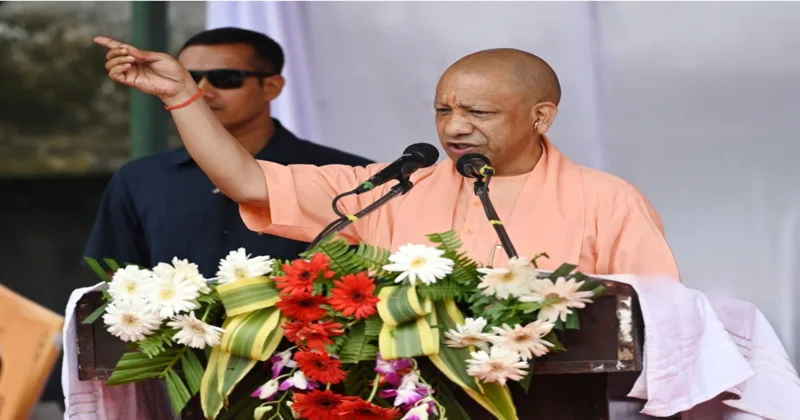
Uttar Pradesh Chief Minister Yogi Adityanath has emerged as one of the most impactful campaigners for the Bharatiya Janata Party in the recently concluded West Bengal Assembly elections. An analysis of the results shows that the BJP performed strongly in constituencies where UP CM Yogi led election outreach. This shows his growing role in the party’s national campaign strategy. Yogi Adityanath campaigned extensively across West Bengal, addressing public meetings in key Assembly segments such as Sonamukhi, Nandakumar, Kanthi Dakshin, Barabani, Rampurhat, Bolpur, Mathabhanga, Dhupguri, Joypur, Garbeta, Jorasanko, Chakdaha, Udaynarayanpur, Nabadwip, Katwa, Bagda, Dhanekhali and Rajarhat Gopalpur. In addition to these rallies, he held large roadshows in Bankura, Kalyani and Dum Dum, drawing considerable crowds and energising local party workers.
The results indicate that out of the 22 constituencies where he campaigned, the BJP secured victory in 19 seats. This shows a strong success rate and indicates that his campaign helped gather voter support in these areas. Compared to the previous Assembly elections, when many of these seats were held by the All India Trinamool Congress, the latest results point to a clear change in voter preference in several constituencies.
In seats like Sonamukhi, Nandakumar, Kanthi Dakshin, Barabani, Rampurhat, Mathabhanga, Dhupguri, Bankura, Pingla, Joypur, Jorasanko, Chakdaha, Nabadwip, Katwa, Bagda, Kalyani, Dum Dum and Rajarhat Gopalpur, BJP candidates won clearly. These wins came from both rural and urban areas, showing that the party’s message was accepted by different types of voters. However, the contest remained competitive in a few areas. The TMC retained seats such as Dhanekhali and Bolpur, where its candidates won by notable margins.
This change in the seats is important because earlier, many of them were with the All India Trinamool Congress. The BJP’s better performance shows that focused campaigning and local connections helped influence the voters.
Yogi Adityanath used a mix of approaches in his campaign. He spoke about development, governance, and law and order, while also touching on cultural identity. In his speeches, he highlighted the importance of protecting local traditions and language, and promoted a governance model focused on infrastructure and efficient administration.
He also presented the governance experience of Uttar Pradesh as an example, referring to improvements in law and order and development projects under his administration. This helped him connect with voters by showing a comparison. Along with focusing on development, he also strongly criticised the ruling government. He raised questions on governance and said that it had not met people’s expectations in some areas. This mix of criticism and his own vision became the main part of his campaign.
One of the notable aspects of his outreach was the emphasis on clear and direct messaging. His speeches were structured to address local concerns while also connecting them to broader national themes. This helped create a consistent campaign line across different constituencies.
The BJP’s campaign in West Bengal also featured the participation of top leaders, including Prime Minister Narendra Modi and Union Home Minister Amit Shah. However, Yogi Adityanath’s role stood out due to the focused nature of his campaigning and the measurable results in the constituencies he covered. Another key factor was the strong response from party workers and supporters. His rallies and roadshows saw large crowds, which helped build energy at the ground level. This kind of support is very important in closely fought elections.
While it is difficult to credit the electoral outcomes to a single factor, the data shows that his campaign helped the BJP perform better in the areas UP CM Yogi visited. Looking ahead, such performances are likely to influence campaign planning in future elections. Political parties may continue to rely on leaders who can deliver results in targeted constituencies, especially in states where contests are closely fought. UP CM Yogi Adityanath’s high strike rate in the constituencies he visited highlights his effectiveness as a campaigner and reinforces his position within the BJP’s national leadership framework. As electoral politics becomes increasingly competitive, the ability to influence outcomes in key seats will remain a critical factor for all parties.