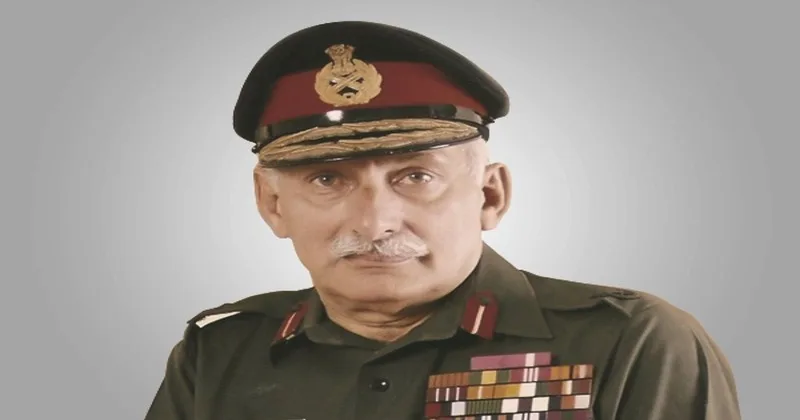
Sam Manekshaw, the first Field Marshal of India was a fearless soldier and was indeed a nightmare to Pakistan. He marched the country to victory during most crucial circumstances and was a catalyst in defending national security against the atrocities of Islamabad. He not just fought against the infiltrating enemies but also stood firm against the political misdeeds and agony of the day with unparalleled vision and valour. He fought against the bureaucratic bottlenecks of the era, thus successfully carved the security architecture of the nation during the initial days of independence. Field Marshal Sam Manekshaw is hence a synonym for unmatched conviction, nationalist vigour and decisive leadership that inspires generations.
The journey that began in British Indian Army
Sam Manekshaw was born on April 3, 1914 in Amritsar, Punjab. He joined the British Indian Army in 1934 and participated in key conflicts of the era including World War 2. He was the second Lieutenant in the 12th Frontier Force Rifles. During World War 2, Manekshaw who was then a captain of the British Indian Army led a company to victory in the Battle of Sitang Bridge. This was the war fought against Japan by the Allied Forces during the former’s campaign towards Burma. During this confrontation, despite several injuries, Sam Manekshaw fought until he collapsed. Recognising his unwavering commitment, he was awarded the Military Cross for his gallantry and leadership.
The decisive military leadership post independence
Post independence, Sam Manekshaw was transferred to 8th Gurkha Rifles Regiment of the Indian Army. Recognising the unparalleled braveness and vigour of Manekshaw, the soldiers of this regiment called him as “Bahadur”. In 1953, he was appointed as the colonel of this regiment. He was infact the honorary colonel of the regiment until his death in 2008. He was the first Indian commissioned officer to become an Army Commander in 1963. Later, Sam Manekshaw was also appointed as the commander-in-chief of the Western Command.
During the 1965 India-Pakistan he was also leading the Eastern Command of the Indian Army. Sam Manekshaw also served as the Chief of Army Staff from 1969 to 1973. As an honour to his courage, conviction and stellar leadership qualities during moments of utmost crisis, Sam Manekshaw is awarded with Padma Bhushan in 1968 and Padma Vibhushan in 1972. He was promoted to the rank of Field Marshal, the highest rank that can be attained in the Indian Army in 1973, which was a testament to his exceptional and uncompromisable commitment to defend the national security and sovereignty.
Standing upto political and bureaucratic bottlenecks
Field Marshal Sam Manekshaw not just fought on the battle ground and was a nightmare to the intruding enemies. But, he also stood up to the political and bureaucratic hurdles of the day which was indeed an obstacle to defend national security. Thus, he created revolution within the Army and brought professionalism, moral high standards into the defence apparatus of the country. For example, in 1961 Sam Manekshaw stood against the decision of the then Defence Minister of India V.K. Krishna Menon. He refused to support Menon’s attempt to subvert the Chief of the Army Staff K.S. Thimayya.
Also Read: Pakistani cleric exposes ‘Jihad’ abuse in PoJK, reveals sexual exploitation in militant-run camps
Similarly, during the 1962 India-China war when V. K. Menon resigned from the position, Sam Manekshaw who was then a lieutenant general was sent to the forefront of the battlefield. Here, Manekshaw fought relentlessly and led the Indian troops firmly to defend the sovereignty and territorial integrity of the country, until a ceasefire was declared. Another instance, that acts as an evidence to the valour of Sam Manekshaw to withstand the political pressure was during the Bangladesh Liberation war.
In 1971, during the spring season, Sam Manekshaw resisted the demands of then Prime Minister Indira Gandhi to wage war against East Pakistan in support of Bengali nationalism. As it was an odd time to confront given the weather conditions, he insisted the Prime Minister to delay the military campaign until the monsoon season ends. Such was the vision, strategic clarity and boldness of Manekshaw in defending the country. He always firmly stood up to political pressure and miscalculations and always spoke for the well-being of the country and its people.
Sam Manekshaw: A nightmare to Pakistan
The fearless Field Marshal Sam Manekshaw was indeed a nightmare to Pakistan. He was a kingpin in consolidating national security during the 1947-48 India Pakistan war. He also successfully defended the country during the 1965 conflict with Pakistan and ensured the defeat of the enemy by leading the Eastern theatre/Command of the Indian Army. Most importantly, as the Chief of the Army Staff, Sam Manekshaw was the mastermind behind India’s victory in the 1971 Bangladesh Liberation War. His strategic smartness led to the surrender of Pakistan and creation of an independent Bangladesh.
Post the victory in the 1971 war against Pakistan, Sam Manekshaw not just turned into a nightmare for Pakistan, but became a household name in India. As he closely monitored more than 90,000 Pakistani prisoners of war, post Bangladesh liberation war, Sam Manekshaw is known for compassionate and humanitarian treatment of the soldiers from the enemy camp. As an impact of his key and decisive role in the Bangladesh Liberation War, he was elevated to the rank of Field Marshal in 1973. Sam Manekshaw thus inspires generations of soldiers and the countrymen with his battlefield fervour, strategic smartness, military vision and decisive leadership attributes.