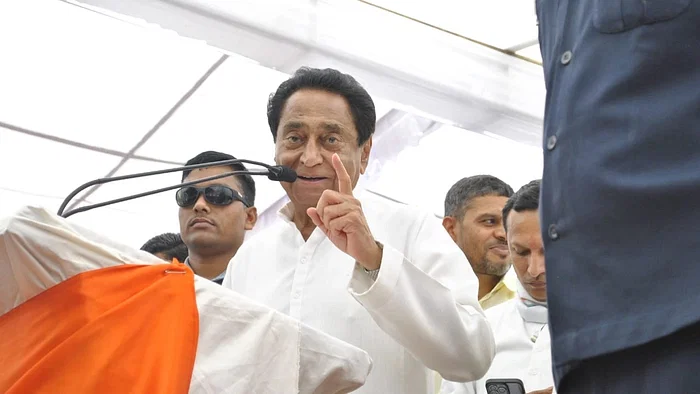
In a development that underscores internal divergence within the Congress, former Madhya Pradesh Chief Minister Kamal Nath has rejected reports suggesting a shortage of liquefied petroleum gas (LPG) across the country. Addressing reporters in Chhindwara on Thursday, Nath asserted that the claims were being overstated and lacked factual basis.
“There is no such shortage. It is just an atmosphere being created that there is a shortage,” Nath said, effectively distancing himself from the broader narrative put forward by his party colleagues.
Nath’s remarks stand in contrast to the official stance of the Indian National Congress, which has in recent days intensified its criticism of the Centre over alleged fuel supply disruptions. Party leaders have linked the issue to escalating geopolitical tensions in West Asia, warning that the situation could strain India’s energy supply chains.
Several Congress leaders have argued that the government has failed to adequately prepare for possible disruptions, leading to rising concerns among citizens.
Adding to the criticism, Telangana Congress communications head Sama Rammohan Reddy targeted Prime Minister Narendra Modi, alleging his absence from an all-party meeting convened to deliberate on the West Asia situation.
Reddy claimed that the Prime Minister’s non-participation reflected misplaced priorities, accusing the ruling dispensation of focusing more on electoral politics than addressing pressing national concerns such as fuel availability.
He further stressed that the evolving geopolitical scenario requires direct intervention at the highest level, given its potential implications on essential commodities like LPG.
The matter also echoed in Parliament, where Congress MP Vijay Vasanth raised the issue during Zero Hour in the Lok Sabha. He alleged that the country was facing a severe shortage of LPG, diesel, and petrol, leading to widespread disruption.
“The acute shortage of LPG gas cylinders, diesel and petrol has brought the country to a halt. Hospitals are struggling, college canteens are shut, hotels are closing down, and the common man is facing immense hardship,” Vasanth claimed.
He further accused the Union government of “mismanagement and inaction,” alleging that the situation had triggered panic among citizens, with long queues forming at fuel stations and cooking gas distribution centres.
The contrasting positions within the Congress highlight a broader political and economic debate unfolding amid global uncertainty. While one section of the opposition continues to flag potential supply disruptions linked to the volatile situation in West Asia, Nath’s remarks suggest that concerns of scarcity may be overstated or premature.