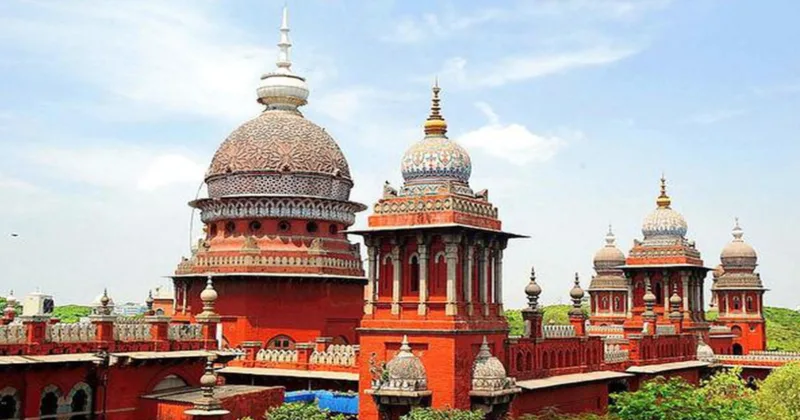
Mere Use of ‘Waqf’ or ‘Mosque’ Not Enough: Madras High Court
June 30, 2026
  • Read Ecopy
  • Circulation
  • Advertise
  • Careers
  • About Us
  • Contact Us
Android AppiPhone AppArattai
Organiser
  • ‌
  • Bharat
    • Assam
    • Bihar
    • Chhattisgarh
    • Jharkhand
    • Maharashtra
    • View All States
  • World
    • Asia
    • Europe
    • North America
    • South America
    • Africa
    • Australia
  • Editorial
  • International
  • Opinion
  • RSS @ 100
  • More
    • Op Sindoor
    • Analysis
    • Sports
    • Defence
    • Politics
    • Business
    • Economy
    • Culture
    • Special Report
    • Sci & Tech
    • Entertainment
    • G20
    • Azadi Ka Amrit Mahotsav
    • Vocal4Local
    • Web Stories
    • Education
    • Employment
    • Books
    • Interviews
    • Travel
    • Law
    • Health
    • Obituary
  • Subscribe
    • Subscribe Print Edition
    • Subscribe Ecopy
    • Read Ecopy
  • ‌
  • Bharat
    • Assam
    • Bihar
    • Chhattisgarh
    • Jharkhand
    • Maharashtra
    • View All States
  • World
    • Asia
    • Europe
    • North America
    • South America
    • Africa
    • Australia
  • Editorial
  • International
  • Opinion
  • RSS @ 100
  • More
    • Op Sindoor
    • Analysis
    • Sports
    • Defence
    • Politics
    • Business
    • Economy
    • Culture
    • Special Report
    • Sci & Tech
    • Entertainment
    • G20
    • Azadi Ka Amrit Mahotsav
    • Vocal4Local
    • Web Stories
    • Education
    • Employment
    • Books
    • Interviews
    • Travel
    • Law
    • Health
    • Obituary
  • Subscribe
    • Subscribe Print Edition
    • Subscribe Ecopy
    • Read Ecopy
Organiser
  • Home
  • Bharat
  • World
  • Operation Sindoor
  • Editorial
  • Analysis
  • Opinion
  • Culture
  • Defence
  • International Edition
  • RSS @ 100
  • Magazine
  • Read Ecopy
Home Bharat

Mere use of ‘Waqf’ or ‘Mosque’ not enough to claim properties: Madras High Court sets aside TN Waqf Board order

The Madras High Court has ruled that simply mentioning “Waqf” or “Mosque” in a document does not automatically make a property waqf. The court emphasised that a valid waqf requires clear dedication for public religious or charitable purposes and complete transfer of ownership

WEBDESKWEBDESK
Apr 3, 2026, 09:00 am IST
in Bharat, Law, Tamil Nadu
Follow on Google News
Madras High Court

Madras High Court

FacebookTwitterWhatsAppTelegramEmail

In a significant ruling clarifying the legal requirements for declaring a property as waqf, the Madras High Court has held that the mere usage of the terms “Waqf” or “Mosque” in a settlement deed does not by itself constitute a valid declaration of waqf property.

Justice P B Balaji, while adjudicating a civil revision petition, observed that for a property to be legally recognised as waqf, there must be a clear and unequivocal declaration by the owner dedicating the property for public religious or charitable purposes. The court further stressed that such a declaration must be accompanied by the complete divestment of ownership rights by the person creating the waqf.

“At the risk of repetition, mere use of the words ‘Waqf’ and ‘Mosque’ will not suffice,” the court remarked, underlining that legal substance must prevail over mere terminology in property documents.

The ruling came in response to a petition originally filed by M Sirajudeen Sayeed (now deceased), which was subsequently pursued by his legal heirs, Zarina Sayeed and Shabana Sayeed. The petition challenged the classification of their property as waqf land by the Tamil Nadu Waqf Board.

The disputed property is located in Siruvadi village in Villupuram district of Tamil Nadu. According to the petitioners, the Waqf Board had, through an order dated November 3, 2009, registered their property as waqf under the provisions of the Waqf Act.

Aggrieved by this classification, the petitioners initially approached legal forums, eventually taking the matter before the Tamil Nadu Waqf Tribunal. However, the tribunal upheld the Waqf Board’s decision on October 11, 2022.

Also Read: Dharma Swantantrya Adhiniyam: Safeguarding the fundamental freedom

Following this, the petitioners filed a civil revision petition before the Madras High Court, seeking to overturn the tribunal’s order.

Appearing on behalf of the petitioners, Advocate Balan Haridas argued that the Waqf Board had based its decision on a flawed interpretation of two historical deeds dated 1910 and 1951. He contended that these documents did not contain any explicit declaration dedicating the property for public religious or charitable purposes.

The counsel further submitted that the notification issued by the Board was legally defective. He pointed out that no proper notice had been served to interested parties, thereby denying them an opportunity to present their case. Additionally, he argued that the Board had failed to conduct a mandatory inquiry under Section 40 of the Tamil Nadu Waqf Act before declaring the property as waqf.

These procedural lapses, according to the petitioners, rendered the Board’s decision unsustainable in law.

While examining the matter, the High Court referred to established legal principles and precedents, including rulings of the Supreme Court of India, to reiterate the essential ingredients required for the creation of a waqf.

The court noted that a waqf is created only when the owner of a property makes a formal declaration of endowment for religious or charitable purposes. Upon such declaration, the property is considered to vest in God Almighty, and the owner must relinquish all rights, title, and interest in the property.

Justice Balaji highlighted two fundamental conditions:

1. There must be a clear intention on the part of the owner to dedicate the property for public purposes.
2. The owner must completely divest himself or herself of ownership and control over the property.
3. In the absence of these elements, the court observed, a property cannot be treated as waqf merely on the basis of wording used in a document.

Applying these principles to the present case, the High Court found no evidence to suggest that the property in question had ever been dedicated for public purposes or vested in God.

“There is absolutely no indication that there has been dedication for public purposes, or properties being vested in God, the executants divesting themselves of all their interest and title,” the court stated while setting aside the order of the Tamil Nadu Waqf Board.

The ruling effectively overturns both the Board’s 2009 notification and the tribunal’s 2022 order, granting relief to the petitioners.

The judgment is expected to have wider implications for similar disputes involving waqf properties across the country. By clearly defining the criteria for waqf declaration, the court has reinforced the importance of due process and substantive legal requirements over mere textual references.

Topics: Justice PB Balaji judgmentMadras High Court waqf rulingwaqf property law IndiaTamil Nadu Waqf Board casewaqf declaration rules
ShareTweetSendShareSend
✮ Subscribe Organiser YouTube Channel. ✮
✮ Join Organiser's WhatsApp channel for Nationalist views beyond the news. ✮
Previous News

ED cracks down on I-PAC with multi-city raids in Bengal coal scam probe

Next News

Amid West Asia tensions, centre moves to cut LPG import dependence; Pushes PNG, renewables

Related News

A representative image

“Mere use of words like ‘Waqf’ or ‘Mosque’ does not create public waqf”: Madras HC sets aside TN Board order

Load More

Latest News

President Droupadi Murmu paid tribute to the heroes of the Santhal rebellion on the occasion of Hul Diwas

Hul Diwas: President Murmu pays tribute to heroes of Santhal rebellion, says their sacrifice will inspire forever

A representative image

Escalating unrest and civilian casualties in Pakistan Occupied Jammu and Kashmir: A 15 year overview

A representative image

Twelve years of pension reforms: Over 3.28 lakh PPOs issued through Bhavishya platform

Representative image made using AI

Religious festival or display of violence? 12 incidents of killings and attempts to kill Hindus during Muharram

A representative image

Nirbhay Chetna: Govt launches world’s largest gender sensitisation drive for women, targets 17.5 lakh representatives

A representative image made from AI

From Digital Consumer to Technology Powerhouse: How India is building technologies that are shaping Viksit Bharat 2047

Representative image

FCRA Amendment Bill 2026: Why evangelical groups are rattled over India’s oversight on foreign funding

Sir Dinshaw Maneckji Petit Birth Anniversary: Remembering Bombay's Textile Pioneer

Birth Anniversary of Sir Dinshaw Petit: The visionary who built Bombay’s textile empire

Guru Hargobind ji

Remembering Guru Hargobind Ji on Prakash Parv: Visionary who united spirituality with the sword of justice

Security personnel along with the miscreants and arma and ammunitions that have been seized in assam

Manipur: Huge cache of arms and ammunitions recovered: Security forces intensify operations

Load More
  • Privacy
  • Terms
  • Cookie Policy
  • Refund and Cancellation
  • Delivery and Shipping

© Bharat Prakashan (Delhi) Limited.
Tech-enabled by Ananthapuri Technologies

  • Home
  • Search Organiser
  • Bharat
    • Assam
    • Bihar
    • Chhattisgarh
    • Jharkhand
    • Maharashtra
    • View All States
  • World
    • Asia
    • Africa
    • North America
    • South America
    • Europe
    • Australia
  • Editorial
  • Operation Sindoor
  • Opinion
  • Analysis
  • Defence
  • Culture
  • Sports
  • Business
  • RSS @ 100
  • Entertainment
  • More ..
    • Sci & Tech
    • Vocal4Local
    • Special Report
    • Education
    • Employment
    • Books
    • Interviews
    • Travel
    • Health
    • Politics
    • Law
    • Economy
    • Obituary
  • Subscribe Magazine
  • Read Ecopy
  • Advertise
  • Circulation
  • Careers
  • About Us
  • Contact Us
  • Policies & Terms
    • Privacy Policy
    • Cookie Policy
    • Refund and Cancellation
    • Terms of Use

© Bharat Prakashan (Delhi) Limited.
Tech-enabled by Ananthapuri Technologies