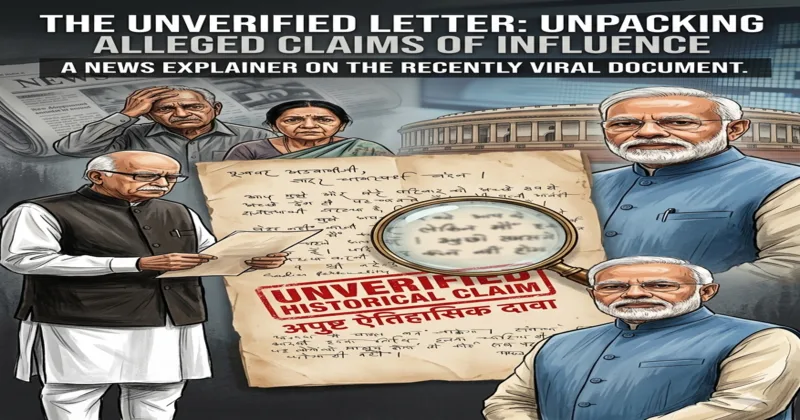
The use of old, private correspondence from Mafatlal Patel, the estranged husband of former Gujarat CM Anandiben Patel, to target Prime Minister Narendra Modi is a classic example of “Digital Propaganda” designed to mislead. These letters, which date back over a decade and primarily concern personal domestic disputes and financial requests for travel, are being recirculated by vested interests to create a false narrative of political misconduct.
By weaponising a long-settled family matter and stripping it of its original context, these social media campaigns aim to distract the public and malign the Prime Minister’s image through sensationalism rather than substantive policy critique. This desperate attempt to use private family matters for political character assassination highlights the lengths to which anti-national and opposition-driven ecosystems will go to distract the public from the nation’s developmental trajectory and the Prime Minister’s global standing.
This report exposes a coordinated smear campaign involving 20 orchestrated social media posts that weaponise an old, out-of-context letter from Mafatlal Patel to L.K. Advani to malign Prime Minister Narendra Modi.
The Desperate Recirculation of Personal Disputes by Media Figures
On February 5, 2026, Dr Vilas Kharat (@vilas1818), identifying himself as an Editor-in-Chief, leveraged his platform to recirculate a long-settled domestic grievance involving Mafatlal Patel and his estranged wife, Anandiben Patel. By framing a private marital dispute, where a husband expressed frustration over his wife’s professional dedication, as a sensationalist “rescue plea” to L.K. Advani, Kharat attempted to cast a shadow over the Prime Minister’s character. This post is a prime example of how partisan media figures weaponise personal tragedies and private letters from the past to create a “Digital Propaganda” loop, ignoring the fact that these claims have been repeatedly debunked and dismissed as baseless personal venting over the years.
The Convergence of Conspiracy Theories and Character Assassination
On March 26, 2026, a social media influencer using the handle @CryptoBudhha escalated the propaganda by blending the old 1994 letter with a laundry list of unrelated, debunked conspiracy theories. This post sought to weave a dark and predatory narrative, linking the 30-year-old personal letter to malicious “Snoopgate” allegations and even baseless international references. By posing “questions” about Anandiben Patel’s 2014 appointment as Chief Minister, the influencer attempted to delegitimise a woman’s professional political merit, suggesting that her rise was due to “control” rather than her decades of service to the BJP. This multi-layered attack highlights a clear pattern of character assassination intended to overwhelm the public with sensationalist lies.
The Tactic of Using ‘Fact-Check’ Requests to Spread Misinformation
Also, on March 26, 2026, the handle @findingoodsong employed a subtler but equally damaging tactic: “just asking questions.” By tagging other accounts to “fact-check” the validity of the Mafatlal Patel letter, the influencer ensured that the defamatory content gained fresh traction across digital feeds. This method allows propagators to circulate scandalous claims under the guise of seeking truth, thereby bypassing traditional scrutiny. By listing the Prime Minister and the Patel family as “main characters” in what they framed as a viral mystery, the post effectively served as a catalyst for the further spread of an unverified, private document, keeping the smear campaign alive in the public eye.
Pressure Tactics Aimed at Senior Statesmen to Validate Rumours
On March 22, 2026, an influencer named Deepak Dixit (@DIPAKDI32659395) joined the chorus by demanding that veteran leader L.K. Advani break his silence on the “truth” of the letter. By asking why the letter went viral and tagging the senior leader, the post sought to create an atmosphere of suspicion in which “silence” is twisted into an admission of guilt. This calculated move ignores the reality that senior leaders often do not dignify private family disputes with public responses. By framing the letter as a plea to “save a wife from Modi’s clutches,” the post relied on inflammatory language to provoke an emotional reaction among Gen Z and other social media users, regardless of the claims’ factual accuracy.
Absurd Demands for Resignation Based on Unverified Personal Allegations
On March 23, 2026, the handle @123_Rockhard pushed the narrative to its most extreme conclusion by demanding the Prime Minister’s resignation based on the recirculated letter. The influencer went as far as to level broad, baseless accusations of misconduct against women, using the old letter to L.K. Advani as a primary “evidence” for these claims. The post also attempted to sow internal discord within the BJP by suggesting that certain leaders be expelled if the claims were false. This type of aggressive rhetoric demonstrates the ultimate goal of such digital campaigns: to use a private, decade-old letter as a tool for political destabilisation and to incite public anger through unverified and defamatory character smears.
The Desperate Re-Circulation of Sensationalist Accusations
On March 26, 2026, social media influencer Ramesh Singh (@bhumiharrameshs) leveraged his platform to broadcast a reductive and defamatory one-line summary of a decades-old private matter. By stripping a 1994 letter of its historical and domestic context, Singh attempted to manufacture a scandal out of thin air, directly targeting the Prime Minister’s integrity. This “hit-and-run” digital propaganda tactic is a textbook example of how long-settled personal frustrations are being weaponised as political tools to mislead the public during an election cycle.
Orchestrated Scripting to Malign the Prime Minister’s Moral Standing
On March 23, 2026, the handle @adv_tripathi07 pushed an emotionally charged excerpt from Mafatlal Patel’s old letter, focusing on a private husband’s grievances to portray a domestic dispute as a failure of institutional character. By translating specific, raw sentiments into a public digital assault, the post reveals a calculated effort to turn a man’s historical personal despair into a modern-day weapon for political character assassination. The timing of such posts suggests a deliberate attempt to flood social media with unverified claims to overwhelm factual discourse.
Using Private Domestic Turmoil to Question Ideological Integrity
On March 23, 2026, Banafer (@niteshsngh_) amplified a detailed and dramatic portion of the decades-old letter, highlighting the husband’s personal plea to L.K. Advani regarding his family dynamics. By specifically citing the husband’s frustration with the “Sangh” (RSS), the influencer attempted to frame a private marital estrangement as a systemic moral failure within the organisation. This post utilises the raw, unfiltered emotions of a long-past domestic crisis to sow seeds of doubt among new voters, questioning the character of the Prime Minister through a lens of unverified personal venting.
The Strategic Amplification of Orchestrated Character Attacks
Also on March 23, 2026, the account @RoyaltyRana1 recirculated the same emotionally heavy excerpts of the 1994 letter, maintaining the narrative of a husband’s domestic “distress.” The identical wording and timing of this post compared to others suggest a highly coordinated digital smear campaign. By framing a private husband’s demand for his wife’s attention as a “plea for freedom” from a political leader, the post manipulates historical domestic context to cast the Prime Minister in a sinister light, ignoring the professional autonomy and success achieved by the woman leader in question.
Undermining Female Political Leadership Through Domestic Narratives
On March 26, 2026, the handle @226M91 attempted to link the private grievances in the old letter to Anandiben Patel’s subsequent professional rise as the Chief Minister of Gujarat. This post seeks to delegitimise her administrative legacy and political achievements by suggesting that her career was the result of a “capture” rather than her own capability and decades of public service. By presenting a husband’s personal “agony” over his wife’s dedication to her party as a political scandal, the post promotes a regressive narrative that undermines the agency and independent political journey of one of India’s senior-most women leaders.
Attempting to Link Private Domestic Disputes to Global Conspiracy Theories
On February 4, 2026, Rajiv Pandey (@RajivPandey__), identifying as a journalist, made a reckless attempt to validate a decades-old domestic letter by baselessly linking it to international scandals like the “Epstein Files.” By claiming that a private grievance from 1994 serves as “confirmation” for global conspiracies, the post demonstrates the extreme lengths to which digital propaganda will go. This tactic of “conspiracy stacking” is a hallmark of disinformation campaigns designed to confuse the public and create a dark, fictional persona for the Prime Minister through absurdly unrelated international rumors.
Inciting Emotional Alarm Through Sensationalist Narratives of Despair
On February 6, 2026, social media influencer Adarsh Pandey (@Adarshp23645682) intensified the smear campaign by adding sensationalist claims of extreme personal distress to the viral narrative. By alleging that the old letter contained threats of self-harm, the post sought to evoke a visceral emotional response from the audience to paint a picture of personal ruin. This type of inflammatory content ignores the private nature of the original correspondence and the fact that these issues were settled within the family years ago, instead weaponising raw personal emotion for political character assassination.
Distorting Historical Political Mentorship into Sinister Surveillance
On February 2, 2026, the handle @indian_nagrik attempted to reframe the professional political partnership between the Prime Minister and senior woman leaders into a narrative of “illegal watch” and control. By reducing a decades-old private complaint from a husband to a generalised accusation of misconduct, the post seeks to undermine the Prime Minister’s career-long commitment to empowering women in the organisation. This brand of digital propaganda relies on stripping away the historical context of political mentorship to sow doubt among younger voters who may be unfamiliar with the actual events of the 1990s.
The Strategic Amplification of Smears by Partisan Political Operatives
On February 6, 2026, Dr Satya Prakash Dubey (@SatyaPrakashAAP), associated with an opposition political party, amplified the same sensationalist narrative regarding Mafatlal Patel’s old letter. By retweeting and endorsing claims of “control” and threats of personal despair, the post reveals a clear partisan interest in keeping a long-settled family matter in the public eye. This coordinated effort to push unverified and emotionally charged content highlights how political rivals use digital mouthpieces to flood social media feeds with character smears, bypassing factual discourse in favour of sensationalism.
Simplifying Complex Private Matters to Fuel Viral Smear Cycles
On March 28, 2026, social media influencer Abhishek Maurya (@MauryaAbhishek0) contributed to the digital propaganda loop by reducing the entire 30-year-old domestic situation into a single, provocative headline. By framing a private husband’s frustration as a formal “letter against Modi,” the post intentionally ignores the correspondence’s private nature and its resolution decades ago. Such posts are designed to ensure that the defamatory narrative remains viral, using the names of senior leaders to gain traction while providing the audience with zero context or factual verification.
Exploiting Personal Distress to Construct a False Narrative of Capture
On March 23, 2026, social media influencer Aabhi Dabhade (@Aabhij7) recirculated a decades-old private grievance, framing a long-settled domestic dispute as a contemporary “rescue mission.” By highlighting claims of extreme personal distress and ultimatums from a 1994 letter, the post seeks to evoke visceral emotional alarm. This tactic of “Digital Propaganda” relies on presenting a private husband’s historical frustrations as current political reality, intentionally ignoring the fact that these matters were resolved within the family and the party decades ago.
Weaponising Unverified Foreign Sources to Malign National Leadership
On March 26, 2026, the handle @Aslam_khader amplified a highly defamatory narrative by citing unverified and biased external sources to question the Prime Minister’s character. By translating selective, emotionally charged excerpts from the old Mafatlal Patel letter and attributing them to questionable third-party narratives, the post attempts to globalise a localised domestic grievance. This method of using “source stacking” is a common tool for character assassination, aimed at damaging the Prime Minister’s reputation through sensationalist claims that have no basis in current factual discourse.
Infantilising Respected Women Leaders to Attack Political Mentorship
On March 26, 2026, the handle @AAPVed used inflammatory language to reframe a professional political partnership as a case of “clutches” and control. By reducing a senior woman leader’s dedication to her party and mentor into a narrative of victimisation, the post promotes a regressive view of women’s agency in politics. This brand of propaganda seeks to undermine the Prime Minister’s record of empowering female leadership by twisting a husband’s three-decade-old domestic frustration into a sinister tale of illegal surveillance and capture.
The Strategic Misuse of Celebratory Milestones to Revive Dead Scandals
On November 8, 2023, Alok Chikku (@AlokChikku) employed a subtle yet manipulative tactic, using the birthday of veteran leader L.K. Advani to reintroduce the old Mafatlal Patel letter into the digital ecosystem. By asking users to “tell what is in the last paragraph,” the post attempted to gamify the spread of a private, defamatory document. This calculated revival of a 30-year-old domestic letter during unrelated public events shows a persistent effort by certain digital circles to keep a dead narrative alive through constant, suggestive recirculation.
Institutionalising Misinformation Through Legal and Elite Networks
On February 6, 2026, Prashant Bhushan, a lawyer in the Supreme Court, lent his significant digital reach to the smear campaign by retweeting and endorsing a sensationalist report of the 1994 letter. By giving institutional weight to claims of “capture” and “suicidal ultimatums” from a decades-old family dispute, this endorsement highlights how elite digital networks are used to legitimise character assassination. Such actions prioritise political sensationalism over factual scrutiny, transforming a long-settled personal matter into a high-profile political talking point designed to defame the Prime Minister.
Ultimately, this orchestrated effort to revive dead narratives serves as a stark reminder of the lengths to which political detractors will go to destabilise national leadership through disinformation. By attempting to link private family matters to global conspiracy theories and undermining the professional agency of senior women leaders, these digital strikes expose their own lack of substantive policy critique. As the public becomes increasingly aware of these “hit-and-run” tactics, such attempts at character assassination are destined to fail, leaving behind only a trail of exposed biases and a desperate reliance on fabricated outrage.