For decades, Hindi cinema has served not just as a medium of entertainment but as a powerful instrument shaping cultural narratives, public perception, and collective consciousness. From the black-and-white era to modern digital filmmaking, Bollywood has consistently influenced how identities, traditions, and beliefs are perceived by millions across India and the global diaspora. With such reach comes an equally significant responsibility, one that continues to be debated in the context of representation and narrative intent.
At a time when films like Dhurandhar are being labelled as “propaganda” despite claiming to present narratives that are rooted in known realities and historical experiences, it also becomes equally important to revisit what constituted “propaganda” in the earlier decades of Hindi cinema and how certain portrayals may have been normalised over the years without similar scrutiny. This contrast has further intensified the debate around selective criticism and the evolving standards through which cinematic narratives are judged.
A growing body of discourse has, over time, pointed toward recurring patterns in cinematic storytelling, particularly in the portrayal of religious symbols, practices, and identities. Reports have flagged instances where Hindu traditions, deities, and cultural markers appear in contexts that raise questions about their depiction, while representations of other identities are perceived differently within similar narrative frameworks. These observations span across genres, filmmakers, and decades, indicating that the issue is neither recent nor isolated.
From iconic films of the 1950s and 1970s to contemporary blockbusters, specific scenes, dialogues, and character arcs have been cited as examples contributing to this ongoing debate. The discussion has gained further traction in recent years, as audiences engage more critically with content and revisit older films through the lens of present-day awareness. This shift has transformed passive viewership into active scrutiny, placing cinema under a sharper societal lens.
In this context, documenting such instances becomes essential to understanding broader narrative trends within the industry. The following compilation brings together multiple examples across timelines, highlighting how symbolism, dialogue, and character portrayal have been presented in mainstream Hindi cinema.
The detailed 25 Incidents: “Bollywood’s Propaganda Machine”: Demeaning Hindu Faith While Glorifying Muslim Identity (1957-2021), are given below.
1. Portrayal of Religious and Symbolic Elements Noted in 1983 Film ‘Coolie’
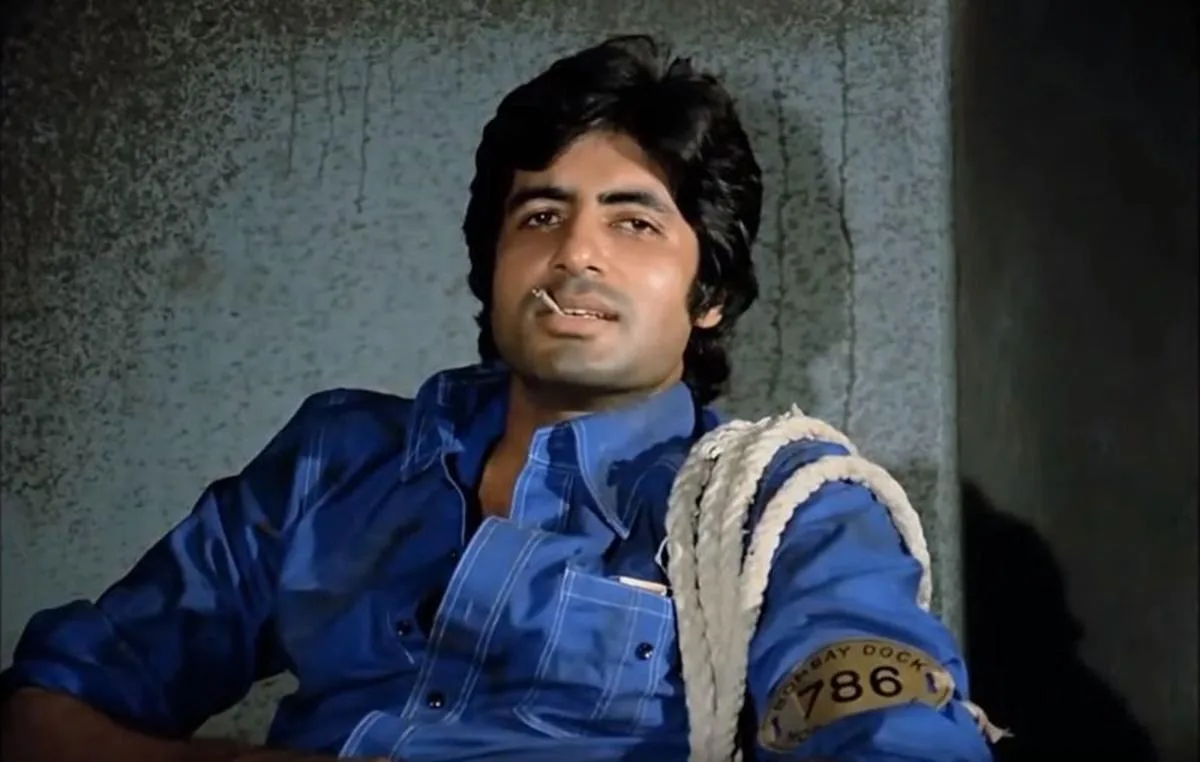
The film Coolie, released on 2 December 1983, was directed by Manmohan Desai and written and co-directed by Kader Khan. The music was composed by Laxmikant–Pyarelal, and editing was handled by Hrishikesh Mukherjee. The film featured Amitabh Bachchan in the role of Iqbal Aslam Khan and Rishi Kapoor as Sunny.
In the film, the character Iqbal, played by Amitabh Bachchan, is shown wearing a badge marked with the number 786. In one fight sequence, the character is depicted creating a hammer and sickle symbol, referring to it as a sign associated with workers.
The storyline includes a sequence in which Iqbal’s mother, played by Waheeda Rehman, is hospitalised. The character plans to undertake a Hajj pilgrimage but is unable to proceed due to a health-related issue. Subsequently, a song referencing Haj is performed, including the line “Madina wale ko mera salaam kehna.” At the end of the song, a lightning effect is shown around the mother, after which she recovers.
In the final sequence, the character pursues the antagonist Zafar, played by Kader Khan, to the top of a mosque. During this scene, the mother is shown praying to Allah. A green and red chadar is depicted covering the protagonist while the antagonist fires multiple bullets at him. The character continues to recite Quranic verses after each shot. The sequence concludes with the protagonist overpowering the antagonist, throwing him from the top, and surviving despite the gunfire.
2. Depiction of Symbolic Conflict Highlighted in 1983 Film ‘Coolie’
The film Coolie, released on 2 December 1983, was directed by Manmohan Desai, with writing and dialogues by Kader Khan. The music was composed by Laxmikant-Pyarelal, and editing was handled by Hrishikesh Mukherjee. The film featured Amitabh Bachchan in the role of Iqbal Aslam Khan and Rishi Kapoor as Sunny.
The film’s narrative includes elements described as depicting symbolic conflict. The protagonist, portrayed by Amitabh Bachchan, is shown engaging in a confrontation involving a hammer and sickle symbol. The antagonist is described as carrying a trishul during the conflict.
The content characterises these elements as part of a broader portrayal within the film.
3. Portrayal of Symbolism and Character Traits in 1975 Film ‘Deewar’
The film Deewar, released on 24 January 1975, was directed by Yash Chopra and produced by Gulshan Rai. The writing, screenplay, and dialogues were handled by Javed Akhtar and Salim Khan. The music was composed by R. D. Burman. The film starred Amitabh Bachchan as Vijay Verma, Shashi Kapoor as Ravi Verma, Parveen Babi as Anita, Nirupa Roy as Sumitra Devi, and Neetu Singh as Veera Narang.
In the film, the character Vijay, portrayed by Amitabh Bachchan, is shown wearing a badge bearing the number 786. In one sequence, when the character is shot at by individuals identified as Sawant’s men, he is depicted as being protected by a brass badge with the number 786 kept in his pocket. The character is shown kissing the badge and placing it on his eyes.
The film also portrays Vijay as an angry and atheist character. The narrative includes these elements as part of the character’s depiction and progression.
4. Portrayal of Themes and Character Depictions in 2004 Film ‘Main Hoon Na’
The film Main Hoon Na, released on 30 April 2004, was directed and written by Farah Khan. It was produced by Shah Rukh Khan, Gauri Khan, and Red Chillies Entertainment. The film starred Shah Rukh Khan as Ram, Zayed Khan as Laxman/Lucky, Sushmita Sen as Chandni, and Amrita Rao as Sanjana/Sanju.
The film includes elements described as portraying themes related to relations with Pakistan and depictions within the military. The narrative is characterised as presenting Pakistan in a positive light and depicting individuals with anti-Pakistan views as antagonistic figures.
The content further describes a portrayal in which an Indian Army officer is shown as being involved in terrorist activity. These elements are presented as part of the film’s storyline and character depiction.
5. Depiction of Historical References in 1982 Film ‘Bemisal’
The film Bemisal, released on 5 March 1982, was directed by Hrishikesh Mukherjee. The writing was handled by Sachin Bhowmick, Ashutosh Mukherjee, and D. N. Mukherjee. The film starred Amitabh Bachchan, Rakhee Gulzar, and Vinod Mehra.
In one scene, the character Dr. Sudhir Roy/Adhir Roy, portrayed by Amitabh Bachchan, is shown stating that all hill stations were discovered by the British and that Kashmir was discovered by the Mughals.
In the same scene, the character Kavita Chaturvedi (Sakhi), portrayed by Rakhee Gulzar, is shown stating that there is no comparison to the Mughals, referring to their music, paintings, and architecture.
These elements are presented as part of the dialogue and character interactions within the film.
6. Opening Narration in 2008 Film ‘Jodhaa Akbar’ Highlights Historical Reference
The film Jodhaa Akbar, released on 15 February 2008, was directed, produced, and written by Ashutosh Gowariker. It was also produced by Ronnie Screwvala, with writing contributions from Haidar Ali. The music for the film was composed by A. R. Rahman. The film starred Hrithik Roshan as Jalaluddin Mohammad Akbar and Aishwarya Rai Bachchan as Jodhaa Bai.
In the opening scene of the film, a background narration is presented stating that many people looted India for thousands of years, followed by a reference to the Mughals as having made the land their home and loved it.
This narration appears as part of the film’s introductory sequence.
7. Depiction of Religious Elements in 2015 Film ‘Bajrangi Bhaijaan’
The film Bajrangi Bhaijaan, released on 17 July 2015, was directed, produced, and written by Kabir Khan. It was also produced by Salman Khan. The film starred Salman Khan as Pawan Kumar Chaturvedi, Harshaali Malhotra as Shahida, Nawazuddin Siddiqui as Chand Nawab, and Kareena Kapoor as Rasika.
In the film, the character Pawan Kumar Chaturvedi is shown praying to Hanuman during the course of his journey. The narrative also includes a sequence in which the character visits a dargah identified as Ashmuqam Dargah in Kashmir.
Following this visit, the character is depicted as achieving success in his efforts. These elements are presented as part of the storyline and character progression within the film.
8. Depiction of Religious Imagery in 2014 Film ‘PK’
The film PK, released on 19 December 2014, was directed, written, and edited by Rajkumar Hirani. It was produced by Siddharth Roy Kapur and Vidhu Vinod Chopra. The film starred Aamir Khan as PK and Anushka Sharma as Jagat Janani (Jaggu).
In the film, the protagonist, portrayed as an alien character by Aamir Khan, is shown approaching and expressing distress in front of Hindu deity idols in relation to the loss of his locket.
In another scene, the character is depicted being chased by an individual dressed as Lord Shiva. The sequence shows the protagonist entering a public restroom to evade the pursuer. The depiction of Lord Shiva appears as part of this sequence within the film.
9. Portrayal of Locations and Themes in 2014 Film ‘Haider’
The film Haider, released on 2 October 2014, was directed, produced, and written by Vishal Bhardwaj. It was also produced by Siddharth Roy Kapur. The film starred Shahid Kapoor as Haider Meer, Tabu as Ghazala Meer, Shraddha Kapoor as Arshia Lone, and Irrfan Khan as Roohdaar.
The film includes the song “Bismil,” which is depicted as being filmed at the ruins of the Martand Sun Temple, described as an 8th-century temple built by Lalitaditya Muktapida and dedicated to Surya Dev. The content further states that the temple was demolished in the 15th century by Sikander Shah Miri.
Within the film, the temple ruins are referred to as “Shaitan Ki Gufa” (Devil’s cave). The content also describes the film as portraying themes in which Pakistan is shown in a positive light and sympathy is extended toward terrorists, along with references to secularism.
These elements are presented as part of the film’s narrative and depiction of locations and themes.
10. Depiction of Musical Preferences in 2003 Film ‘Kal Ho Naa Ho’
The film Kal Ho Naa Ho, released on 10 March 2003, was directed by Nikkhil Advani and produced by Karan Johar and Yash Johar under Dharma Productions. The film starred Shah Rukh Khan as Aman Mathur, Preity Zinta as Naina Catherine Kapur, and Saif Ali Khan as Rohit.
In one scene, the character Aman Mathur, portrayed by Shah Rukh Khan, is shown criticizing a Saraswati bhajan and pointing out perceived faults in it. In the same sequence, the character is depicted praising Sufi and qawwali music.
These elements are presented as part of the character’s dialogue and interactions within the film.
11. Narrative and Character Depictions in 1998 Film ‘Fire’
The film Fire, released on 5 November 1998, was directed, produced, and written by Deepa Mehta. It was also produced by Bobby Bedi. The film featured Shabana Azmi, Nandita Das, and Karishma Jhalani.
The narrative is described as being based on a work referred to as “Begum Jaan and Rabbo,” with character names changed in the film to Radha and Sita. The story follows two sisters-in-law living together in a household in New Delhi within a conservative family setting.
The characters are depicted as experiencing constraints within the family environment, and the storyline portrays the development of a relationship between them, through which they are shown seeking happiness and freedom.
12. Portrayal of Characters and Incident Depictions in 2021 Film ‘Sherni’
The film Sherni, released on 18 June 2021, was directed by Amit Masurkar. The film starred Vidya Balan and Vijay Raaz.
The film is described as being based on an incident involving a tigress identified as Avni. The content references real-life individuals named KM Abharna, described as a forest officer, and Ashgar Ali, described as a poacher. In the film, these are depicted as characters named Vidya Vincent and Ranjan Rajhans.
The portrayal includes depictions of forest officials, with references to their conduct and characterization within the narrative. The character corresponding to the shooter is shown as Ranjan Rajhans, while a character named Hassan Noorani is also mentioned. The content further describes portrayals of officials as being corrupt or incompetent and engaging in alcohol consumption.
Additional references include the depiction of individuals associated with religious practices and character identities within the storyline. The background of Ashgar Ali and Nawab Ali is also mentioned, including a reference to Nawab Ali’s father being associated with British hunters before independence.
These elements are presented as part of the film’s narrative and character representation.
13. Character Representation in 2007 Film ‘Chak De! India’ References Real-Life Inspiration
The film Chak De! India, released on 10 August 2007, was directed by Shimit Amin and produced by Aditya Chopra and Yash Chopra. The film starred Shah Rukh Khan as Kabir Khan.
The film’s central character, Kabir Khan, is presented as being inspired by a real-life figure identified as Mir Ranjan Negi, a former goalkeeper for the Indian national field hockey team. The content references the name Ranjan Negi in connection with the real-life coach.
Within the film, the character is depicted as Kabir Khan, and the narrative includes references to his background and experiences as portrayed in the storyline. These elements are presented as part of the film’s character representation and adaptation.
14. Character Depiction in 1985 Film ‘Ram Teri Ganga Maili’
The film Ram Teri Ganga Maili, released on 4 April 1985, was directed, produced, and written by Raj Kapoor, with production also credited to Randhir Kapoor. The film starred Rajiv Kapoor as Naren and Mandakini as Ganga.
In one scene from the film, a character identified as a pandit is depicted chanting “Om Namah Shivay” following an act of molestation involving the female protagonist.
This depiction is presented as part of the film’s narrative and character portrayal.
15. Depiction of Villain Character in 1957 Film ‘Mother India’
The film Mother India, released on 14 February 1957, was directed, produced, and written by Mehboob Khan. The film starred Nargis as Radha, Sunil Dutt as Birju, Raaj Kumar as Shammu, and Rajendra Kumar as Ramu.
In the film, the character Sukhi Lala is depicted offering prayers to Devi Mata prior to attempting to molest the female protagonist.
The depiction is presented as part of the film’s portrayal of the antagonist and narrative events.
16. Depiction of Scene in 2011 Film ‘Ready’ Involving Religious Reference
The film Ready, released on 3 June 2011, was directed by Anees Bazmee and produced by Sohail Khan. The film starred Salman Khan as Prem R. Kapoor and Asin Thottumkal as Pooja Malhotra/Sanjana Singh.
In one scene from the film, the character portrayed by Salman Khan is shown cutting the shikha, a traditional Hindu hair tuft, of another character. During this sequence, the character is depicted making a remark stating, “baal hi kaate jaa rahe hain, khatna nahi kiya jaa raha.”
This scene is presented as part of the film’s narrative and dialogue.
17. Depiction of Antagonist’s Actions in 2010 Film ‘Dabangg’
The film Dabangg, released on 10 September 2010, was directed and written by Abhinav Kashyap. It was produced by Malaika Arora and Arbaaz Khan. The film starred Salman Khan as Chulbul Pandey, Sonakshi Sinha as Rajjo, and Arbaaz Khan in a supporting role.
In the film, the antagonist Chedi Singh is depicted offering prayers to Bhagwan Hanuman before giving instructions related to the killing of Chulbul Pandey.
This sequence is presented as part of the film’s narrative and portrayal of the antagonist’s actions.
18. Depiction of Song Lyrics in 2012 Film ‘Student of the Year’
The film Student of the Year, released on 19 October 2012, was directed and produced by Karan Johar, along with Gauri Khan. The film featured Sidharth Malhotra, Alia Bhatt, Varun Dhawan, Rishi Kapoor, Ronit Roy, Ram Kapoor, Manjot Singh, and Sana Saeed.
In the film, a song sequence includes lyrics referring to a “sexy Radha body,” performed by the female lead character.
This depiction is presented as part of the film’s music and dance sequence.
19. Depiction of Religious Practice in 1998 Film ‘Kuch Kuch Hota Hai’
The film Kuch Kuch Hota Hai, released on 16 October 1998, was directed and written by Karan Johar. It was produced by Yash Johar under Dharma Productions, with choreography by Farah Khan. The film starred Shah Rukh Khan as Rahul Khanna, Kajol as Anjali Sharma, and Rani Mukerji as Tina Malhotra.
In the film, the characters Rahul Khanna and Tina Malhotra are depicted as Hindus. The narrative includes a scene in which their eight-year-old daughter, Anjali, is shown performing namaz.
This depiction is presented as part of the film’s storyline and character portrayal.
20. Dialogue and Character Portrayal in 2010 Film ‘My Name Is Khan’
The film My Name Is Khan, released on 12 February 2010, was directed, produced, and written by Karan Johar. It was also produced by Gauri Khan under Red Chillies Entertainment and Dharma Productions. The film starred Shah Rukh Khan as Rizwan Khan and Kajol as Mandira Khan.
In the film, the character Rizwan Khan, portrayed by Shah Rukh Khan, is associated with the dialogue, “My name is Khan, and I am not a terrorist.”
The narrative includes this dialogue as part of the character’s portrayal and progression within the storyline, set against the backdrop of events referenced in the content.
21. Dialogue and Thematic Depiction in 2012 Film ‘Agent Vinod’
The film Agent Vinod, released on 23 March 2012, was directed and written by Sriram Raghavan. It was produced by Saif Ali Khan. The film starred Saif Ali Khan as Agent Vinod and Kareena Kapoor Khan as Iram Parveen Bilal/Dr. Ruby.
The film includes themes described as relating to terrorism and the attribution of responsibility. The narrative is characterised as presenting elements in which Pakistan and Lashkar-e-Taiba (LeT) are depicted without direct blame, while references are made to Indian businessmen and internal networks in connection with terrorist activities.
In one scene, the character Agent Vinod is shown delivering a dialogue stating: “You explode a bomb in Delhi and the world thinks it is the work of some terrorist group like Lashkar. That is why the colonel used people like Abu, Gajan, Jimmy and Husaifa. You hoist the flag of Jihad everywhere. You earn billions by instigating war between the two countries. You and great businessmen like you. Senators, ex Prime Ministers. I have heard that whenever you people meet, something strange definitely happens somewhere in the world. Death of a President in a plane crash. Sudden civil war in a small country. Nuclear blast in New Delhi. Wow.”
These elements are presented as part of the film’s narrative and dialogue.
22. Portrayal of Characters and Narrative Elements in 2002 Film ‘Mr. and Mrs. Iyer’
The film Mr. and Mrs. Iyer, released on 19 July 2002, was directed and written by Aparna Sen. It was produced by N. Venkatesan, with writing contributions from Dulal Dey. The film starred Rahul Bose as Raja Chowdhury/Jehangir Chowdhury and Konkona Sen Sharma as Meenakshi Iyer.
The film includes depictions described as involving communal tensions during a bus journey. A character identified as a villain is shown wearing a tilak and is portrayed as a terrorist. The narrative includes scenes in which individuals identified as Hindus are depicted entering buses and killing Muslims and Jews.
The storyline further includes a Tamil Brahmin married woman who is shown saving the life of a Muslim man from rioters during the journey. The narrative depicts the development of a relationship between the two characters following this incident.
The content also describes the film as portraying Hindus as aggressors in Kashmir and notes that the film received several National Awards. These elements are presented as part of the film’s narrative and character depiction.
23. Dialogue Referencing Underworld and Religion in 2026 Film ‘O’ Romeo’
The film O’ Romeo, released on 13 February 2026, was directed by Vishal Bhardwaj and produced by Sajid Nadiadwala. The film starred Shahid Kapoor as Ustara and Tripti Dimri as Afsha.
In one scene, the character Ustara, portrayed by Shahid Kapoor, is shown delivering a dialogue stating: “Before the Babri incident, the underworld was independent of religion. There was no Hindu, no Muslim. After that, we too were divided.”
This dialogue is presented as part of the film’s narrative and character depiction.
24. Depiction of Religious Elements in Film ‘Taqdeer’
The film Taqdeer, released on 1 January 1967, was directed by Brij, with writing by Madan Joshi, Suhrid Kar, and K. K. Shukla. The film featured Mithun Chakraborty, Zeenat Aman, Hema Malini, and Shatrughan Sinha.
According to the provided content, the film includes depictions in which Hindu deities are portrayed as ineffective while a character identified as a fraudulent sadhvi is shown deceiving devotees in the name of a temple.
The content further describes a portrayal in which references to Allah Miya are presented as part of the narrative. These elements are depicted within the storyline as described.
25. Character Portrayal in 1986 Film ‘Suhagan’
The film Suhagan, released on 15 August 1986, was directed by K. Raghavendra Rao and written by Kader Khan. It was produced by M. Arjuna Raju. The film starred Jeetendra as Ramu, Sridevi as Janaki, Padmini Kolhapure as Jyoti, Raj Babbar as Murli, Pran as Jagat Prasad, Shakti Kapoor as Leela Krishna, Tanuja as Shanta.
In one scene, the character Leela Krishna, portrayed by Shakti Kapoor, is shown carrying a flute and is associated with the name “Krishna.” The character is depicted engaging in inappropriate behavior toward women in public spaces.
These elements are presented as part of the film’s narrative and character portrayal.
Taken together, these documented instances spanning from 1957 to 2021 reflect a continuity of narrative patterns that have increasingly come under public scrutiny. The recurrence of specific symbolic portrayals, character constructions, and thematic choices across decades suggests that the conversation is not limited to isolated films but extends to broader storytelling tendencies within the industry.
Cinema, by its very nature, shapes perception subtly yet powerfully. When certain representations appear repeatedly across timelines, they contribute to forming impressions that go beyond the screen. This makes the question of balance, sensitivity, and narrative responsibility central to any serious discussion on cultural representation in mainstream media.
The growing awareness among audiences indicates a shift toward more conscious consumption of content. As viewers revisit films with a more analytical lens, the demand for accountability and thoughtful portrayal continues to rise. The issue, therefore, is not merely about criticism but about encouraging a more nuanced and equitable approach to storytelling.