BENGALURU: The Karnataka government’s decision to reduce the total SSLC marks from 625 to 525 by excluding third-language Hindi scores has triggered sharp criticism from education experts, parents and opposition voices, who argue that the move creates confusion and undermines academic consistency.
The School Education Department recently announced that marks obtained in the third language—such as Hindi, Urdu, Sanskrit, Arabic, Konkani, Tulu and Marathi—will no longer be counted in the final aggregate. Instead, these subjects will be graded, while the overall result will be calculated out of 525 marks.
The announcement, made by Education Minister Madhu Bangarappa, is set to come into effect from the next academic year. While the government claims the decision will reduce academic pressure on students, critics say the timing and intent of the reform raise serious concerns.
Sudden change raises questions
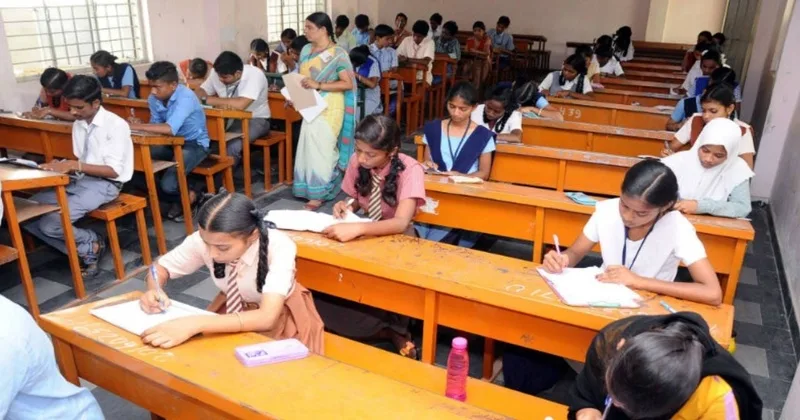
One of the primary criticisms is the timing of the decision, which comes while SSLC examinations are already underway. Many believe that introducing such a significant structural change without adequate consultation or transition planning reflects a lack of preparedness.
Educationists argue that altering the evaluation system midway sends mixed signals to students and teachers. “Consistency is critical in public examinations. Frequent changes without clarity can affect students’ confidence and long-term planning,” said a senior academician.
The decision has also reignited debates around language policy in Karnataka. While the government maintains that the three-language formula remains intact, critics argue that removing marks for the third language effectively diminishes its importance.
“This move indirectly sidelines languages like Hindi, Urdu and Sanskrit from academic evaluation. If a subject is not counted in the final score, students are less likely to take it seriously,” said an education policy analyst.
Several stakeholders fear that the grading system may dilute academic rigour, as grades do not offer the same level of differentiation as marks, especially in competitive scenarios.
Impact on students’ future
Another major concern is how the revised system will impact students’ prospects in higher education. With total marks reduced to 525, questions are being raised about how SSLC scores will be compared with previous batches or used in admissions.
Parents have expressed anxiety over the lack of clarity. “Our children compete at state and national levels. Sudden changes in marking systems can put them at a disadvantage,” said a parent from Bengaluru.
Experts also warn that excluding a subject from aggregate marks may lead to uneven focus among students, potentially affecting holistic learning.
Defending the decision, Minister Madhu Bangarappa said the reform aims to reduce stress and align with the broader framework of the three-language policy. He clarified that while the third language exam will remain compulsory, its evaluation will be based on grades rather than marks.
“The objective is not to remove the subject, but to make learning less burdensome for students,” he said, adding that further decisions regarding other classes will be taken in due course.
Critics call for a review
Despite the government’s justification, opposition leaders and education experts are demanding a review of the decision. They argue that instead of reducing marks, the focus should be on improving teaching quality, infrastructure, and learning outcomes.
“There are far more pressing issues in the education sector—teacher shortages, infrastructure gaps, and declining learning standards. Addressing these should be the priority, not cosmetic changes in marking schemes,” an opposition leader said.