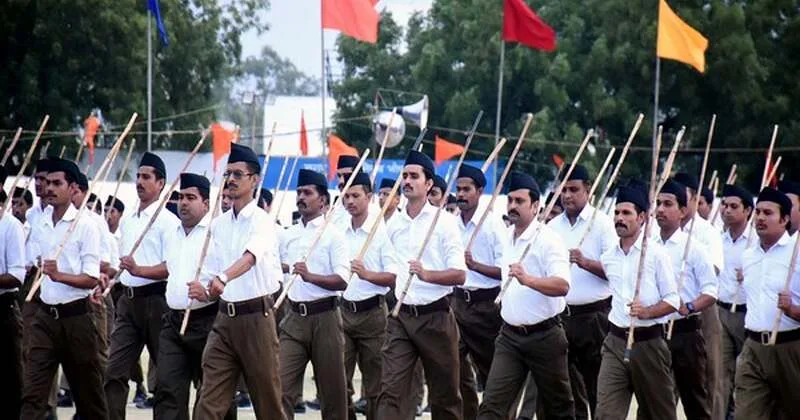
Kochi: By next October, Rashtriya Swayamsevak Sangh (RSS) shakhas will be established in all villages across Keralam, significantly expanding the organisation’s grassroots presence, Dakshin Keralam Saha Pranth Karyavah K.B. Sreekumar said at a press conference. He noted that with the culmination of the RSS centenary celebrations, Sangh activities would reach every part of the state.
At present, there are 7,000 RSS shakhas in Keralam. “By October, there will be no place without Sangh activity,” he said, emphasising the rapid growth of the organisation. According to him, both the number of shakhas and the swayamsevak strength are increasing at a substantial pace. Sreekumar was elaborating on the decisions taken at the RSS Akhil Bharatiya Pratinidhi Sabha held in Samalkha, Haryana.
Organisational expansion and structural changes
As part of the centenary initiatives, the RSS will also undertake structural reorganisation within Keralam. The current two-region system, Uthar Keralam and Dakshin Keralam, will be restructured into three Sambhags: Thiruvananthapuram, Ernakulam, and Kozhikode. This transition is expected to be completed within the next year.
Sreekumar explained that the reorganisation is aimed at improving operational efficiency and facilitating further expansion. With increasing activities and outreach, the Sangh believes that decentralised administrative units will help in better coordination and implementation of programmes. He also highlighted the global presence of the RSS, stating that Sangh-related activities are currently taking place in approximately 65 to 70 countries. This international expansion reflects the organisation’s growing influence beyond Bharat.
Social outreach and ideological initiatives
Focusing on social transformation, Sreekumar outlined five key areas that swayamsevaks and the general public should prioritise. First, he stressed the importance of protecting family values, urging that this effort should begin at the household level through family-based education to address rising concerns such as alcoholism, drug abuse, and divorce. Secondly, he emphasised the need to promote social equality, calling upon both individuals and society to actively embrace it. He also advocated for a self-reliant economic model rooted in indigenous values and self-respect. “Every family should evolve into a productive unit, encouraging entrepreneurship and economic independence,” he said.
Environmental conservation was another major focus. Sreekumar underlined that ecological responsibility is deeply embedded in Bharat’s traditional ethos. He called for water conservation, tree planting, and creating a harmonious environment for all living beings. Additionally, he stressed the importance of civic responsibility, stating that awareness must be strengthened alongside developmental progress.
Providing details of outreach efforts, Sreekumar said that RSS Swayamsevaks have reached more than 10 crore households across Bharat with their message. In Keralam alone, Swayamsevaks directly contacted 22 lakh homes, including 64,000 Muslim families and 54,000 Christian families. Around 1,500 Hindu gatherings are currently being conducted across the state.
He also highlighted various programmes organised as part of the centenary celebrations. Events marking the 150th anniversary of Vande Mataram were held, while Vivekananda Jayanti gatherings took place in 381 mandals in Dakshin Kerala on January 12. Prominent personalities such as RSS Sarkaryawah Dattatreya Hosabale, S. Gurumoorthy, Sridhar Vembu, and Dr A.S. Somnath participated in the “Blooming Bharat Vaicharik Samvad” for research scholars in Thiruvananthapuram and Ernakulam.
Sreekumar further mentioned that a slogan demonstration by RSS Kochi Swayamsevaks at Bolgatty Lake, commemorating Veluthampi Dalava’s naval commander Chembilarayan, drew national attention. A district-level cycle yatra titled “Swarasam” (Swabhiman) will be organised from the 27th to the 29th in his memory. Prantha Prachar Pramukh M. Ganesan also attended the press conference.