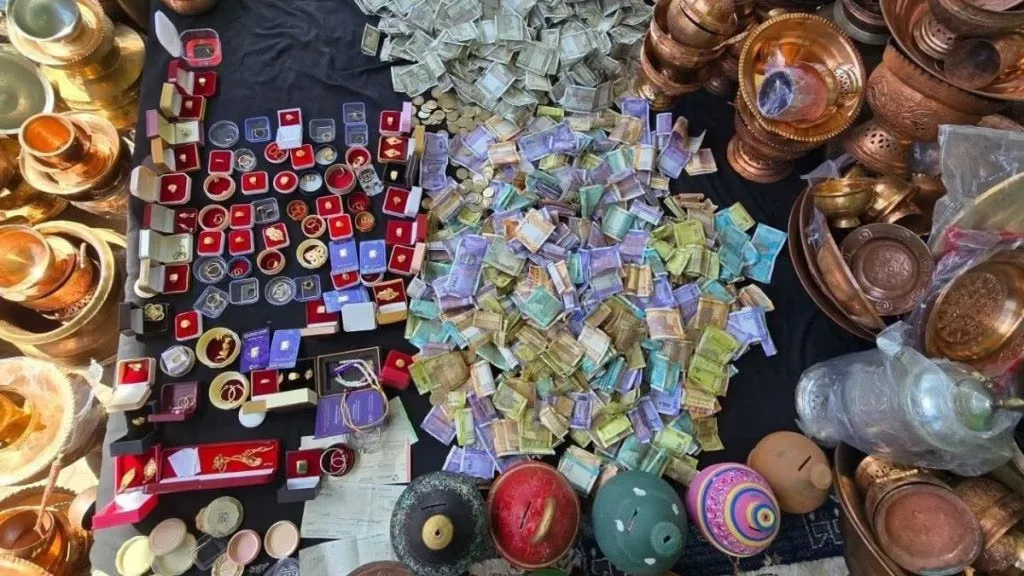
As the ongoing conflict in West Asia enters its fourth week, several regions in Kashmir, including Budgam and Baramulla, have witnessed a large-scale humanitarian campaign aimed at assisting people affected in Iran.
The initiative, largely driven by volunteers in Shia-majority areas, gained momentum soon after Eid-ul-Fitr, with residents organising door-to-door collection drives to gather relief materials.
What stands out in this campaign is the nature of contributions. Apart from monetary donations, locals have offered gold and silver jewellery, livestock, and even traditional copper utensils, reflecting a deep emotional connection to the cause.
Women, in particular, played a significant role, parting with personal jewellery and household valuables. In one poignant instance, a Kashmiri widow donated a gold memento she had preserved for 28 years in memory of her late husband.
The humanitarian effort saw participation across all age groups. Children, too, joined the initiative by donating their savings and Eid money, an act that has drawn attention for its symbolic value and compassion.
Residents described the campaign as a collective moral responsibility. A Srinagar-based participant, Aijaz Ahmad, stated that the scale of devastation in Iran had compelled ordinary citizens to step forward and offer whatever support they could.
Sharing images and videos of the donation drive, the Embassy of Iran in India publicly acknowledged the efforts of Kashmiri residents.
In a message posted on social media, the embassy said: “With hearts full of gratitude, we sincerely thank the kind people of Kashmir for standing with the people of Iran through their humanitarian support and heartfelt solidarity; this kindness will never be forgotten. Thank you, India.”
According to reports, the flow of donations began nearly a week after the Iranian Embassy shared bank account details on social media, appealing for support for those affected by the conflict.
However, the developments also raise a deeper and more uncomfortable question around the idea of the Ummah and its expression in times of crisis. If this mobilisation is being projected as humanitarian solidarity, can it truly be called universal when similar collective outrage or relief efforts are not visibly seen for other persecuted communities? If the Ummah represents a borderless bond of empathy and responsibility, should that concern not extend equally to all victims of violence, irrespective of faith? The contrast prompts a critical reflection on whether such responses are driven purely by humanitarian concern or shaped by selective solidarity.
At the same time, it raises a larger and equally uncomfortable question in the public discourse: if this mobilisation is rooted in humanitarian concern and solidarity, where were similar large-scale campaigns when Hindus were reportedly facing violence and persecution in Bangladesh?