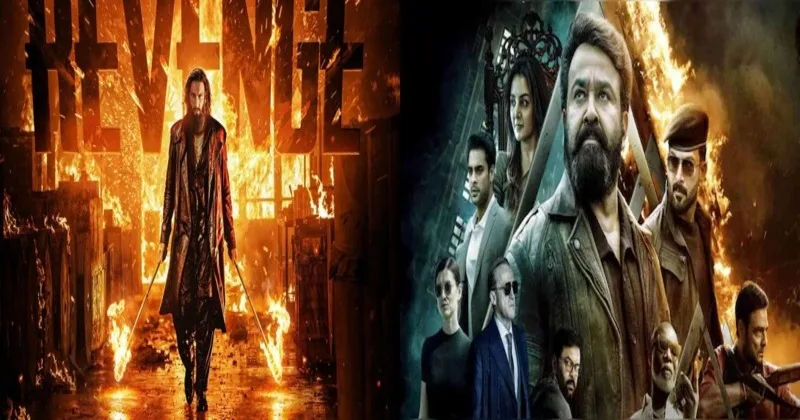
The year 2026 has witnessed a peculiar phenomenon in the Indian cultural landscape, one where the darkened halls of a cinema theatre have become the primary battleground for a fractured national identity. On one side of the aisle, we have the high-octane, nationalistic fervour of Aditya Dhar’s Dhurandhar franchise, led by the charismatic Ranveer Singh. On the other, we have the sprawling, dark political odyssey of L2: Empuraan, directed by Prithviraj Sukumaran and starring the legendary Mohanlal.
While both films have shattered box office records, the intellectual response to them has been anything but uniform. The discourse surrounding these two cinematic giants has exposed a deep-seated ideological hypocrisy that has long been simmering under the surface of Indian film criticism. It is a tale of two “propagandas”, one labelled a dangerous tool of the state and the other hailed as a courageous beacon of freedom of expression.
The Dhurandhar phenomenon and the echo chamber of “propaganda”
The arrival of Dhurandhar 1 in late 2025, followed closely by its high-octane sequel in early 2026, acted as a definitive litmus test for the intellectual honesty of Bharat’s film critics and the self-styled liberal intelligentsia. Almost immediately upon release, a coordinated wave of “propaganda” allegations was unleashed, transforming film reviews into political manifestos. Leading the charge was digital influencer Dhruv Rathee, who used his massive platform to claim that Aditya Dhar’s work was a calculated “brainwashing” tool designed to serve a political master rather than the craft of cinema.
Rathee’s critique went beyond the narrative, actively discouraging his audience from engaging with what he termed “state-sponsored fiction”, a label he curiously never applies to films that align with his own ideological leanings. This sentiment was echoed by critics like Sucharita Tyagi and Rahul Desai, who dissected the film not for its technical merit or Ranveer Singh’s intense performance, but for its perceived “nationalist agenda”, suggesting that any portrayal of Bharat’s security agencies as competent was inherently suspicious and “nefarious”.
The backlash extended deep into mainstream film journalism, where the “crying foul” became a badge of honour. Anupama Chopra, writing for The Hollywood Reporter India, published a review describing the film’s patriotic fervour as “unpalatable” to a modern, global audience. By focusing almost exclusively on the “anti-Pakistan” tone, these critics effectively tried to gatekeep the types of stories allowed to be told in Bharat.
They argued that the depiction of real-world events, such as the current administration’s strategic manoeuvres and the relentless pursuit of national security, was an attempt to manipulate the masses. Even social media personalities like RJ Sayema joined the fray, using sarcasm to devalue the film’s massive box-office success as a symptom of a “regressive” society. For this echo chamber, Dhurandhar was not viewed as a cinematic achievement in the espionage genre; it was treated as a threat that needed to be neutralised through relentless labelling and public shaming of the actors involved.
However, the irony reaches a staggering peak when one examines the same group’s fervent defence of L2: Empuraan. When Prithviraj Sukumaran’s film was accused of distorting history or spreading dangerous misinformation regarding the Mullaperiyar Dam, these very critics suddenly rediscovered their unwavering commitment to “artistic freedom”. They argued that a filmmaker has no obligation to be factually accurate if the story serves a “larger truth” or critiques the establishment.
When nationalist groups pointed out the blatant vilification of institutions like the NIA in Empuraan, voices like those of Vidhupriya and other columnists in the liberal media dismissed these concerns as “fascist overreach.” This selective application of the “propaganda” label suggests that for these critics, a film is only “dangerous” when it celebrates the strength and sovereignty of Bharat. If a movie critiques the nation’s foundations or institutions, no matter how inaccurately or technically flawed it may be, it is shielded as a “daring” and “essential” work of art.
This 2026 cinematic schism has proven that for the “libertalls,” the term propaganda is simply a weapon used against narratives they cannot control. The hypocrisy is laid bare in the silence that greets Empuraan’s factual errors, compared with the microscopic scrutiny applied to every frame of Dhurandhar. Actors who usually speak at length about “speaking truth to power” were conspicuously quiet when Empuraan was criticised for its potential to incite interstate tensions, yet they were the first to sign petitions against Aditya Dhar’s franchise. Until these critics can apply the same standard of “sensitivity” and “fact-checking” to every film regardless of its political leaning, their “crying foul” will remain nothing more than the background noise of an elite class struggling to maintain its relevance in a changing Bharat.
The Mullaperiyar myth and engineering fear for a narrative
Perhaps the most glaring example of this double standard can be found in the technical and factual liberties taken by L2: Empuraan, which were largely ignored or even celebrated by its supporters. One of the central plot points of the film involves a transparent stand-in for the real-life Mullaperiyar Dam. The movie weaves a terrifying narrative about a conspiracy to destroy the dam, complete with dialogues that suggest a historical context often used to stoke regionalist fears.
In reality, the legal and historical nuances of such critical infrastructure are far more complex and have been the subject of decades of judicial scrutiny and safety audits. The film’s assertion that a specific series of events could lead to the mass destruction of Kerala was seen by many as dangerous fear-mongering and a gross misrepresentation of hydraulic engineering and the Supreme Court’s findings on the matter.
Despite these significant technical faults and the potential to incite interstate tensions, the liberal ecosystem remained remarkably quiet. There were no calls for “accuracy” or “responsible filmmaking”. Instead, the narrative was that the director was using a metaphor to discuss the “vulnerability of the common man”. It is fascinating to note that when Dhurandhar depicts the complexities of cross-border terrorism, it is scrutinised for every minor historical detail, yet when Empuraan distorts the history and safety profile of a critical piece of infrastructure to suit a “dam-burst” thriller narrative, it is lauded for its “daring vision”. This discrepancy highlights a growing trend where factual accuracy is used as a weapon against films with a nationalist bent, while being treated as an optional accessory for films with a “progressive” or anti-establishment veneer.
The demonisation of national institutions and selective realism
The hypocrisy extends even further into the portrayal of India’s central investigative agencies. In Empuraan, there is a significant sub-plot involving the National Investigation Agency(NIA) and its handling of cases under the Prevention of Money Laundering Act(PMLA). The film portrays these institutions not as independent bodies seeking justice, but as the personal hit-squads of a political high command.
While cinema has every right to critique the state, the specific portrayal of NIA officers as mere caricatures of villains, completely divorced from the procedural realities of PMLA cases, was accepted without a murmur by the very critics who demanded “realism” from Aditya Dhar. They argued that Empuraan was exposing the “weaponisation of agencies”, a popular political talking point for the opposition. By doing so, they essentially admitted that they value cinema more for its alignment with their political grievances than for its adherence to factual or technical truth.
This divide has created a strange environment where actors and directors are judged not by their craft, but by their perceived proximity to a political pole. Actors who appeared in Dhurandhar were labelled as “siding with power” by a section of the industry, while those in Empuraan were hailed as “brave voices”. The reality, of course, is that both films are commercial products designed to entertain and evoke emotion. They both utilise the “larger-than-life” tropes of Indian cinema to convey their stories. If Dhurandhar is propaganda because it portrays the state as a protector, then Empuraan is equally propaganda for portraying the state as a predator. The refusal of critics to acknowledge this symmetry is perhaps the greatest failure of contemporary film journalism in Bharat.
The death of objective criticism and the future of artistic freedom
The “crying foul” over Dhurandhar also overlooks the sheer technical brilliance and the massive public mandate the film received. When the sequel crossed massive box office milestones, it wasn’t just because of a political wave; it was because the film delivered a cinematic experience that resonated with the pulse of the nation. People were drawn to the intense performance and the high-stakes espionage that felt grounded yet spectacular. Yet, instead of analysing why the film connected so deeply with the masses, many critics chose to belittle the audience as “misguided”. In contrast, when Empuraan faced backlash, the narrative was that the audience must be “educated” to appreciate complex art. It is a classic case of intellectual elitism: when the people like what the critic likes, they are enlightened; when they like what the critic dislikes, they are victims of propaganda.
Ultimately, the controversy surrounding Dhurandhar and Empuraan is not really about cinema; it is about who gets to tell the story of Bharat. The critics and actors who cry foul are not doing so because they hate propaganda; they are doing so because they have lost the monopoly on it. For decades, a specific ideological leaning was the default setting for “intellectual” Indian cinema. Any deviation from that was treated as an aberration or “low-brow”. Now, as filmmakers like Aditya Dhar find massive success by tapping into a different set of cultural and nationalistic sensibilities, the old guard is struggling to maintain its relevance. They use the word “propaganda” as a shield to hide their own bias and a sword to attack those who dare to offer an alternative narrative.
As we move further into 2026, it is clear that the standard for what constitutes “fair criticism” has been permanently lowered. If we are to have a healthy cinematic culture, we must demand that the same yardstick be applied to all films. If technical faults and factual distortions in a film about national security are grounds for dismissal, then the same must hold for a film about dam failures and central agencies. If a film that praises the government is a “threat”, then a film that paints a distorted, villainous picture of national institutions must be scrutinised with the same intensity.
Until the critics and actors who “cry foul” can look at both Dhurandhar and Empuraan with the same objective eye, their words will continue to be seen as nothing more than the echoes of a selective and hypocritical outrage. The audience has already made its choice at the box office; it is high time the critics caught up with the reality of a modern, multi-vocal Bharat.