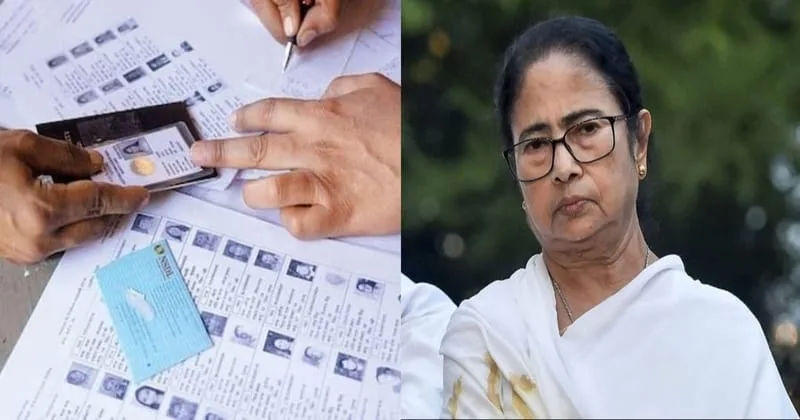
Kolkata: The latest candidate list released by Mamata Banerjee-led All India Trinamool Congress (TMC) has intensified political tensions in West Bengal, with concerns being raised about a deepening crisis of credibility within the ruling party. As multiple nominees face serious allegations or past legal scrutiny, questions are being raised about whether electoral strategy is being placed above ethical governance.
Key highlights of TMC candidate list:
👉🏻Paresh Adhikari, who is involved in the SSC scam, got the ticket.
👉🏻Jyotipriyo Mallick, who is involved in the ration scam, got the ticket.
👉🏻Daughter of ration distribution scamster Shankar Adhya got the ticket.
👉🏻Ritabrata Banerjee, who…— BJP West Bengal (@BJP4Bengal) March 18, 2026
A closer look at the list reveals a pattern that the opposition describes as deeply troubling. Several candidates have been associated with high-profile controversies that have dominated political discourse in recent years.
Key Names Drawing Criticism
-Paresh Adhikari, who is alleged to be involved in the SSC scam, has been given a ticket.
-Jyotipriyo Mallick, linked by critics to the ration scam, has been nominated.
-The daughter of Shankar Adhya, accused in ration distribution irregularities, has been fielded.
-Ritabrata Banerjee, who has faced allegations in a sexual assault case, has received a ticket.
-Akhil Giri, criticised for remarks against President Droupadi Murmu, has been included.
-Madan Mitra, who has previously been jailed, has been nominated.
-Kunal Ghosh, who has also faced imprisonment in past cases, is on the list.
-Sokat Molla, criticised by opponents in connection with law-and-order concerns, has been given a ticket.
-Jahangir Khan, accused by rivals of involvement in smuggling and electoral malpractice, has been nominated.
-Firhad Hakim, often criticised for controversial statements, is on the list.
-Trinankur Bhattacharya, described by critics as linked to alleged corruption in colleges, has been fielded.
-Narayan Goswami, accused by opposition figures of involvement in illegal cattle trade, has been nominated.
-Arup Biswas, criticised over sports and film sector governance, has been included.
-Tirthankar, son of Panihati MLA Nirmal Ghosh, has been given a ticket, raising nepotism concerns.
-Udayan Guha, often accused of intimidation by rivals, has been nominated.
-Moloy Ghatak, linked by critics to coal-related irregularities, is on the list.
-Siddiqullah Chowdhury, known for controversial statements, has been fielded.
-Chandranath Sinha, accused in the teacher recruitment controversy, has been given a ticket.
-Goutam Deb, who has faced corruption allegations within his party, has been nominated.
-Subodh Adhikary, linked to a chit fund case, is on the list.
-Rathin Ghosh, associated with alleged civic recruitment irregularities, has been included.
-Sujit Bose, also linked to similar allegations, has been given a ticket.
Beyond individual controversies, the candidate list has also revived allegations of patronage politics. Proximity to power and loyalty to the leadership appear to outweigh considerations of public image or administrative integrity. The inclusion of individuals linked to influential networks or political families has strengthened the perception that internal power structures within the TMC are becoming increasingly entrenched.
For Mamata Banerjee, the controversy presents a significant political challenge, with growing questions around accountability and internal discipline within the party. She faces criticism for what opponents describe as selective silence and inconsistent action against tainted figures within her own ranks.
The Bharatiya Janata Party (BJP) has hit out at the TMC over the issue, framing the upcoming elections as a referendum on corruption and governance. While many of the allegations cited by opponents remain under investigation or have not resulted in convictions, the political impact of such controversies cannot be dismissed.
The All India Trinamool Congress candidate list has once again brought the issue of political accountability to the forefront in West Bengal. It reflects a growing normalisation of controversy within the corridors of power, while also appearing as a calculated risk aimed at preserving electoral strength.