In today’s global landscape, self-reliance has emerged as the bedrock of any nation’s strategic autonomy, national security and foreign policy independence. Particularly for a nation like India, which is racing ahead at a rapid pace of development, the question of self-reliance is not limited merely to boosting production or reducing imports. Its true essence lies in minimizing external dependencies and managing national interests in a balanced manner amidst the competition among major global powers.
The international pressures that periodically surface regarding India’s oil imports clearly illustrate how economic resources and energy supplies can also be wielded as diplomatic weapons in the realm of global politics. When oil supplies are linked to bilateral trade terms, or when a nation’s energy trade is curtailed through the imposition of sanctions-such actions cease to be merely economic decisions; rather, they come to influence the foreign policies and strategic choices of nations.
Viewed from a certain perspective, this situation holds particular significance for Bharat, given that a substantial portion of its energy requirements is dependent on imports. Such circumstances serve as a reminder that the true essence of self-reliance is not confined solely to boosting domestic production; it also entails recognizing the pressures stemming from external dependencies and managing them with prudence.
A review of independent India’s developmental journey clearly reveals that the nation embarked upon its path of economic and political progress while grappling with several significant external dependencies. Four sectors, in particular, stand out in this regard: food, foreign exchange, defense equipment, and energy. The crises that periodically emerged within these four sectors impressed upon India’s policymakers the realization that, if a nation is to preserve its autonomy in policymaking, it must necessarily cultivate indigenous capabilities in these fundamental domains.
In this context, it is pertinent to note that the foreign exchange crisis of 1957–58 constituted the first major economic shock for independent India. At that time, a surge in imports coupled with relatively low export earnings led to a rapid depletion of foreign exchange reserves. Consequently, India was compelled to impose restrictions on imports and seek assistance from international financial institutions. This crisis drove home to policymakers the lesson that if a country’s economic structure becomes excessively reliant on external resources, it renders itself vulnerable to external economic pressures.
A few years later, in 1962, the war with China exposed a significant weakness in India’s defense infrastructure. At that time, it became evident that India was heavily dependent on foreign nations for defense equipment and military technology. This experience prompted the country to realize that developing ‘indigenous capability’ in defense production was imperative for national security.
Similarly, the severe drought of 1965–67 plunged India’s food security into crisis. During that period, the country was compelled to import food grains on a massive scale to meet the needs of its population. This situation was extremely challenging for India, as for any nation, external dependence regarding a fundamental necessity like ‘food’ can undermine its sovereignty. It was during this era that India took decisive steps toward the Green Revolution-driven by comprehensive reforms in the agricultural sector and the adoption of scientific techniques; which ultimately steered the country toward self-reliance in food grain production.
Similar challenges emerged in the energy sector as well. During the Gulf War of 1990, oil prices in the international market witnessed a sudden surge. Since India fulfills a substantial portion of its energy requirements through oil imports, this price hike had a direct impact on the country’s economy. Consequently, a severe balance-of-payments crisis ensued, compelling India to undertake major economic reforms. This experience underscored the fact that external dependence on strategic resources, such as energy-can jeopardize the economic stability of any nation.
It is also important to understand here that, within Indian thought, the concepts of ‘Swadeshi’ and ‘Self-reliance’ have existed from the very beginning. Even in ancient Indian political philosophy, the independence of resources was regarded as the very foundation of state power. In the ‘Arthashastra’, the great patriot Acharya ‘Kautilya’ linked the prosperity and security of a state directly to its economic resources and productive capacity. According to him, the stability of any state hinges upon how effectively it manages its resources and to what extent it can safeguard itself from the influence of external powers.
In modern India, this concept was most effectively articulated by figures such as Lala Lajpat Rai, Bipin Chandra Pal, Bal Gangadhar Tilak, Pt. Madan Mohan Malaviya, and Makhanlal Chaturvedi- most notably, by Mahatma Gandhi. In his renowned book, “Hind Swaraj”, Gandhi presented the concept of Swadeshi as a principle of social and political liberty- one that transcended the scope of mere economic policy. In his words, “Swadeshi implies utilizing the resources and labor available within one’s immediate surroundings to fulfill one’s own needs.” For Gandhi, the objective of Swadeshi was not merely confined to the boycott of foreign goods; rather, it aimed at establishing a system wherein the economic structure of society could remain free from the control of external forces.
Similarly, in his renowned work ‘Poverty and Un-British Rule in India’, Dadabhai Naoroji argued that “a primary cause of India’s poverty was the economic dependence engendered by colonial rule.” According to him, “when external powers gain control over a country’s resources and commercial activities, that country’s economic progress is stifled.” It must certainly be acknowledged that this concept remains just as pertinent today, for even in the modern global economy, economic dependence frequently serves as a conduit for political pressure. Furthermore, we observe that thinkers such as Pt. Deendayal Upadhyaya, Dattopant Thengadi, and Nanaji Deshmukh have presented this perspective to Indian society in a highly pragmatic manner.
Indeed, in the contemporary context, the challenge of energy security facing India assumes particular significance within this very framework. Bharat fulfills the majority of its energy requirements through oil imports. International politics has frequently witnessed instances where energy trade has been utilized as an instrument of diplomatic leverage. On several occasions, the United States-through the imposition of sanctions-has exerted pressure on nations importing oil from countries like Iran; consequently, India, too, has been compelled to exercise caution in its decisions regarding energy imports.
Such circumstances unequivocally demonstrate that energy dependence is not merely an economic issue; it is inextricably linked to foreign policy and strategic autonomy. Hence, in today’s world, self-reliance entails cultivating indigenous capabilities while simultaneously balancing external dependencies in such a manner that no external power can impinge upon India’s freedom to formulate its own policies.
In his book “India 2020”, former President Dr. A.P.J. Abdul Kalam wrote: “If India aspires to become a developed nation, it must achieve self-reliance in critical sectors such as energy, technology and defense.” According to him, “without energy self-reliance, the long-term development strategy of any nation remains incomplete”. It is for this very reason that India is currently making rapid investments in sectors such as renewable energy, solar power, biofuels and electric vehicles.
Ultimately, it can be asserted that India’s developmental journey offers us a crucial lesson; the foundation of true self-reliance lies in the balanced management of indigenous capabilities and external dependencies regarding economic resources. Historical crises in sectors such as food, foreign exchange, defense equipment and energy have demonstrated that if a nation becomes excessively dependent on external powers for its fundamental necessities, its freedom in policy-making may be compromised.
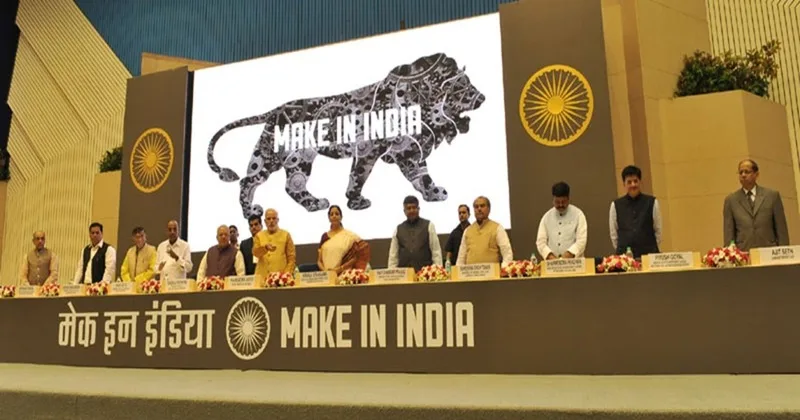
Therefore, in the current global landscape, self-reliance signifies building-through indigenous production, technological innovation, and multilateral diplomacy-the kind of economic and strategic capacity that enables India to safeguard its national interests even amidst global power rivalries. This is the path that appears poised to establish India as an independent and influential power in world politics; it is commendable that the current PM Modi-led central government is pursuing precisely this course. It is within this approach that India’s long-term interests truly lie.