
From Congress LPG shortages to reliable supply under Modi
June 28, 2026
  • Read Ecopy
  • Circulation
  • Advertise
  • Careers
  • About Us
  • Contact Us
Android AppiPhone AppArattai
Organiser
  • ‌
  • Bharat
    • Assam
    • Bihar
    • Chhattisgarh
    • Jharkhand
    • Maharashtra
    • View All States
  • World
    • Asia
    • Europe
    • North America
    • South America
    • Africa
    • Australia
  • Editorial
  • International
  • Opinion
  • RSS @ 100
  • More
    • Op Sindoor
    • Analysis
    • Sports
    • Defence
    • Politics
    • Business
    • Economy
    • Culture
    • Special Report
    • Sci & Tech
    • Entertainment
    • G20
    • Azadi Ka Amrit Mahotsav
    • Vocal4Local
    • Web Stories
    • Education
    • Employment
    • Books
    • Interviews
    • Travel
    • Law
    • Health
    • Obituary
  • Subscribe
    • Subscribe Print Edition
    • Subscribe Ecopy
    • Read Ecopy
  • ‌
  • Bharat
    • Assam
    • Bihar
    • Chhattisgarh
    • Jharkhand
    • Maharashtra
    • View All States
  • World
    • Asia
    • Europe
    • North America
    • South America
    • Africa
    • Australia
  • Editorial
  • International
  • Opinion
  • RSS @ 100
  • More
    • Op Sindoor
    • Analysis
    • Sports
    • Defence
    • Politics
    • Business
    • Economy
    • Culture
    • Special Report
    • Sci & Tech
    • Entertainment
    • G20
    • Azadi Ka Amrit Mahotsav
    • Vocal4Local
    • Web Stories
    • Education
    • Employment
    • Books
    • Interviews
    • Travel
    • Law
    • Health
    • Obituary
  • Subscribe
    • Subscribe Print Edition
    • Subscribe Ecopy
    • Read Ecopy
Organiser
  • Home
  • Bharat
  • World
  • Operation Sindoor
  • Editorial
  • Analysis
  • Opinion
  • Culture
  • Defence
  • International Edition
  • RSS @ 100
  • Magazine
  • Read Ecopy
Home Bharat

India’s LPG Story! From Congress-Era Cooking Gas Shortages to Stable Supply Under PM Modi Even Amid Global Crisis

Around 2010, during the Congress-led government, Indians often waited weeks for LPG cylinders despite a relatively stable global energy environment and no major supply disruptions. Today, even amid wars, shipping disruptions, and global energy tensions, the Modi government has managed to maintain a stable LPG supply, ensuring households continue to receive cooking gas without widespread shortages

Nandini NairNandini Nair
Mar 11, 2026, 03:00 pm IST
in Bharat, World
Follow on Google News
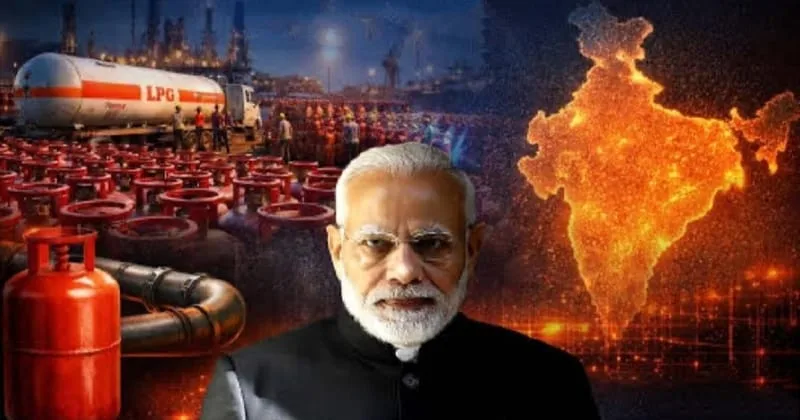
Representative image

Representative image

FacebookTwitterWhatsAppTelegramEmail

New Delhi: Around 2010, getting a household LPG cylinder in India was often a frustrating process. Under the Congress-led government at the time, consumers across several cities reported waiting 15 to 30 days after booking a cylinder. Delivery backlogs were common, and complaints of shortages regularly appeared in local news reports, highlighting deep inefficiencies in the LPG distribution system.

In 2010, there was no global war, no supply shock — yet Indians waited 15–30 days for LPG cylinders. Shortages, delivery backlogs and black-marketing were reported across several cities.

Today the world faces wars, Red Sea disruptions, and West Asia tensions that threaten global… pic.twitter.com/KR0cB53G20

— DeepDownAnalysis (@deepdownanlyz) March 10, 2026

When There Was No Global Crisis — Yet Cylinders Were Scarce

What made the situation particularly striking was that the global energy environment was relatively stable. There were no major wars disrupting oil routes, no large-scale shipping blockades, and no widespread supply shocks affecting LPG markets. Despite these favourable global conditions, the domestic LPG supply chain struggled to meet the needs of ordinary households.

The Congress-era subsidy system was widely criticised for poor oversight and weak monitoring mechanisms. Subsidised LPG cylinders meant for households were frequently diverted to commercial establishments, where they could be sold at significantly higher prices. This diversion created artificial shortages in the domestic market.

Even without any global energy crisis, the country faced recurring shortages and delivery delays. The combination of subsidy leakages, weak administrative control, and lack of transparency created an inefficient and fragile distribution network where ordinary families often struggled to receive LPG cylinders on time.

A Very Different Global Situation Today

Fast forward to the present decade, and the global energy environment looks far more volatile. Conflicts in West Asia, instability in major energy-producing regions, and disruptions in shipping routes such as the Red Sea have raised concerns about the security of global fuel supply chains. These developments have periodically affected oil and gas markets worldwide.

Under such circumstances, countries dependent on energy imports would normally expect supply stress. India, one of the world’s largest LPG consumers, imports a substantial share of its cooking gas. Yet widespread household LPG shortages have largely not reappeared.

Millions of Indian families continue to book and receive cylinders without the long waiting periods that once defined the system.

Rebuilding the LPG Distribution System

The change did not happen automatically. Over the past decade, several structural reforms were introduced to fix long-standing weaknesses in the LPG ecosystem.

One of the most important steps was the introduction of the PAHAL Direct Benefit Transfer (DBT) system. Earlier, LPG subsidies were embedded directly in the cylinder price. This made it easier for fake connections and diversion networks to exploit the subsidy.

Under the DBT system, consumers pay the market price for cylinders while the subsidy amount is transferred directly to their bank accounts. This significantly reduced incentives for diversion and helped eliminate millions of duplicate connections.

Another major initiative was the Pradhan Mantri Ujjwala Yojana, which expanded LPG access to poorer households. More than nine crore families have received LPG connections through this scheme, bringing millions of rural homes into the formal energy network.

While access expanded, infrastructure was also strengthened. The number of LPG bottling plants increased, and distribution networks were expanded to reach smaller towns and rural areas. More distributors were appointed to improve last-mile delivery and reduce waiting times.

Technology and Transparency

Digital technology has also transformed the LPG booking process. Consumers can now book cylinders through mobile apps, online portals, SMS services, and automated call systems. Many platforms also allow customers to track delivery status, making the process more transparent. These digital systems help oil marketing companies monitor the movement of cylinders across the supply chain, reducing opportunities for black-market and diversion.

Also Read: From Kaliachak to Ram Navami Clashes in West Bengal: A decade of communal violence under Mamata Banerjee’s rule

India has also worked to diversify its LPG import sources. Stronger energy partnerships with multiple supplier nations help ensure that supply disruptions in one region do not severely affect domestic availability. In addition, improvements in logistics, storage capacity, and supply planning have strengthened the system’s resilience against global shocks.

The contrast between the two periods highlights how much the LPG ecosystem has evolved. In 2010, even without global disruptions, households often faced shortages due to leakages, weak monitoring, and inefficient distribution. The system itself was fragile.

Today, despite a far more uncertain global energy environment, the supply network has proven more stable. Millions of households receive cooking gas with far fewer delays.

The transformation demonstrates how policy reform, infrastructure expansion, digital governance, and improved supply management can reshape a critical public service.

India’s LPG story shows the difference between a fragile system vulnerable to inefficiency and a resilient one capable of functioning even during global turbulence.

The contrast between the two periods highlights how much the LPG ecosystem has evolved. In 2010, under the Congress-led government, even without global disruptions, households often faced shortages due to leakages, weak monitoring, and inefficient distribution. The system itself was fragile.

Today, under the Modi government, despite a far more uncertain global energy environment, the supply network has proven more stable. Millions of households receive cooking gas with far fewer delays.

The transformation demonstrates how policy reform, infrastructure expansion, digital governance, and improved supply management can reshape a critical public service. India’s LPG story shows the difference between the fragile system seen during the Congress era and a more resilient one that continues to function even during global turbulence.


 

Topics: Cooking gas subsidy reformsIndia energy security policyDigital LPG booking systemPradhan Mantri Ujjwala YojanaLPG reformsLPG distribution system IndiaPAHAL DBT schemeLPG supply chain India
Nandini Nair
Nandini Nair
Nandini Nair is a Subeditor-cum-Content Manager at Organiser Digital with more than 3.5 years of experience covering international, national, cultural and current affairs. Also tracks and develops impactful stories emerging from social media discourse, delivering engaging digital reporting [Read more]
ShareTweetSendShareSend
✮ Subscribe Organiser YouTube Channel. ✮
✮ Join Organiser's WhatsApp channel for Nationalist views beyond the news. ✮
Previous News

J&K: Nearly 90 per cent rainfall deficit raises concerns over dip in water level and decline in tourism in the state

Next News

Assam Elections: Battle in Jalukbari constituency; CM Sarma’s development & true commitments render him unchallengeable

Related News

Happy Tribal Women

The true tribal nari shakti vandan in MODI era

Prime Minister Narendra Modi

Ujjwala Gas Subsidy: Indian Government fuels progress, extends subsidy till March 25

Prime Minister Narendra Modi at Mera Manjhi's house (X)

“We were not aware that God would arrive like this,” Ujjwala Yojana beneficiary delighted after making tea for PM Modi

Union Minister Anurag Thakur

Union Cabinet raises LPG subsidy for Ujjawala beneficiaries to Rs 300 per cylinder

Union Information and Broadcasting Minister Anurag Thakur

PM Ujjwala Scheme: Cabinet approves additional 75 lakh LPG connections

9 Years of Modi Government: Serving the poor, honouring the marginalised

Load More

Latest News

Muharram Procession Targeted? Pune businessman Faiyaz Premji held with thousands of poison capsules

Muharram mass poisoning plot in Mumbai foiled; Faiyaz Nisar arrested with 14,900 rat poison capsules

Suicide bomber detonates bomb at Rangers HQ in Karachi; At least 9 people reportedly killed

Karachi Blasts: Jamaat Ul Ahrar – splinter group of TTP claims responsibility; 9 killed including 6 Sindh Rangers

A representative image generated using AI

Exclusive | ‘He is only a Muslim’: Inside Madras HC judgment striking down Backward Class Muslim status for converts

St Peter & Paul Sea Foods Exports

Tiruvallur Ammonia Gas Leak: Death toll rises to 15; BJP questions delay in action, seeks Rs 25 lakh compensation

The Dark Days of Emergency: How despotic rule censored iconic ‘Sholay’ climax to serve political power

ISRO successfully tests next-gen semi-cryogenic rocket engine; Key milestone as India moves closer to Gaganyan mission

Europe Boils: Heatwave kills 100+ sparking public health emergency; Exposes the dark side of western model of growth

ANCHOR was released during the 3rd BRICS Neuroscience Symposium 2026

IIT Madras unveil ‘ANCHOR,’ the world’s most detailed 3D atlas of human brainstem

MC Sreedhara Varma Raja, hereditary trustee of Shree Tirumandhamkunnu Bhagavati Temple in Perinthalmanna, Malappuram

Keralam: Hereditary trustee takes over Tirumandhamkunnu temple after Devaswom board defies HC verdict

Karnataka sprinter Unnathi Aiyappa

Karnataka sprinter Unnathi Aiyappa eyes Asian Games medal after qualifying in 200m

Load More
  • Privacy
  • Terms
  • Cookie Policy
  • Refund and Cancellation
  • Delivery and Shipping

© Bharat Prakashan (Delhi) Limited.
Tech-enabled by Ananthapuri Technologies

  • Home
  • Search Organiser
  • Bharat
    • Assam
    • Bihar
    • Chhattisgarh
    • Jharkhand
    • Maharashtra
    • View All States
  • World
    • Asia
    • Africa
    • North America
    • South America
    • Europe
    • Australia
  • Editorial
  • Operation Sindoor
  • Opinion
  • Analysis
  • Defence
  • Culture
  • Sports
  • Business
  • RSS @ 100
  • Entertainment
  • More ..
    • Sci & Tech
    • Vocal4Local
    • Special Report
    • Education
    • Employment
    • Books
    • Interviews
    • Travel
    • Health
    • Politics
    • Law
    • Economy
    • Obituary
  • Subscribe Magazine
  • Read Ecopy
  • Advertise
  • Circulation
  • Careers
  • About Us
  • Contact Us
  • Policies & Terms
    • Privacy Policy
    • Cookie Policy
    • Refund and Cancellation
    • Terms of Use

© Bharat Prakashan (Delhi) Limited.
Tech-enabled by Ananthapuri Technologies