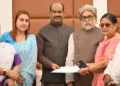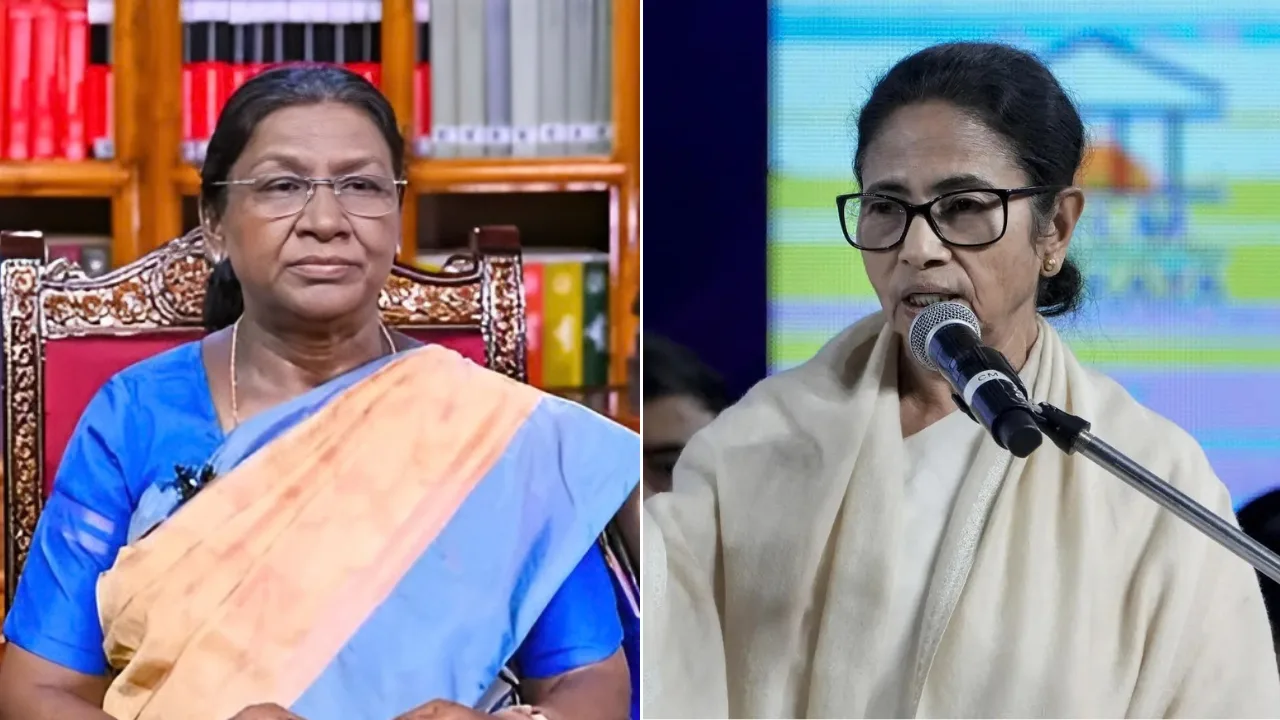
What was meant to be a proud cultural gathering celebrating one of India’s largest tribal communities unexpectedly evolved into one of the most dramatic constitutional controversies in recent years. On March 7, 2026, President Droupadi Murmu arrived in north Bengal to attend the 9th International Santhal Conference as the chief guest. Murmu, who holds the historic distinction of being India’s first tribal woman President, belongs to the Santhal community herself. Her presence at the event carried enormous symbolic value for the community and for tribal representation in India’s democratic institutions.
However, when the President reached the venue, the atmosphere was far removed from the large-scale celebration that had been anticipated. Instead of a massive gathering of Santhal community members, she found a much smaller venue, a noticeably thin audience, and the absence of the state’s top political leadership. Standing before the crowd, Murmu posed a question that quickly echoed across the national political landscape: “Is Mamata upset with me?” In a few measured words, she publicly questioned the decisions of the state administration, transforming what might have been perceived as a logistical issue into a moment of constitutional tension.
A conference dedicated to Santhal heritage
The International Santhal Conference holds immense significance for the Santhal community, one of the largest Scheduled Tribe groups in India with a substantial population across West Bengal, Jharkhand, Odisha, and Bihar. The community has a rich history of cultural pride and resistance against colonial rule, most famously embodied in the Santhal Rebellion of 1855 led by tribal leaders Sidhu Murmu and Kanhu Murmu.
The ninth edition of the international conference was intended to celebrate Santhal language, traditions, history, and aspirations for the future. Organisers envisioned the event as a major cultural gathering that would bring together community members, scholars, and leaders from different parts of the country. Given President Murmu’s own journey from a tribal background to the highest constitutional office in the country, her participation was expected to be a powerful symbol of social progress and representation.
The conference had originally been planned for a large open ground in the Bidhannagar area of Siliguri. The location was chosen carefully because it was spacious and capable of accommodating tens of thousands of attendees. It was also easily accessible to Santhal families living in surrounding tribal regions.
Organisers had reportedly been preparing for the event for weeks, anticipating a massive turnout from different parts of north Bengal and neighbouring states. However, according to reports, the state administration eventually denied permission for the Bidhannagar venue, citing security and logistical concerns. This decision forced organisers to search for an alternative site at short notice.
The controversial venue shift
The programme was eventually shifted to Goshaipur, a smaller and comparatively less accessible location. Reports suggested that the venue change was not the only adjustment made during the planning stage. Student organisation Akhil Bharatiya Vidyarthi Parishad alleged that the venue had been changed multiple times before the event was finally fixed at Goshaipur.
The new location created several logistical challenges. The seating capacity was limited, making it difficult to accommodate large crowds. The distance from major tribal settlements made travel complicated for many attendees. As a result, the conference witnessed a much smaller turnout than originally expected. What was intended to be a grand international gathering appeared modest and sparsely attended.
President Murmu’s reaction
During her address at the conference, President Murmu spoke candidly about the situation, making remarks that observers described as unusually direct for a head of state who traditionally maintains strict neutrality in political matters. She noted that the programme would have been far better if it had been held at the original venue in Bidhannagar, which had ample space and could have accommodated a much larger gathering.
Looking at the partially empty seats before her, Murmu observed that it was difficult to believe that an international conference was taking place. She also pointed out that the location of the event made it difficult for many members of the Santhal community to attend.
Then came the comment that would dominate the political discourse for days. Referring to Chief Minister Mamata Banerjee, Murmu said, “Mamata Banerjee is like my younger sister. I am also a daughter of Bengal. I do not know whether she is upset with me and that is why the venue was shifted.”
She added that she held no grievance but wished the Chief Minister well. Yet another remark drew even greater attention when the President stated that she did not know whether the state administration truly wanted the welfare of the tribal community. For many observers, this statement amounted to a rare public rebuke of a state government from the country’s highest constitutional office.
Absence of state leadership
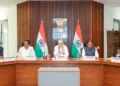
Another dimension of the controversy was the absence of key political leaders from the event. Under established constitutional protocol, when the President visits a state, it is customary for the Chief Minister or a senior cabinet minister to be present to receive and accompany the President. At the conference venue, however, neither Chief Minister Mamata Banerjee nor any senior state minister was present. Instead, the President was received by Gautam Deb, the mayor of Siliguri.
This deviation from long-standing protocol immediately drew criticism from opposition leaders, who argued that the state government had failed to show the customary respect to the President’s office.
Mamata Banerjee’s response
Chief Minister Mamata Banerjee rejected the criticism and described the controversy as politically motivated. At the time of the conference, she was in Kolkata participating in a protest regarding alleged deletion of names from the state’s electoral rolls. Banerjee maintained that the event had been organised by an independent body and that the state government could not be held responsible for the organisers’ logistical arrangements.
She argued that opposition parties were attempting to politicise the matter ahead of upcoming elections. According to her, the controversy was being amplified to damage the image of her government rather than address genuine administrative issues.
Prime Minister Modi’s intervention
The issue escalated further when Prime Minister Narendra Modi publicly commented on the controversy. Posting on the social media platform X (formerly Twitter), Modi described the episode as “shameful and unprecedented.” He said the incident had caused deep pain among people who believe in the empowerment of tribal communities and the dignity of the President’s office.
The Prime Minister also criticised the state’s ruling party, the All India Trinamool Congress, accusing it of failing to uphold constitutional norms and respect for national institutions.
Political leaders and organisations across India reacted strongly to the episode. Many leaders from the Bharatiya Janata Party described the situation as a serious breach of constitutional conventions. Meanwhile, student organisations and tribal rights groups expressed concern about the venue shift and the limited participation of the Santhal community in an event meant to celebrate their heritage.
From neighbouring Odisha, Chief Minister Mohan Charan Majhi said the incident had caused deep anguish among members of the tribal community. He highlighted President Murmu’s inspiring journey from a tribal village in Rairangpur to the highest office in the country as a symbol of empowerment for indigenous communities.
The controversy has also highlighted the increasing importance of tribal communities in West Bengal’s electoral politics. Santhal and other tribal groups form a significant portion of the electorate in regions such as north Bengal and the Jungle Mahal area. As political parties prepare for future elections in the state, these communities are likely to remain a key focus of political mobilisation.
Questions about constitutional protocol
Beyond political calculations, the episode has also raised serious questions about constitutional protocol. In India’s parliamentary system, the President functions as the ceremonial head of state, and state governments are expected to adhere to established conventions during presidential visits. The absence of senior state representatives at an event attended by the President has therefore attracted criticism from constitutional observers.
Following the controversy, the Ministry of Home Affairs (India) reportedly sought an explanation from the West Bengal government regarding the circumstances surrounding the President’s visit and the handling of the conference arrangements.
Ironically, the political dispute has overshadowed the very purpose of the event. The International Santhal Conference had been organised to celebrate tribal heritage, promote education and language preservation, honour historical leaders, and discuss socio-economic development for indigenous communities.
Instead, the event has become synonymous with a political confrontation that has captured national headlines.
Moment that will be remembered
For many, the events of March 7 represent more than a routine political controversy. President Murmu’s remarks, delivered in a calm yet candid tone, reflected both personal warmth and institutional concern. Her question, “Is Mamata upset with me?” may have been phrased politely, but it carried a deeper message about the expectations of respect and protocol in India’s constitutional framework.
Whether the issue fades from the headlines or continues to influence the political discourse in West Bengal remains to be seen. What is clear, however, is that a conference meant to celebrate the cultural pride of the Santhal community has instead ignited a national conversation about governance, constitutional dignity, and the relationship between political authority and institutional respect.