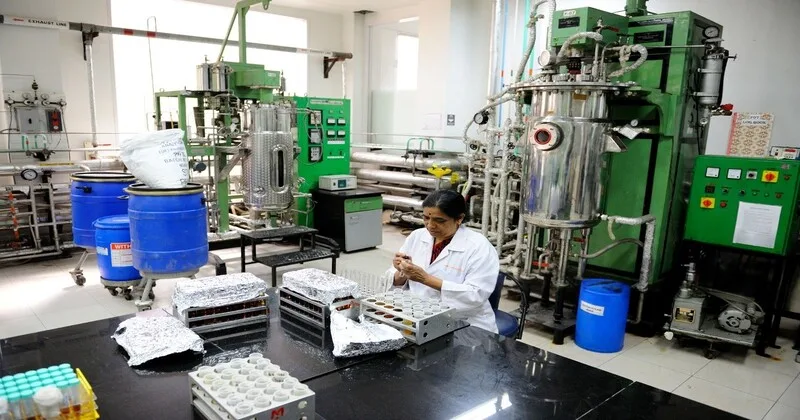
In the current global healthcare scenario, India has established itself as a key pillar in terms of affordability, innovation and pharmaceutical manufacturing. From providing basic drugs to advancing in innovative biotechnology solutions, India has established itself as the Pharmacy of the World. It is a matter of great satisfaction to note that this achievement is a result of a highly developed pharmaceutical sector, favourable government initiatives and a rapidly advancing innovation ecosystem. India’s contribution to healthcare goes far beyond its geographical boundaries.
This shift in India’s recent healthcare transformation has been driven by the policy vision and sustained political push from Prime Minister Narendra Modi. Since 2014, the government has prioritised healthcare as a core pillar of inclusive development, launching large-scale initiatives that combine welfare delivery, digital infrastructure and institutional reforms. From establishing the world’s largest publicly funded health assurance scheme, Ayushman Bharat and advancing in terms of medical education and health architecture, the government is supporting each and every step.
Affordable Medicines for Every Citizen
Access to affordable medicines in the country has been another significant focus area. The Pradhan Mantri Bhartiya Janaushadhi Pariyojana (PMBJP) scheme has been launched to provide high-quality, affordable medicines at much lower prices.
Under this scheme, government bodies have opened 17,990 Janaushadhi Kendras in the country. These centres provide citizens with access to over 2,000 medicines and 315 surgical instruments at 50 to 90 per cent lower prices than the market. The medicines cover a range of diseases, including heart diseases, diabetes and cancer. The impact of the scheme on the economy is significant, and in the last decade, the government has helped citizens save Rs. 30,000 crores on their healthcare bills.
The scheme provides affordable medicines through the Affordable Medicines and Reliable Implants for Treatment (AMRIT). This scheme is for the purchase of high-cost medicines and implants needed for tertiary care. There are currently 255 AMRIT pharmacies in the country. The plan is to increase the number of pharmacies to 500.
Indian Pharmaceutical Powerhouse
The Indian pharmaceutical industry ranks third-largest in the world by volume. The Indian pharmaceutical industry provides affordable medicine to nearly 200 countries. India provides 20 per cent of the world’s generic medicine. This makes India indispensable to the global pharmaceutical market.
India’s contribution to the health of the people in developing nations is to be appreciated. India provides over 70 per cent of the world’s anti-retroviral medicine. This medicine is critical to the health of the people in developing nations as it is used to treat HIV/AIDS.
Indian capabilities to produce medicine were well demonstrated during the COVID-19 pandemic. During the pandemic, India produced indigenous vaccines such as Covaxin and Covishield. India also exported vaccines to other nations. India currently provides 55-60 per cent of the vaccines procured by UNICEF. The vaccines include those for diseases such as measles, DPT and BCG.
Biotechnology and the Emerging Bio-Economy
India’s next phase of healthcare development is underway for biotechnology and advanced therapeutics. The country’s bio-economy has grown from $10 billion in 2014 to over $165.7 billion in 2024. Projections indicate that the bio-economy could reach $ 300 billion by 2030.
Government initiatives are supporting this expansion. The Biopharma SHAKTI programme, announced in the Union Budget 2026–27, aims to strengthen the entire ecosystem for biologics and biosimilars. The initiative focuses on domestic manufacturing, workforce development and expanding clinical trial infrastructure across the country.
As part of this push, three new National Institutes of Pharmaceutical Education and Research (NIPER) will be established, while seven existing institutes will be upgraded to meet the growing demand for specialised talent in the biopharmaceutical sector.
National Biopharma Mission: Innovation in India
India’s biotechnology progress is accelerating through the National Biopharma Mission (NBM), known as the Innovate in India (i3) programme. Launched in 2017 with the support of the World Bank, the mission has funded 101 projects involving more than 150 organisations.
The mission has generated over 1,000 jobs, including hundreds of scientists and researchers. Several important breakthroughs have emerged from these initiatives, including:
- Developing the first biosimilar of Liraglutide, a drug used to treat diabetes at nearly a third of the international price.
- Developing ZyCoV-D, the world’s first DNA-based vaccine for COVID-19
These examples reflect the progress of the research and innovation that are making for the country to stand on the world map of the pharmaceutical industry.
Expanding Medical Education and Human Resources
A booming healthcare industry demands highly experienced medical personnel members to fill the positions. Recognising this need, the government has significantly expanded medical education capacity over the past decade.
India now has 23 All India Institutes of Medical Sciences (AIIMS) and 2,045 medical colleges, including institutions dedicated to allopathic, dental and AYUSH systems of medicine.
The expansion has dramatically increased the number of medical seats:
- MBBS seats are increased by 130 per cent, from 51,348 to 118,190.
- Postgraduate medical seats increased by 138 per cent, reaching 74,306.
This expansion also aims to ensure that the country has sufficient healthcare professionals to meet the demands of a rapidly expanding healthcare system.
Rising Global Hub for Medical Tourism
The improved health care infrastructure and affordable health care facilities in India have also attracted medical tourists from other countries. Medical tourism has seen tremendous growth in recent times. It has increased from only 112,000 tourists in 2009 to more than 600,000 tourists in 2024.
In recognition of the tremendous growth prospects in the health care industry, the Union Budget 2026-27 announced the development of five new integrated health care hubs to provide diagnostic, treatment, and rehabilitation facilities in collaboration with the private sector. These new health care hubs would only strengthen India’s position as a hub for quality, affordable health care facilities.
Expanding Global Health Role
India’s transformation from a country struggling with infectious diseases to a global leader in health care manufacturing and innovation is a remarkable story of strategic policy and institutional strength. From health care manufacturing to health care innovation, India has built a powerful ecosystem that is capable of serving both domestic and global health care needs. As the global health care industry increasingly demands affordable and reliable health care supplies, India’s health care partnership is more critical than ever before.