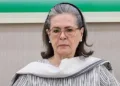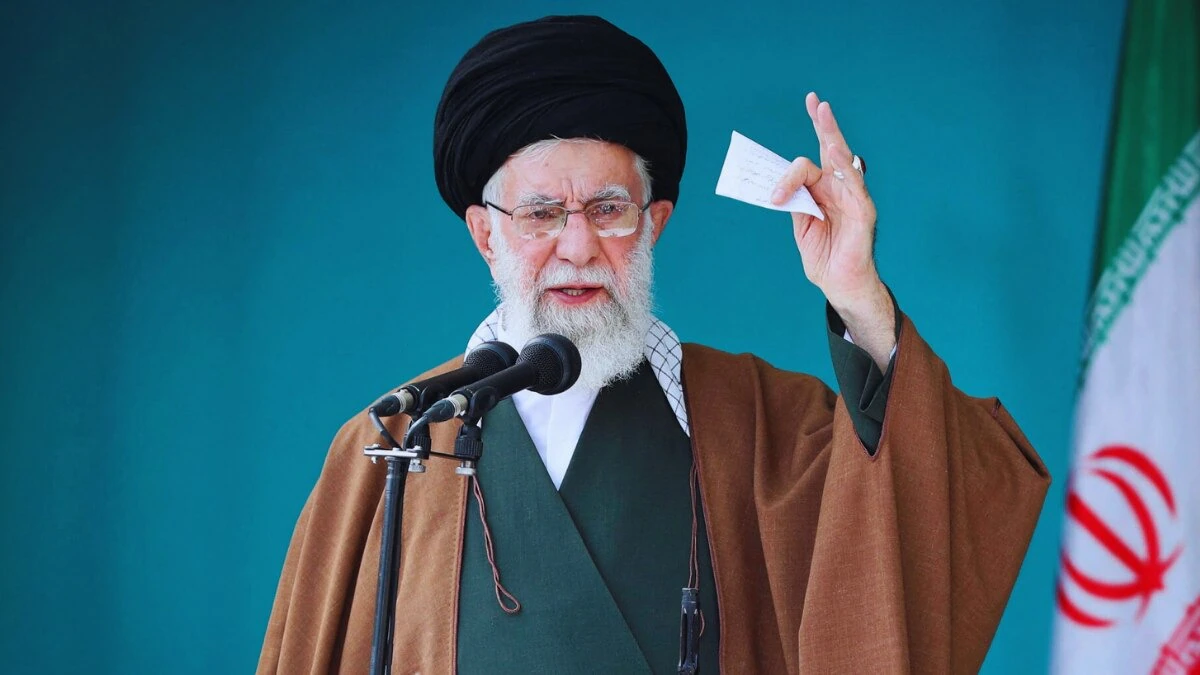
The death of Iran’s Supreme Leader Ali Khamenei has generated a wave of global reactions. While several Western leaders openly criticised his legacy, Congress leader Sonia Gandhi argued in an opinion article that India’s silence on the assassination represents a moral and diplomatic failure.
Writing in The Indian Express on March 3, Gandhi urged India to condemn the killing and framed the issue within India’s constitutional values and long-standing diplomatic traditions. She invoked India’s historic policy of non-alignment and cited international law provisions, including Article 2(4) of the UN Charter, which prohibits the use of force against sovereign states.
Her argument also referenced past diplomatic cooperation between India and Iran, including India’s engagement with Tehran in the 1990s and former Prime Minister Atal Bihari Vajpayee’s visit to Iran in 2001. Gandhi presented Iran as a civilisational partner and suggested that India had a moral responsibility to condemn the killing of its leader.
However, reports argue that such a portrayal overlooks decades of friction and ideological conflict between India and the Iranian regime under Khamenei.
The omitted context: Iran’s internal repression
One of the most contentious aspects of the debate concerns the absence of discussion about Khamenei’s domestic record.
During his decades-long leadership, Iran faced widespread criticism from international human rights groups over political repression, executions, and restrictions on civil liberties. Reports indicate that in 2025 alone, more than 2,200 executions were carried out in Iran, the highest number recorded in the country’s history.
The regime’s response to protests has also drawn global attention. Demonstrations following the death of Mahsa Amini in police custody triggered a nationwide uprising in 2022, which authorities suppressed through arrests, force, and mass detentions.
More recently, during protests in January 2026, security forces reportedly carried out a large-scale crackdown that human rights groups say resulted in tens of thousands of deaths.
For many Iranian citizens, Khamenei’s death symbolised the end of an era marked by strict ideological rule and suppression of dissent. In several cities, including Tehran and Mashhad, videos circulating online appeared to show people celebrating the news.
This stark divide between the regime and segments of the Iranian population has become central to the global debate over how Khamenei’s legacy should be viewed.
Iran’s repeated interventions on Kashmir
Beyond domestic repression, another major point of contention in the India debate concerns Iran’s long-standing criticism of New Delhi’s policies in Kashmir.
Khamenei publicly commented on the Kashmir issue multiple times during his tenure, often framing it in religious terms. As early as 1991, he described Muslims in Kashmir as victims of oppression and urged the Indian government to address their grievances.
These interventions became more frequent in the 2010s.
After India revoked the special status of Jammu and Kashmir under Article 370 in August 2019, Khamenei posted messages on social media urging India to adopt what he called a “just policy” toward Kashmir’s Muslims.
The comments triggered diplomatic friction, with India summoning Iran’s ambassador to express concern over what it considered interference in its internal affairs.
In March 2020, Khamenei again criticised India during communal tensions following protests against the Citizenship Amendment Act. Using the hashtag #IndianMuslimsInDanger, he urged the Indian government to curb what he described as extremist elements.
Such remarks were welcomed by Pakistan’s leadership, including then Prime Minister Imran Khan, who publicly thanked the Iranian leader.
As recently as 2024, Khamenei again referenced India while discussing Muslim communities facing challenges globally. These statements reinforced perceptions in New Delhi that Iran’s ideological framework often aligned more closely with Pakistan’s narrative on Kashmir.
Security concerns and alleged IRGC activities in India
India’s concerns regarding Iran have not been limited to diplomatic statements.
Several security incidents in the past decade have been linked by investigators to Iranian networks, particularly those associated with the Islamic Revolutionary Guard Corps (IRGC).
In February 2012, a magnetic bomb attack targeted the car of the wife of an Israeli diplomat in New Delhi. The blast injured multiple people and occurred close to the Prime Minister’s residence.
Indian investigators later identified several suspects connected to the IRGC.
Another explosion occurred near the Israeli Embassy in New Delhi in January 2021. Counterterrorism agencies again traced the incident to groups allegedly linked with the IRGC’s Quds Force.
A third blast near the same location in December 2023 further heightened concerns about foreign intelligence activities operating within India.
Indian security agencies have also investigated alleged recruitment efforts targeting Shia communities in Maharashtra, including networks believed to be linked to Iran-based organisations promoting the ideology of the 1979 Iranian Revolution.
The 1994 UNHRC episode and its limits
Supporters of closer India-Iran ties often cite a key diplomatic moment in 1994. That year, the government of Prime Minister P. V. Narasimha Rao sought Iranian support to prevent Pakistan from passing a resolution against India at the UN Human Rights Commission over Kashmir.
External Affairs Minister Dinesh Singh reportedly travelled to Tehran, where Iranian leaders agreed not to back the Pakistani initiative, helping India avoid an embarrassing international vote.
However, reports note that the decision reflected Iran’s strategic calculations at the time rather than a consistent pro-India position.
During the same period, Iran had growing tensions with Pakistan due to sectarian violence against Shia communities and Pakistan’s support for the Sunni Taliban in Afghanistan.
Iran’s long-term stance at the Organisation of Islamic Cooperation (OIC) has frequently aligned with resolutions supporting Kashmiri self-determination.
The OIC Contact Group on Kashmir, established in the 1990s, has repeatedly criticised India’s policies in the region, and Iran has participated in those deliberations.
The ideological dimension of Iranian foreign policy
Another factor shaping Iran’s relationship with India lies in the ideological foundation of the Iranian state.
The Iranian Constitution commits the government to supporting Muslim communities worldwide and backing struggles of what it calls the “oppressed” against the “arrogant powers.”
This ideological framework has influenced Iran’s support for groups such as Hezbollah, Hamas, and the Houthis, and it also informs its commentary on Muslim issues globally, including Kashmir.
For India, a secular state with a Hindu-majority population and multiple religious communities, this ideological approach has often complicated relations with Tehran.
Economic Reality: A limited partnership
Despite periodic diplomatic engagement, India-Iran economic ties remain modest compared to India’s partnerships with Gulf countries.
Bilateral trade between India and Iran stands at around $2.3 billion.
By contrast, India’s trade with Saudi Arabia exceeds $40 billion, while trade with the United Arab Emirates has crossed $100 billion.
Nearly 10 million Indians live and work in Gulf Cooperation Council countries such as Saudi Arabia, the UAE, Qatar, and Kuwait.
In contrast, the Indian diaspora in Iran numbers fewer than 10,000 people.
Chabahar port and strategic frictions
India’s involvement in Iran’s Chabahar Port was long seen as a cornerstone of bilateral cooperation.
The port project was intended to provide India with access to Afghanistan and Central Asia while bypassing Pakistan.
However, the project has faced repeated delays and uncertainties.
India’s plans to develop a railway line from Chabahar to Zahedan stalled, and in 2020 Iran announced it would proceed independently with the railway.
Meanwhile, Tehran signed a long-term strategic partnership agreement with China in 2021 worth hundreds of billions of dollars, strengthening ties between Iran and Beijing.
India’s diplomatic balancing act
The Indian government has adopted a cautious approach following Khamenei’s death.
External Affairs Minister S. Jaishankar held conversations with both Iranian and Israeli counterparts.
India formally condoled the death of Iran’s supreme leader Khamenei on Thursday. EAM Jaishankar spoke to Iranian counterpart Seyed Abbas Araghchi, while Foreign Secretary Vikram Misri visited the Iranian Embassy in India and signed the condolence book on behalf of the government.
Meanwhile, ever since tensions escalated in the Middle East, Prime Minister Narendra Modi has made various calls to leaders in the region. PM Modi also spoke with leaders across the Gulf region, including the UAE and Saudi Arabia, focusing on regional stability and the safety of Indian citizens.
Civilisational connections vs. contemporary realities
India and Iran share deep historical and cultural links dating back thousands of years.
Ancient linguistic connections between Vedic Sanskrit and Old Avestan reflect a shared Indo-Iranian heritage. Persian culture influenced Indian art, literature, and architecture for centuries.
The Parsi community in India, descended from Zoroastrian refugees from Persia, has also played a significant role in India’s economic and social development.
Yet, reoports argue that modern geopolitics cannot be guided solely by historical ties.
The Iranian Revolution of 1979 fundamentally reshaped Iran’s political system, replacing secular nationalism with a theocratic framework that prioritises ideological goals.
Since then, India and Iran have often found themselves cooperating selectively when interests align but rarely functioning as consistent allies.
The debate over whether India should mourn or condemn the killing of Ali Khamenei has exposed deeper questions about the nature of India-Iran relations.
Ultimately, India’s response is likely to remain shaped by pragmatic considerations: protecting its diaspora in the Gulf, maintaining regional stability, and balancing relationships across West Asia.
The controversy surrounding Sonia Gandhi’s remarks shows a broader reality of modern diplomacy, historical sentiment and political rhetoric often collide with the hard calculations of national interest.