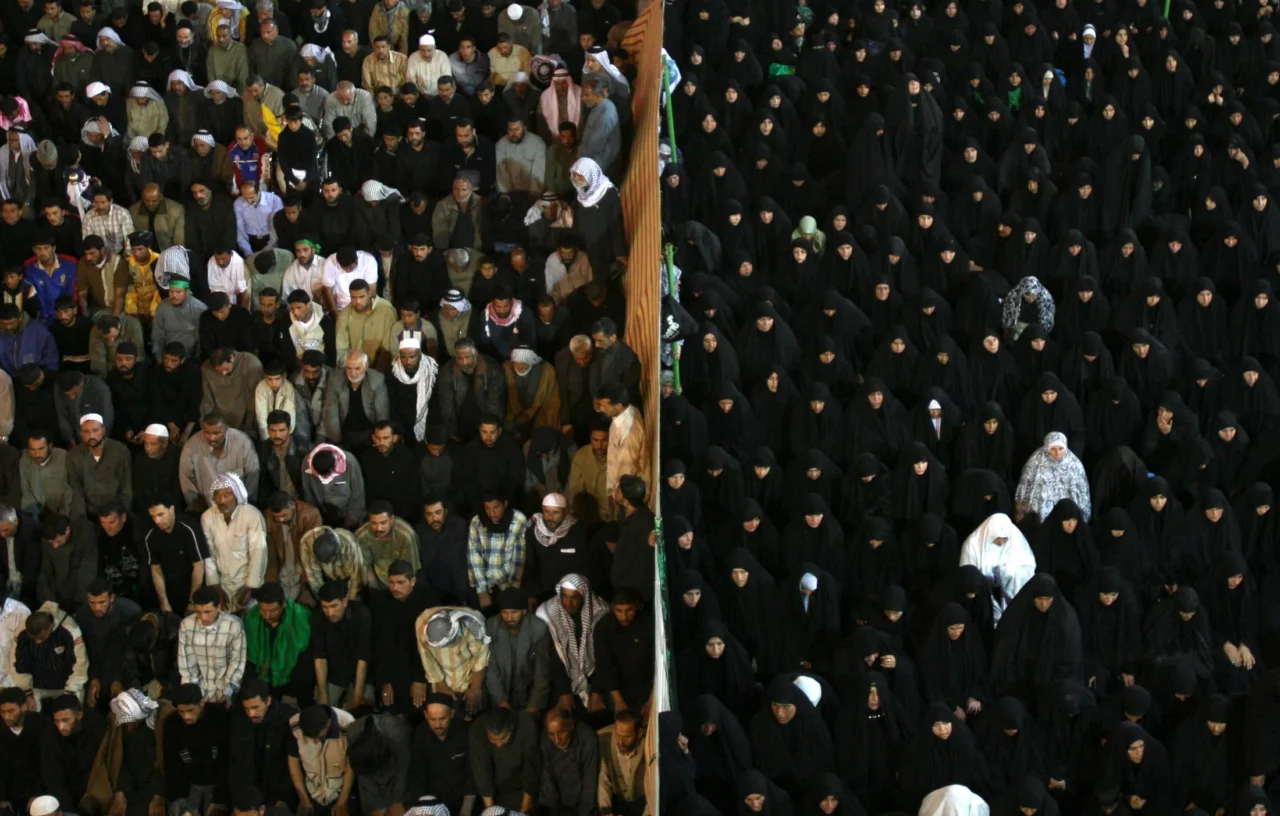
The escalating war in West Asia triggered by the United States and Israel’s military strikes against Iran has once again drawn international attention to the geopolitical and sectarian dynamics within the Muslim world. Iran’s counter-attacks on multiple targets in the Middle East, including areas where American military facilities are located, have intensified discussions about the political role played by Iran and its regional influence.
These developments have also revived public debate about the historical differences between the two largest branches of Islam – Sunni and Shia. Although the divide between these communities dates back more than a thousand years, it continues to influence political alliances, regional rivalries and social dynamics across several countries in West Asia and beyond.
Understanding these differences requires examining the historical events that followed the death of the Prophet Muhammad and the differing interpretations of leadership that eventually led to the emergence of two distinct traditions within Islam.
Islam is currently the second-largest religion in the world. Global estimates suggest that nearly 1.9 billion people follow Islam today. Demographic projections indicate that the number of Muslims worldwide may rise to around 2.2 billion by the year 2030.
The Muslim population is spread across approximately 57 Muslim-majority countries, stretching from North Africa and West Asia to South Asia and Southeast Asia. In many of these nations, Muslims make up a very large portion of the population, often shaping the cultural and political identity of the state.
Foundations of Sunni and Shia beliefs
Despite political tensions and historical differences, Sunni and Shia Muslims share the same foundational principles of Islam. Followers of both traditions believe in one God, Allah, and regard Quran as holy book of Islam. Both communities also accept the Prophet Muhammad as the final messenger of God.
The essential religious practices that define Islamic faith are common to both groups. Muslims across both traditions observe the five daily prayers, fast during the holy month of Ramadan, give charity to those in need, and undertake the pilgrimage to Mecca known as Hajj.
These shared religious foundations form the core of Islamic belief and practice across the world. However, historical interpretations regarding leadership after the death of the Prophet Muhammad eventually resulted in the emergence of two distinct traditions.
According to widely cited estimates, including reports from organisations such as the Pew Research Centre and the BBC, the majority of Muslims worldwide belong to the Sunni branch of Islam. Around 85 to 90 per cent of the global Muslim population identifies as Sunni, while approximately 10 to 15 per cent belong to the Shia community.
Shia Muslims form a majority in a few countries, including Iran, Iraq, Azerbaijan and Bahrain. In contrast, several other nations have predominantly Sunni populations, including Saudi Arabia, Turkey, Pakistan, Bangladesh, Afghanistan, Indonesia and India.
Origins of the Sunni-Shia Divide
The origins of the Sunni-Shia divide can be traced back to the year 632 CE, following the death of the Prophet Muhammad. The Prophet, who was born around 570 CE in Mecca into the Quraysh tribe, played a central role in establishing the early Muslim community.
After his death, the Muslim community faced an important question about who should lead the rapidly expanding Islamic society. The issue of leadership became the central point of disagreement that eventually led to the emergence of two different interpretations within the Muslim community.
One group believed that leadership should be decided through consultation among members of the Muslim community, while another group believed that leadership should remain within the Prophet’s family.
The Sunni perspective on leadership
A large group among the Prophet’s companions believed that the leader of the Muslim community should be chosen through consultation and agreement among respected members of society. The leader, known as the Caliph, was responsible for guiding the Muslim community and administering the growing Islamic state.
Through this process of consultation, Abu Bakr, one of the Prophet’s closest companions and also his father-in-law, was selected as the first Caliph. Abu Bakr ruled from 632 to 634 CE and played an important role in stabilising the early Muslim state during a period of political uncertainty. Historical accounts also credit him with playing a role in early efforts to preserve the Quranic text.
After Abu Bakr, leadership passed to Umar ibn al-Khattab, followed by Uthman ibn Affan, and later Ali ibn Abi Talib. Sunni Muslims refer to these four leaders as the “Rashidun,” meaning the “Rightly Guided Caliphs.” According to Sunni belief, these leaders governed the early Muslim community in accordance with the teachings and traditions of the Prophet Muhammad.
The Shia perspective on leadership
Another group within the early Muslim community held a different view regarding leadership after the death of the Prophet Muhammad. They believed that leadership of the Muslim community should remain within the Prophet’s family, known as the Ahl al-Bayt.
According to this perspective, Ali ibn Abi Talib, who was both the Prophet’s cousin and son-in-law, had been designated as the rightful successor to lead the Muslim community.
Those who supported Ali came to be known as “Shiat Ali,” which means “the supporters of Ali.” Over time, the term evolved into the word Shia, which today refers to the broader Shia Muslim community.
For Shia Muslims, Ali is regarded as the first Imam, a divinely guided leader responsible for interpreting Islamic teachings and guiding the community.
The lineage of the Imams in Shia tradition
Among Shia Muslims, the largest group is known as the Twelver Shia. This group recognises a lineage of twelve Imams beginning with Ali ibn Abi Talib. The line of Imams continues through his descendants, including his sons Hasan ibn Ali and Husayn ibn Ali.
These Imams are regarded in Shia theology as spiritual leaders who possessed divine guidance in matters of religion and leadership. The concept of Imamate forms a central element of Shia belief and distinguishes it from Sunni interpretations of authority within the Muslim community.
One of the most significant events in Shia history occurred in the year 680 CE during the Battle of Karbala. In this battle, Husayn ibn Ali, the grandson of the Prophet Muhammad, was killed.
Husayn’s death is regarded as a major turning point in Islamic history and holds deep religious significance in Shia tradition. For many Shia Muslims, the event symbolises sacrifice and resistance in the face of injustice.
Every year, Shia Muslims commemorate this event during the Islamic month of Muharram. The mourning period includes religious gatherings and remembrance ceremonies dedicated to Husayn and the events of Karbala.
Differences in religious practices
Although Sunni and Shia Muslims share the same core beliefs of Islam, certain differences exist in their religious practices and interpretations. These differences include variations in Hadith traditions, which are collections of sayings and actions attributed to the Prophet Muhammad, as well as differences in Islamic jurisprudence and prayer practices.
Another distinction lies in the way historical events are commemorated. For example, Shia Muslims observe extended mourning rituals during the month of Muharram to honour the sacrifice of Husayn at Karbala. Sunni Muslims also respect Husayn as an important historical figure, but the event is generally commemorated in different ways.
Historical disagreement that shaped two traditions
At its core, the distinction between Sunni and Shia Islam originated from differing views on leadership after the death of the Prophet Muhammad. Sunni Muslims historically emphasised leadership based on consensus and selection by the community, while Shia Muslims emphasised leadership through the lineage of the Prophet’s family.
Over centuries, these differences evolved into two major traditions within Islam, each with its own theological interpretations, historical narratives and religious practices.
Even today, the Sunni-Shia divide continues to influence religious identity, social traditions and political dynamics in several parts of the Muslim world, particularly in regions such as West Asia where historical, political and sectarian factors often intersect.
In the contemporary era, the Iran-based Islamic Republic of Iran has positioned itself as the leading advocate of Shia interests globally, framing much of its foreign policy as a defence of Shia communities across the region.
The domestic fracture
Long before recent military strikes, internal tensions were already visible inside Iran. Large-scale protests erupted in December 2025, initially driven by a worsening economic crisis. The first demonstrations began among bazaar merchants in Tehran, before spreading to universities and major cities such as Isfahan, Shiraz, and Mashhad.
What began as economic protests gradually transformed into political unrest, becoming the largest wave of demonstrations since the Mahsa Amini protests. As the movement expanded, protesters shifted their slogans from economic grievances to open political dissent. Witness accounts from inside the country reported crowds chanting, “Death to the Dictator.”
The number of casualties remains heavily contested. Iranian doctors cited in international reporting claimed that more than 16,500 people were killed and around 330,000 injured during the unrest. In contrast, Ministry of Interior of Iran acknowledged 3,117 deaths, illustrating the vast gap between official and independent estimates.
The oil dimension
Energy geopolitics further amplifies Iran’s regional influence. The Strait of Hormuz, located between Iran and the Arabian Peninsula, carries roughly 25 percent of global oil and gas shipments. Because Iran sits along this narrow maritime corridor, it retains the ability to threaten its closure during crises.
Despite this strategic leverage, Iran’s oil revenues remain significantly lower than those of several neighbouring producers. In 2024, Iran earned roughly $51 billion from oil exports. By comparison, Saudi Arabia generated around $237 billion, while Iraq earned approximately $110 billion.
Yet Iran’s geographic control over one of the world’s most critical shipping routes allows it to exert economic pressure far beyond the scale of its own oil income. Even states that earn far more from energy exports remain dependent on the same narrow waterways for global trade.