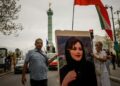

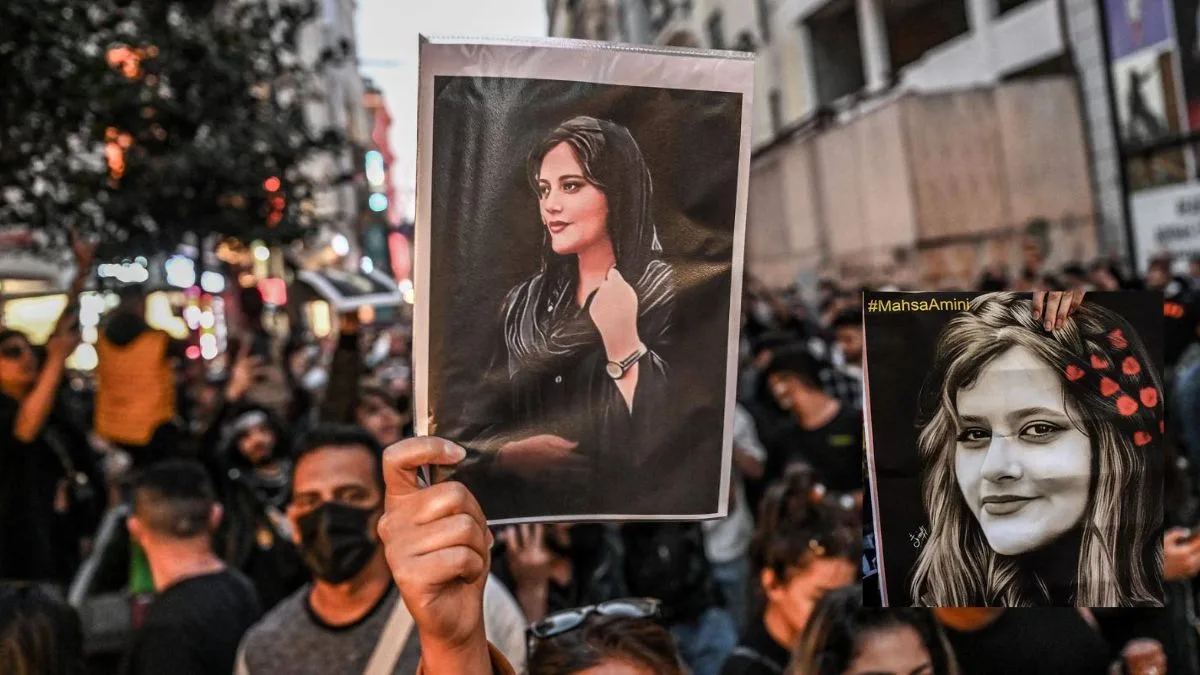
Mahsa Amini became a name known not only in Iran but across the world. The 22-year-old Kurdish woman became the face of the “Woman, Life, Freedom” uprising that shook Iran. Amini was born in Iran’s western province of Kurdistan. In September 2022, she was detained by the country’s morality police for allegedly wearing her hijab “improperly,” an accusation that soon triggered global outrage. She died on on September 16, 2022 following her detention. Her death sparked months of unrest in which at least 551 protesters, including 68 children, were killed, according to rights groups, and thousands detained.
Her death caused massive anger in Iran, where frustration with the government was already high, and it sparked a wave of protests that spread across the country. This was considered one of the most powerful protests Iran had ever witnessed. It drew people from across the country and captured the attention of the entire world.
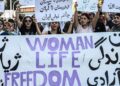
For nearly six months — the largest and arguably most consequential uprising in the Islamic Republic’s history. Women led the charge, removing their headscarves and waving them like flags of defiance, shattering the regime’s carefully crafted image of public compliance.
Ebrahim Raisi’s Drive to Enforce State-Mandated Dress and Behaviour
In 2022, former President of Iran, Ebrahim Raisi introduced strict measures enforcing state-approved dress and behaviour, shaped by the country’s ruling class of mainly Persian Shiʿi clerics.
On the evening of September 13, Amini and her brother went to Tehran to visit their relatives. As they left the train station, she was stopped by the Gasht-e Ershad for “improper” clothing. She was told that she would be taken to a detention centre for a class on mandatory public dress.
According to the news reports from Iran, later that evening Amini collapsed at the Vozara detention centre. She went into a coma and was taken to the hospital, where she died three days later, on September 16. The reason for her collapse and death is still unclear. Her family was initially told she had suffered a heart attack and a stroke.
There are reports Amini was beaten on the head with a baton, and her head was banged against the vehicle by the so-called morality police. Authorities have stated she died of natural causes.
Initially it was considered as a normal death. However, afterwards the reason gradually shifted to ‘killing of Amini’. Her death death struck a chord within a decades-long movement among Kurds protesting the killing of Kurdish women. Security forces confronted mourners, and reports of the violence spread quickly. Soon, protests broke out in cities across Iran.
UN human rights chief urged impartial probe
Soon after the custodial death of Mahsa Amini, Acting UN High Commissioner for Human Rights Nada Al-Nashif expressed alarm. She raised concern over Amini’s detention by Iran’s “morality police,” who enforce strict hijab rules, and criticised the violent response by security forces to the protests that followed.
Al-Nashif said the compulsory veiling laws remain of concern in Iran, where appearing in public without a hijab is punishable by imprisonment. He also criticised the authorities for targeting, harassing, and detaining women who do not abide by the hijab rules.
The morality police have increased their patrols on the streets at that time, targeting women they believe are wearing the hijab “improperly.” Many women have faced verbal abuse, physical harassment, and even arrest.
The UN Human Rights Office has also received many verified videos showing women being treated violently. These include incidents where women were slapped, beaten with batons, and forced into police vans.
What Iranian Lawyers and Activists Said About Mahsa Amini’s Death
Iranian lawyer, Scholar and writer Sedigheh Vasmaghi has said that Mahsa Amini’s death started a major protest movement. It acted like a spark that began a big change. According to her, “This movement shifted women from the margins to the center of society and showed that women are no longer sidelined.”
She argued that the protests went beyond hijab rules. “The most important achievement was that women demonstrated their power and changed the thinking of society. Today many men defend women’s rights and believe gender should not be a basis for discrimination,” she said.
A Green Movement leader in Iran, Zahra Rahnavard said that women in Iran are very capable, but they are still heavily oppressed because of unfair laws and government policies. She also added that Iranian women face some of the worst restrictions in the world.
According to her, Mahsa Amini’s death is “a whip across the conscience of the nation”. Zahra believed that the uprising “has given the nation hope for a future free of oppression, backwardness and discrimination.”
Iranian Actress Pantea Bahram was banned from working in Iran, reposted a message from Amini’s father and wrote on Instagram: “Your name is a reminder of the beginning of a new era … built with courage, fear, defiance, anger, blood and at times madness. Salute to the girls.”
What has changed since Amini’s death?
The anniversary of Mahsa Amini’s death often brings a tense moment for Iran’s leadership. One of the most visible changes since the protests is the growing refusal of many women—especially younger women in cities—to wear the hijab.
Defying the pressures and threats from security forces and the morality police, these women have been resisting the hijab mandate — the same one that was used to arrest Amini — and challenging the authorities’ efforts to enforce it.
Women activists and lawyers believe that the movement that followed Mahsa Amini’s death marked the beginning of a struggle to reshape Iran. They saw it as a fight for greater freedom and equality for women, and for building the kind of society many Iranians hope their country can become.