Abu Dhabi/Washington: UAE’s Minister of State for International Cooperation, Reem Al Hashimi, said Iran’s recent attacks are “unjustifiable” and warned that they carry serious consequences for regional security and stability. Speaking at a press conference, the UAE minister stated that Tehran carried out the attacks without considering the UAE’s position or the broader implications for the Gulf region.
Al Hashimi stressed that the United Arab Emirates has the right to defend itself and protect its sovereignty. She said the country’s stance on the latest developments is clear and firm. According to her, the UAE, along with other Gulf nations, has intensified diplomatic efforts in recent days to prevent the conflict from escalating into a wider military confrontation.
She emphasised that these diplomatic initiatives are driven by a strong belief that the security and stability of the Gulf region are essential for global peace and economic stability. Al Hashimi added that the UAE has already taken several precautionary steps to safeguard its national interests.
Among those measures are the decision to close the UAE embassy in Tehran and recall its ambassador. She said the move was taken after careful assessment of the evolving security situation and was necessary to ensure the safety of diplomatic personnel and the protection of the country’s national security.
The minister reiterated that the UAE remains committed to working with international partners to de-escalate tensions and prevent further instability in the region.
Drone attacks raise alarm across Gulf cities
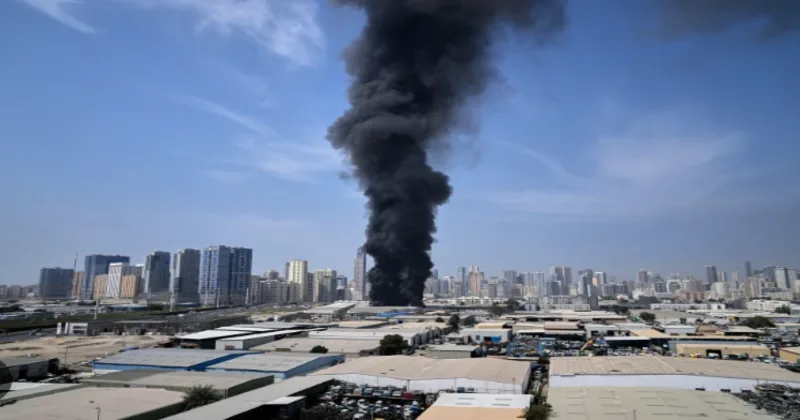
Meanwhile, tensions across West Asia continue to rise sharply as Iran-linked attacks target diplomatic and military installations in several Gulf countries. In a dramatic incident, a drone attack targeted the American consulate in Dubai around midnight on Tuesday. According to local authorities, the drone strike caused a small fire in an area near the consulate compound. Teams from the Dubai Civil Defence rushed to the site immediately after receiving the alert and extinguished the fire within minutes. Officials confirmed that the damage was limited and no casualties were reported.
However, the attack has heightened security concerns in the UAE, with authorities warning that Iranian provocations targeting the country are continuing. The government has issued a strong warning that any attempt to threaten its sovereignty or security will be dealt with firmly. Similar attacks were reported elsewhere in the region. Early Tuesday morning, drones targeted the US embassy in Riyadh, Saudi Arabia. The strike caused a fire in part of the embassy building, though emergency teams quickly contained the blaze.
The Saudi Defence Ministry said the attack on the American diplomatic mission in Riyadh came just hours after the drone strike near the US consulate in Dubai.
On Monday, another drone attack targeted the US embassy in Kuwait City, raising fears that diplomatic facilities across the Gulf are becoming primary targets amid the escalating confrontation. Dubai and several other Gulf cities have remained on high alert since Saturday as tensions surged following US-Israeli strikes on Iran and Tehran’s retaliatory attacks. In response to the deteriorating security situation, the US administration has ordered the suspension of all consular services in Saudi Arabia until further notice.
American citizens have also been advised to avoid visiting US embassies and consulates in the region and to remain in safe locations. Officials warned that the security environment remains volatile and unpredictable.
Military escalation and regional security measures
The security crisis has also extended to military installations across the Gulf.
A missile strike reportedly targeted the US military base at Al Udeid Air Base, one of the largest American military facilities in West Asia. While details of the damage remain unclear, authorities confirmed that the base had been placed on high alert following the attack.
At the same time, Israel intensified its operations against Iranian-backed groups in the region. Israeli warplanes carried out airstrikes targeting positions linked to Hezbollah in southern Lebanon late Monday night.
The World Health Organisation reported that three paramedics were killed while evacuating injured civilians following one of the airstrikes in the Tyre district. Six other people were injured in the attack.
Meanwhile, Qatar issued a strong warning that it would respond decisively to any attack on its territory. The Qatari Foreign Ministry stated that the country was fully prepared to deal with Iranian threats. Qatar also rejected claims circulating online that it had been informed in advance about an Iranian attack. Officials described those allegations as false and misleading.
The Qatari Interior Ministry further announced the arrest of ten individuals accused of working for Iranian military networks. Authorities said the suspects belonged to two separate groups involved in espionage and sabotage activities.
Crackdown on espionage and global military moves
As Iran intensifies its attacks across the Gulf, authorities in several countries have launched a crackdown on individuals suspected of supporting Tehran’s operations. Security agencies reported that several people posting messages in support of Iran on social media have been detained. Investigations revealed that seven individuals were assigned espionage tasks, while three others were involved in sabotage activities.
In Bahrain, two people were arrested after posting messages supporting the Iranian attacks. Officials said one of the suspects had photographed sensitive military locations. In Kuwait, authorities also arrested a person accused of circulating manipulated or false images related to the attacks in an attempt to spread panic and misinformation.
Meanwhile, global powers are also responding to the rapidly escalating crisis. Emmanuel Macron announced that France would deploy an aircraft carrier to the Mediterranean Sea and send a warship to Cyprus as a precautionary defensive measure.
On the American side, Donald Trump said the US Navy would escort oil tankers passing through the strategically vital Strait of Hormuz. Trump stated on social media that the United States would ensure the uninterrupted flow of global energy supplies through the region.
The US president also warned that Washington would respond strongly to the drone attack on the American embassy in Riyadh. Trump further claimed that Iran had been planning attacks first and that the United States had acted before those plans could be executed.
Rejecting allegations that Washington was acting under pressure from Israel, Trump insisted that the US had forced Israel to take action rather than the other way around. In another development, Trump criticised Spain for refusing to build a US military base in the West Asia and announced that Washington would halt trade relations with the country.
He also revealed that around 9,000 American citizens have been evacuated from the Middle East since the conflict began. As the cycle of attacks and counter-attacks intensifies, fears are growing that the region could be heading toward a broader and more destructive conflict. Gulf nations, international powers and diplomatic channels are now racing to contain the crisis before it spirals further out of control.