India stands energy-ready amid Hormuz crisis
June 7, 2026
  • Read Ecopy
  • Circulation
  • Advertise
  • Careers
  • About Us
  • Contact Us
Android AppiPhone AppArattai
Organiser
  • ‌
  • Bharat
    • Assam
    • Bihar
    • Chhattisgarh
    • Jharkhand
    • Maharashtra
    • View All States
  • World
    • Asia
    • Europe
    • North America
    • South America
    • Africa
    • Australia
  • Editorial
  • International
  • Opinion
  • RSS @ 100
  • More
    • Op Sindoor
    • Analysis
    • Sports
    • Defence
    • Politics
    • Business
    • Economy
    • Culture
    • Special Report
    • Sci & Tech
    • Entertainment
    • G20
    • Azadi Ka Amrit Mahotsav
    • Vocal4Local
    • Web Stories
    • Education
    • Employment
    • Books
    • Interviews
    • Travel
    • Law
    • Health
    • Obituary
  • Subscribe
    • Subscribe Print Edition
    • Subscribe Ecopy
    • Read Ecopy
  • ‌
  • Bharat
    • Assam
    • Bihar
    • Chhattisgarh
    • Jharkhand
    • Maharashtra
    • View All States
  • World
    • Asia
    • Europe
    • North America
    • South America
    • Africa
    • Australia
  • Editorial
  • International
  • Opinion
  • RSS @ 100
  • More
    • Op Sindoor
    • Analysis
    • Sports
    • Defence
    • Politics
    • Business
    • Economy
    • Culture
    • Special Report
    • Sci & Tech
    • Entertainment
    • G20
    • Azadi Ka Amrit Mahotsav
    • Vocal4Local
    • Web Stories
    • Education
    • Employment
    • Books
    • Interviews
    • Travel
    • Law
    • Health
    • Obituary
  • Subscribe
    • Subscribe Print Edition
    • Subscribe Ecopy
    • Read Ecopy
Organiser
  • Home
  • Bharat
  • World
  • Operation Sindoor
  • Editorial
  • Analysis
  • Opinion
  • Culture
  • Defence
  • International Edition
  • RSS @ 100
  • Magazine
  • Read Ecopy
Home Bharat

India stands energy-ready amid Hormuz crisis, taps strategic reserves and diversified oil sources

Escalating tensions in West Asia have disrupted crude shipments through the Strait of Hormuz, prompting India to activate its strategic reserves and accelerate oil import diversification. With 100 million barrels in stock and Russian crude emerging as a key alternative, New Delhi is positioning itself to shield domestic energy security from prolonged regional instability.

Dr Vishnu AravindDr Vishnu Aravind
Mar 4, 2026, 07:00 am IST
in Bharat, USA, World, West Asia, International Edition
Follow on Google News
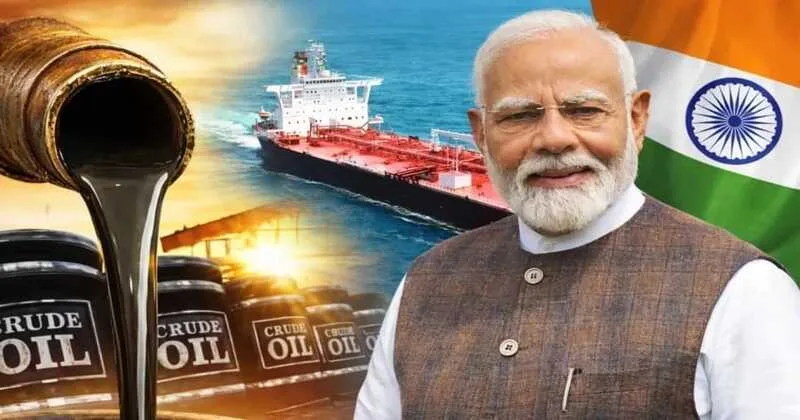
India reinforces its energy security framework, leveraging robust reserves and strategic partnerships to stay resilient amid global oil turbulence.

India reinforces its energy security framework, leveraging robust reserves and strategic partnerships to stay resilient amid global oil turbulence.

FacebookTwitterWhatsAppTelegramEmail

NEW DELHI: Escalating tensions in West Asia have disrupted fuel shipments through the strategic Strait of Hormuz, raising alarm across energy-importing nations. The immediate concern is how countries dependent on crude imports will meet their fuel demand if the disruption continues.

India, however, currently holds an estimated 100 million barrels of crude oil in reserves, sufficient to meet domestic demand for about 40 to 45 days. The development comes amid fears that the Strait of Hormuz, the world’s most critical oil transit chokepoint, could remain shut due to the intensifying Iran–Israel conflict. India imports nearly 88 per cent of its crude oil requirements, with more than half sourced from West Asia. Any prolonged closure of Hormuz could therefore have significant consequences for the country’s energy security.

Strategic chokepoint disrupted

The Strait of Hormuz serves as a vital corridor through which nearly one-third of the world’s seaborne oil supply passes. Reports indicate that almost 86 per cent of the usual crude flow to South Asia, including India, has been affected by the current disruption.

The scale of the crisis is reflected in shipping data. More than 700 oil tankers are reportedly stranded on either side of the narrow waterway. On March 1, only three tankers carrying around 2.8 million barrels of crude oil managed to transit through the strait. By March 2, traffic had slowed further, with just one small tanker and a small cargo vessel passing through.

The sharp decline in vessel movement has intensified concerns about the continuity of crude supplies to major Asian importers. For India, which is the world’s third-largest oil importer, the closure presents a serious strategic challenge. About 20 per cent of global liquefied natural gas (LNG) supplies also transit through Hormuz, adding to the global energy risk.

Also Read: India calls for restraint, expresses concern as Iran-Israel conflict escalates; Reiterates for the safety of Indians

Despite the alarming developments, energy analytics firm Kepler estimates that India’s existing crude reserves, stored in above-ground tanks, strategic underground caverns, and oil tankers already en route, total approximately 100 million barrels. According to Kepler, these reserves could cushion the country against supply disruptions for roughly six weeks.

Reserves offer short-term cushion

India’s strategic petroleum reserves are located at Mangalore, Padur, and Visakhapatnam. These facilities were designed precisely to buffer the economy against sudden supply shocks or geopolitical disruptions.

Sumit Ritolia, Lead Research Analyst at Kepler, noted that while the reserves provide short-term relief, they are not a long-term solution if the Strait of Hormuz remains closed for an extended period. “A prolonged disruption could cause significant volatility in petrol and diesel prices,” Ritolia warned, emphasising that the reserves are intended for temporary crises rather than sustained supply blockages.

Following earlier tensions between Iran and the United States, crude prices had already surged by around 10 per cent. Now, with uncertainty deepening in the region, global benchmark Brent crude has crossed $80 per barrel.

Although India does not face an immediate supply shortage, rising international crude prices could increase the country’s import bill. Higher costs may eventually be passed on to consumers in the form of increased petrol and diesel prices, placing pressure on inflation and household budgets.

Alternative supply routes and Russian option

If the Strait of Hormuz remains shut for an extended period, India will need to diversify its sourcing strategy. Apart from traditional West Asian suppliers, India can turn to West Africa, Latin America, and the United States. However, shipping from these regions involves longer transit times and higher freight costs. Russia has emerged as a key alternative supplier in recent years. India has already increased purchases of discounted Russian crude since the onset of Western sanctions against Moscow. Military analysts have suggested that if direct military action in Iran were to occur, it might be relatively short-lived. Some estimates indicate that active hostilities may not extend beyond four weeks. India’s current reserve capacity roughly aligns with that timeframe, offering a limited but crucial window of resilience.

Meanwhile, the central government and oil marketing companies are closely monitoring developments. Officials are reportedly reviewing contingency measures, including the possibility of regulating LPG supplies if required.

India has prepared an emergency crude supply plan to mitigate the impact of extended disruptions. Despite earlier signals of reducing Russian oil imports, policymakers are now believed to be actively reconsidering that position in light of the current crisis. Increasing supplies from Russia may prove essential to stabilising energy availability if instability in the West Asia persists.

Energy security experts caution that while physical shortages may be avoided in the near term, sustained high global crude prices would pose economic challenges.

As Brent crude remains above $80 per barrel, any further escalation in conflict could push prices significantly higher.

In such a scenario, India’s import costs would rise sharply, potentially widening the trade deficit and exerting pressure on the rupee. Domestic fuel prices could also increase, affecting transport costs, industrial production, and overall economic stability. For now, India’s strategic reserves provide breathing space. However, the situation remains fluid, and the coming weeks will determine whether the crisis remains a short-term disruption or evolves into a prolonged energy emergency.


Topics: Iran-Israel-US WarBharatWest Asia
ShareTweetSendShareSend
✮ Subscribe Organiser YouTube Channel. ✮
✮ Join Organiser's WhatsApp channel for Nationalist views beyond the news. ✮
Previous News

PM Modi speaks to 8 West Asian nations in 48 hours amid escalating tensions; Emphasizes on peace, stability & security

Next News

PM Modi extends Attukal Pongala wishes, says “This festival has a special importance for our Nari Shakti”

Related News

Strait of Hormuz Crisis: Why India cannot afford to be a spectator

How Ramrajya and Kautilya’s Saptang model can build a prospering civilisation

Why invading empires hated them?

As fuel shortages rippled across Asia, New Delhi expanded supplies to its neighbours while Beijing sought to turn energy security into strategic influence.

The Hormuz Test: How India’s energy assistance outshines China’s conditional approach

Demographic changes in Bharat’s border districts have raised concerns about migration, security, and social cohesion

Demographic Shift in Border Areas of Bharat: The dangerous design

J. Nandakumar addresses the Citizens programme

Hindutva is Bharat’s identity and intellectual foundation, Says J Nandakumar

Load More

Latest News

‘We Wanted Him to Serve the Nation, Not Get Caught in Political Drama’: Parents Rebuke Abhijit Dipke

‘This is not what we raised him for,’ say disappointed parents over Cockroach Janata Party Abhijit Dipke’s activism

Strait of Hormuz Crisis: Why India cannot afford to be a spectator

India & Israeli billionaires in the US: How immigrants from Asian countries are powering the growth of American economy

Beneath the Minaret: The Hindu and Jain legacy burried under Qutub Minar

How Ramrajya and Kautilya’s Saptang model can build a prospering civilisation

Why invading empires hated them?

A representative image generated using AI

Hindu Hate Watch-A Weekly Tracker: 46 Incidents of violence, religious persecution, conversion recorded this week

Beyond NEET & CUET: The growing crisis of trust in India’s entrance tests; Decoding lasting solutions

West Bengal Set for Bullet Train Project, Says Railways Minister

Massive Rail Boost for West Bengal: Bullet train, 60 new metro rakes and Rs 14,205 crore allocation announced

Uttar Pradesh Chief Minister Yogi Adityanath reviewing meeting for upcoming Tourist Circuit

UP Charts New Tourism Vision: From Chhatrapati Shivaji Maharaj Museum to Vindhyachal Circuit

Load More
  • Privacy
  • Terms
  • Cookie Policy
  • Refund and Cancellation
  • Delivery and Shipping

© Bharat Prakashan (Delhi) Limited.
Tech-enabled by Ananthapuri Technologies

  • Home
  • Search Organiser
  • Bharat
    • Assam
    • Bihar
    • Chhattisgarh
    • Jharkhand
    • Maharashtra
    • View All States
  • World
    • Asia
    • Africa
    • North America
    • South America
    • Europe
    • Australia
  • Editorial
  • Operation Sindoor
  • Opinion
  • Analysis
  • Defence
  • Culture
  • Sports
  • Business
  • RSS @ 100
  • Entertainment
  • More ..
    • Sci & Tech
    • Vocal4Local
    • Special Report
    • Education
    • Employment
    • Books
    • Interviews
    • Travel
    • Health
    • Politics
    • Law
    • Economy
    • Obituary
  • Subscribe Magazine
  • Read Ecopy
  • Advertise
  • Circulation
  • Careers
  • About Us
  • Contact Us
  • Policies & Terms
    • Privacy Policy
    • Cookie Policy
    • Refund and Cancellation
    • Terms of Use

© Bharat Prakashan (Delhi) Limited.
Tech-enabled by Ananthapuri Technologies