The threat of climate change is no longer remote. Agriculture, towns, beaches, forests and public health are all shaped by this reality. Converging of the issues include rising temperatures, unpredictable monsoons, stronger cyclones, glacial retreat, floods, droughts and air pollution. The necessity for proactive adaptation has increased as hazards become more significant. India is rapidly using artificial intelligence (AI) as a force multiplier in climate action, as it expands renewable energy, increasing green cover and covering emissions.
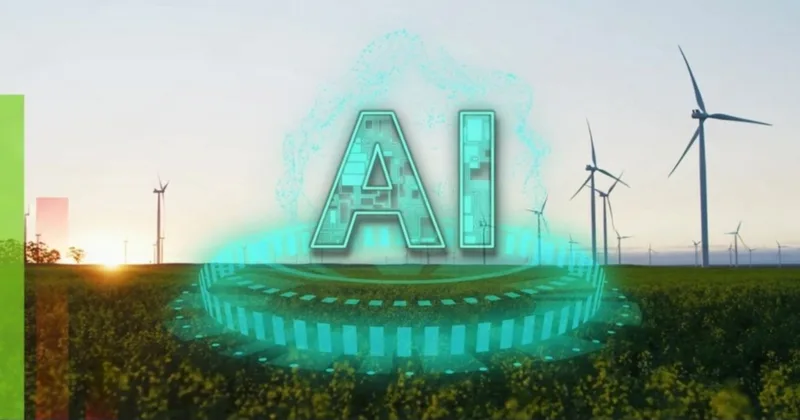
AI has makes it possible for the systems to make predictions or decisions after learning from large datasets. When it used in climate research, it improves catastrophe resilience, aids sustainable agriculture, increases modelling accuracy and optimizing renewable energy. From measuring groundwater risk to early cyclone warnings, India is embedding AI across climate institutional frameworks, thus creating a scalable model for climate resilient development.
A global AI moment in the Global South
During the IndiaAI Impact Summit 2026, which took place at Bharat Mandapam in New Delhi from February 16th-20th, Indian climate tech momentum gained international attention. The summit was first of its kind to be held in the Global South and based on the principles of People, Planet and Progress. The event has demonstrated how artificial intelligence will revolutionize environmental management, sustainable development and government. It made climate as a major attraction, which shows the domestic research and cutting-edge computing infrastructure are working together to solve actual climate dangers.
Strategic aim is evident in India’s investments. Under the Ministry of Earth Sciences, India has set up high performance computer systems with 22 PetaFLOPS of capacity. About 10% of this system uses specialized GPU for weather forecasting AI research. The remaining GPU clusters set for machine learning applications. This computing backbone is enabling next generation climate modelling.
Reinventing cyclone forecasting and extreme weather prediction
India has significantly strengthened the cyclone forecasting capability through AI-assisted tools. The India Meteorological Department (IMD) uses the Advanced Dvorak Technique to estimate the cyclone intensity by utilizing satellite data. AI-based guidance includes inputs from global numerical models, enhances predictions of cyclone formation and tracking intensity. Comparative evaluation of global AI weather systems such as GraphCast, PanguWeather, Aurora and FourCastNet have shown improvements in cyclone path prediction up to 96 hours before landfall with accuracy of 200 kilometres. These advancements improve planning and infrastructure.
Indian researchers are also developing transformer based neural networks capable of forecasting monsoon behaviour up to 18 days in advance. This extended lead time is particularly for agriculture, management and disaster preparedness. Damage assessment is modernised as well. The Spatially Aware Domain Adaptation Network (SpADANet), developed at IIT Bombay, has improved cyclone and hurricane damage classification from aerial imagery. The models has achieved over 5 percent higher accuracy than existing approaches while using limited labelled data, addressing the constraints faced by disaster management agencies
IMD has established a dedicated AI and machine learning team and signed collaboration agreements with IITs, NIT, ISRO and DRDO. A annual training courses on AI fundamentals which are organised to build capacity among scientists. This ecosystem approach will compete sustained innovation around the world.
Landslides, floods and Himalayan vigilance
Early warning systems powered by AI in Himalayan regions are placed. Alerts are sent out up to three hours before the slope breakdown, occurs by an indigenous landslide early warning system. Low-cost sensors are used in the system to measure temperature, humidity, rainfall, soil moisture and ground movement. A machine learning model receives millions of data with more than 90% accuracy. It is installed at more than 60 locations in Himachal Pradesh and allowed for prompt evacuations by detecting millimeter level slope fluctuations.
Forecasting for floods has also changed. AI-enhanced systems river basin management in the Ganga and Brahmaputra areas are implemented. The Indian Land Data Assimilation System (ILDAS), sponsored by ISRO between 2021 and 2024 combines remote sensing data and coupled models to estimate land surface states and floodplain. For the Brahmaputra Basin, BrahmaSATARK offers impact-based flood forecasts, while GBM-CLIMPACT assesses the climate impacts in the Ganga, Brahmaputra and Meghna basins
In areas that commonly experiences monsoon flooding, these techniques enhance readiness. IIT Madras combines 26 climate models and scores them for prediction accuracy using Reliability Ensemble Averaging (REA). When compared to individual models, testing are done across cities including Coimbatore, Rajkot, Udaipur and Siliguri has demonstrated increased reliability. This lessens the uncertainty in monsoon-prone regions climate planning.
Last-mile climate intelligence: Empowering panchayats
The dissemination climate information is one of the biggest changes. Almost all gram panchayats in India are currently covered by the Gram Panchayat Level Weather Forecasting (GPLWF), which was started by IMD in association with the Ministry of Panchayati Raj. Temperature, precipitation, humidity, wind and cloud data are included in forecasts. Platforms like e-Gramswaraj, Meri Panchayat and Mausam Gram allow farmers to access these data.
The Bharat Forecasting System (BharatFS), which was introduced on May 27, 2025, complements this. Compared to the previous 12 km models, BharatFS provides forecasts with a 6 km spatial resolution and can predict rainfall up to 10 days ahead of time. Disaster management and agricultural planning are supported with this much accuracy. New technologies like MausamGPT are being created to offer AI-powered weather and climate advisory services such as fire, fog, lightning and thunderstorm. These mechanisms work together to instil resilience at the local level.
Forest rotection and biodiversity monitoring
An essential source of carbon sinks is forests. Cameras using AI and machine vision capabilities are placed along forest borders to evaluate live video to identify animal movement, unlawful encroachment and fires. Till date human account for approximately 75 percent of global wildfires, thus early detection is crucial. AI systems also identify animals straying beyond forest areas, reducing human-wildlife conflict and protecting ecosystem. Integrated satellite, drones, ground sensor networks strengthen governance and conservation monitoring.
Air quality and urban sustainability
AI-driven solutions are being used to mitigate the dangers associated with urban climate change. To promote AI-driven research for sustainable cities, IIT Delhi and the AIRAWAT Research Foundation at IIT Kanpur has Memorandum of Understanding. Air quality, energy, mobility, infrastructure and waste management are the main areas of attention for this MoU. In order to create a healthier and more liveable cities, AI-enabled sensor systems are essential for real-time air and bioaerosol monitoring that combines data from several urban sources. AI improved policy responsiveness makes a focused methods possible in pollution prone metropolitan cities by combining environmental datasets.
Groundwater risk mapping and safe drinking water
Another area where AI is having a desired result is water security. An AI-based model was created by IIT Kharagpur researchers to identify arsenic poisoning the groundwater in the Ganga basin. The model predicts the distribution of arsenic and identifies high-low risk areas based on geological, environmental and usage data. The model has strong associations between surficial thickness and groundwater-fed irrigation with arsenic hazards. It supports smarter groundwater source selection under the Jal Jeevan Mission, improving safe drinking water access in affected regions.
Coastal monitoring and sea-level preparedness
Vulnerability along Indian coastlines is evaluated on Ai based sea level and coastal monitoring systems. These resources support urban planning decisions by identifying regions that are vulnerable to sea level rise. By facilitating adaptation the communities may get ready for the long-term effects of climate change.
Institutional integration and capacity building
Training and institutional coordination assists the Indian AI-climate ecosystem. A virtual center for creating AI-based application tool, which is set up by the Indian Institute of Tropical Meteorology (IITM) in Pune. IMD partnerships with IITs, NITs, ISRO and DRDO guarantees the interdisciplinary research. Scientific capacity is strengthening through AI training sessions. Long-term dedication is demonstrated by investments in GPU clusters and high-performance computing.
Toward net-zero resilience
India is committed to achieve net-zero emissions by 2070. AI contributes across sectors where renewable energy optimisation, sustainable agriculture, disaster prediction and environmental monitoring can be done eeasily. It is not a stand-alone technology to include AI into climate governance. Urban planning processes, agricultural advice, conservation systems and disaster management all incorporate it. AI is being mainstreamed into public policy from gram panchayat-level weather advisories to national infrastructure.
The importance of AI can be seen in both accessibility and technological sophistication. Predictive mapping, real-time alerts and village-level forecasts democratize climate intelligence. It improves readiness, decrease uncertainty and speed up reaction times. India has shows that technology must support climate resilience in the Global South without being exclusive of it. This model foundation is made up of localized deployment, capacity building and institutional partnership.
AI-powered systems are generating early warnings, enhancing environmental governance and assisting with well-informed and decision-making as climate conditions are worsening. An all-encompassing approach to climate risk is shown in the intersection of data science, meteorology, hydrology, agriculture and urban planning. Indian startups and institutes has demonstrated in summit, how AI may be a vital component of sustainable development when combined with local governance frameworks and national missions. The nation is creating an enivronment for climate resilience which is inclusive and scalable via consistent investment. Also the collaborations and innovation for the Global South.