The misconception and stereotypes among the western media and its personalities about Sanatana culture is not a new phenomenon. As an impact of their ill-conceived and shallow knowledge potential about the greatness or depth of the practices in Sanatana Dharma, the western media personalities, YouTubers and the so called social media influencers predominantly tend to spread the Sanatana culture in a negative shade.
Such episodes keep resurfacing across social media and such influencers also are severely scrutinized by the Hindus and the larger Indian diaspora across the globe. The social media influencers and other media personalities are thus advised to study, understand and grasp the essence of Sanatana traditions and practices before making a mockery of it. In the name of satire, artistic representation or performative scrutiny, age-old civilisation and its ancient practices or sacred rituals cannot be disrespected.
American YouTuber making mockery of worshipping cow
On February 10, 2026 in Plano, a city in the state of Texas in the United States of America(USA), an American YouTuber and Comedian named Alex Stein, delivered a satirical address in the City Council meeting. He made a mockery of the Hindu traditions and practices, specifically with reference to the tradition of worshipping cows. He made exaggerated claims regarding cow dung and gomutra used as a part of Hindu rituals.
Several Indian Americans who attended the event severely criticized the comments made by Alex Stein and staged a walk out from the event. Wide criticisms circulated on social media platforms as well, as many stated the comments by Alex Stein as disrespectful and reductive towards an ancient civilisation. It was not just a political satire, but a deliberate attempt to disrespect an ancient culture. Many people also asserted that the comments by Alex Stein towards Sanatana traditions depicted his lack of knowledge towards the culture.
Fake claims regarding the cleanliness of River Ganga
A few weeks earlier, a British Television presenter named Jeremy Wade, known for hosting a show called as River Monsters visited River Ganga. He posted a video online, where he tested water from the Ganga River using a chemical indicator and claimed that the Ganga river water is full of contamination. He also exclaimed that the river water is “full of human waste”.
River Ganga is apparently, in its cleanest form in the present circumstances and is devoid of human wastes. However, the British influencer with his preconceived misconceptions and prejudices made false claims and many people criticised his statement as antithetical or disrespectful to the spiritual, cultural significance of the Ganga river in the Hindu traditions.
Deepawali culture criticised in Canada
During the Deepawali celebrations in Canada, many criticised the ritual and practices and made derogatory remarks on social media. In Alberta, Canada, an engineer framed Deepawali wishes as “nonsense”. Another Canadian vlogger posted Deepawali celebrations with inflammatory language targeting the Indians. The YouTuber was accused of fomenting racism with his prejudiced attitude.
Dear @Netflix_CA and other service providers & vendors,
You already know everything about me from all my personal information that you keep collecting. Let me repeat some of it. I'm a middle aged white guy from Alberta, who like war movies, science fiction, and real crime… pic.twitter.com/kypI3S3QYf
— Martyupnorth®- Unacceptable Fact Checker (@Martyupnorth) October 17, 2025
Kavadi Tamil ritual mocked in Malaysia
In Malaysia, hosts of the three Era FM Radio, Nabil Ahmad, Azad Jasmin and Radin Amir shared a video that mimicked and mocked the Kavadi ritual widely followed by the Tamil community, during Thaipusam. The FM radio hosts were immediately arrested and investigations were initiated. However, the row illustrates how personalities who are said to be influencers with their stereotypes spread misinformation and hatred in the society, which are indeed a threat to communal harmony.
Misrepresentation of Maa Kali
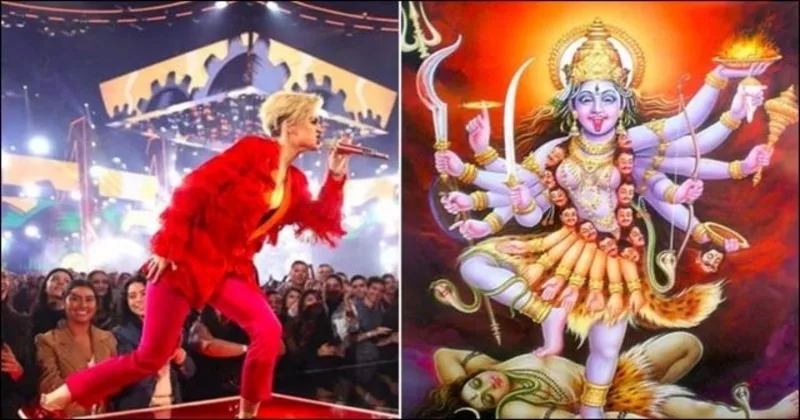
In yet another instance, Canadian Rapper, Tommy Genesis faced massive criticism over the use of Maa Kaali visuals in her song True Blue. She was criticised for misusing the sacred symbols, without trying to understand the true meaning, spiritual or theological significance. Similarly, in another instance, American Pop Star Katy Perry posted an image of Goddess Kali and wrote on instagram as “current mood”. She drew wide criticism for irrelevant comparison without understanding the true significance of Maa Kali.
In an era of digital media, the social media influencers aim to follow trends, create fan bases and gain millions of views. In this urgency, they tend to mock cultures, distort belief systems and make satire of ancient civilisations to seek personal benefits. Stereotypes, lack of awareness, shallow knowledge base and most importantly lack of readiness to learn and respect the depth or intensity of other cultures is the reason behind such atrocities towards Hindu culture. Hindu iconography or rituals cannot be a material for stage drama and satire, without understanding their spiritual significance or historical relevance.