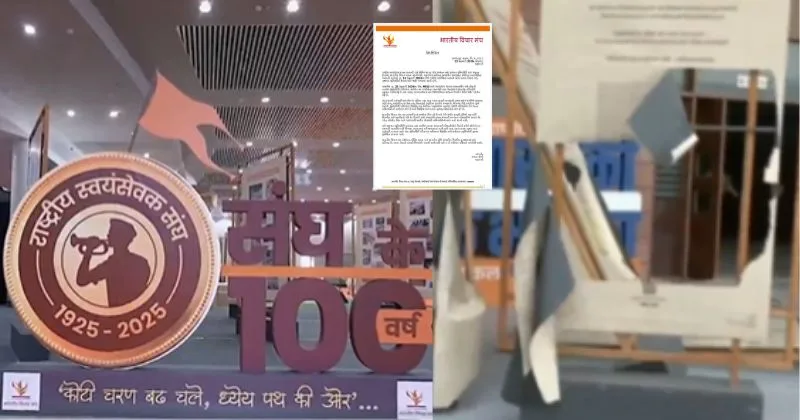
AHMEDABAD: Students belonging to the National Students Union of India, the youth wing of the Congress party created ruckus at the Gujrat Univeristy campus on February 23 when they vandalised the exhibition hall where an exhibition on RSS @ 100 was held.
The move of the NSUI uspporters wsa denounced by Bharatiya Vichar Manch. which termed the episode a “grave and condemnable act” and demanded strict legal action against those responsible. The controversy has once again raised concerns over maintaining academic freedom and campus discipline in institutions of higher learning.
https://www.instagram.com/reel/DVF7oRxEofB/?utm_source=ig_web_copy_link
According to statement issued by BVM, the destruction of research exhibits and disruption of the event amounted to a serious violation of campus norms and potentially constituted criminal offences under applicable laws. The organisation asserted that universities are meant to function as centres of knowledge, debate, and intellectual exchange, and not as spaces for intimidation or destruction.
BVM emphasised that while freedom of expression is a fundamental democratic right, it does not extend to vandalism, threats, or unlawful disruption of academic activities. The group called upon Gujarat University authorities and law enforcement agencies to initiate strict and immediate legal action against those allegedly involved in the incident.
The university administration has not yet issued a detailed public statement outlining the extent of damage or identifying individuals responsible. However, sources indicated that standard procedures are being followed to assess the situation and review any available evidence, including campus surveillance footage.
The alleged involvement of NSUI, the student wing of the Indian National Congress, has added a political dimension to the controversy. Student organisations across the country have historically engaged in protests and demonstrations on campuses, but incidents involving damage to property often lead to broader debates on the limits of protest within educational institutions.
BVM reiterated its commitment to academic freedom, civilised discourse, and the rule of law, stating that any attempt to silence or intimidate academic expression undermines the very purpose of a university. The organisation expressed confidence that both the university administration and state authorities would take firm and decisive action against those found guilty.