Many individuals think that humanity is a fundamental string that binds mankind irrespective of the distinctions regarding geography, belief system and society. Its presentation appears to be somewhat arbitrary in execution, nevertheless. Scenes of anguish in news outlets, on social networking sites and in conversations among people throughout the globe increasingly influence which emergencies receive widespread empathy while others are disregarded. The global community opens up strongly to Palestinian suffering. Millions across the globe use social media platforms to pass on consciousness. Around the world, organisation launch urgent announcements and demonstrations filling the squares.
On the contrary, notwithstanding being true that the suffering of people is analogous, other catastrophes—such as the expulsion of Hindu families in Murshidabad, the brutal attacks on minorities in Bangladesh, for instance or continuing oppression of Christian communities in Nigeria—get considerably less media coverage. The distinction poses substantial questions concerning the character of empathy: is it affected by storytelling accessibility, prominence and geographical ambitions or is it an abiding moral framework? The following piece addresses the troubling facts of choosing pity by examining these contrasting scenarios, bringing the subject whether or not compassion and empathy is actually driven by beliefs or frequently influenced by personal gain along with external approval.
The atrocities on Hindus in Murshidabad
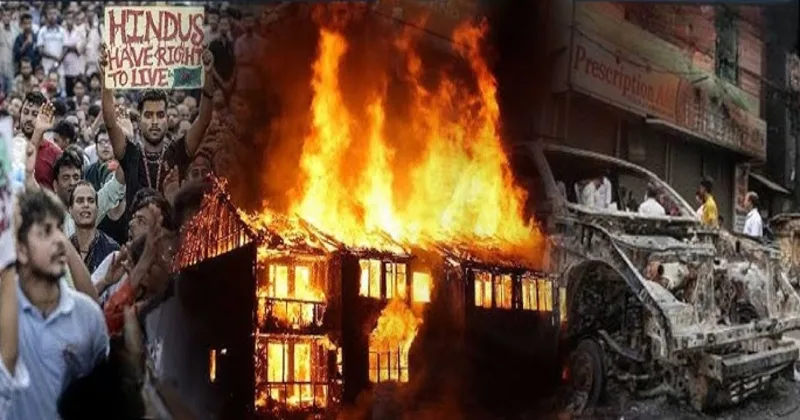
Hindus in India’s Murshidabad were assaulted, yet they had been ignored in their home nation. Violence ensued West Bengal’s Murshidabad region in April 2025. Violent intercommunal conflict flared forth amid rallies in opposition to the the Waqf(Amendment) Act. Systematic assaults have been launched on Hindu population. Religious buildings suffered harm, establishments were pillaged and residences suffered fires. The dreadful scenes have been described by bystanders. In the wee hours people escaped over the water’s edge, forsaking their means of survival and ancestral customs. In line with accounts, more than 500 Hindu homes were uprooted and all of their possessions were reduced to ashes.
Surviving as asylum seekers in their own homeland, women and children seeking security within temporary camps. The wreckage had been documented by local media and websites such as Hinduphobia Tracker, but there was astonishingly minimal national media coverage. Even more concerning, there were many accusations of cops inaction. The judicial system was noticeably absent amid the most severe moments of the assaults and requests for assistance from affected individuals went unheeded, as reported by NDTV and other media. Nevertheless, where did the international humanitarian community’s voices go? No demonstrations, no political concern, no public declarations—just quietness. It appeared as if the dire situation of the Hindus in Murshidabad was not a humanitarian matter worthy our empathy.
Bangladesh: Amid political troubles; Minorities are in accordance with threat
Following Prime Minister Sheikh Hasina was sacked from government in 2024, the scenario for Hindus across the borders worsened. Aggression towards minority communities grew widespread as an outcome of the subsequent political void. Several people suffered injuries or relocated, numerous Hindu residential and commercial properties sustained damage and several of temples were smashed, reportedly to the Bangladesh Hindu Buddhist Christian Unity Council (BHBCUC). In a matter of moments, long-standing temples had been reduced to rubble. Within hours, entire towns were abandoned as terrified individuals fled towards India for safeguarding.
Reuters and other international news organisations documented the violence that occurred. They reported that in several of municipalities, thousands of people ransacked businesses and vandalised Hindu places of worship. But despite the pervasiveness chaos, there was barely any public outrage considering it was overwhelmed by additional developments from halfway around the world. Former Nobel Peace Prize winner and the Chief Advisor of the interim government Muhammad Yunus arrived pursuant to intense scrutiny for his dismissive remarks. He addressed accounts involving violence as “fake information or “politically motivated exaggerations.”
His suggestion to minorities and not emphasised their faith in an interview conveyed a disturbing signal to those who were already frightened. The evidence are as follows: not withstanding the razing of temples, the expulsion of families and the destruction of fatalities, there were no nationwide marches, prominent posts on Twitter or recommendations from international human rights organisations. The Hindu minority in Bangladesh’s cries were disregarded through diplomatic means.
Christians in Nigeria are suffering siege while the globe denies them
A gradual, relentless, largely unidentified annihilation is currently taking place in Nigeria. For years, militant organisations, extremist groups and Islamist terrorists have viciously assaulted Christian communities in the name of religion or power. As to reports from International Christian Concern(ICC), approximately 8,000 Christians were murdered or kidnapped in 2022 alone. The Yelwata massacre in June 2025 massacred between 100 and 200 people and forced out countless others. Religious organisations were burned to ashes, entire towns were destroyed and victims were left reeling in a darkness of universal disregard.
International news cycles are quick, but they seldom stop here. No “Pray for Nigeria” slogans or viral campaigns have dominated for days at a time. The globe’s prevalent consciousness rarely recognises the accounts of vanished churches, mourning children and devastated moms. Where is the wailing, one queries? Results in the absence of international allure make the agony of Nigerian Christians anything less awful?
Global action for Palestinians juxtaposed
Now contemplate the predicament in Palestinian territory. Images of ill children, bombed healthcare facilities and terrified citizens from Strip filled screens had created a massive surge of worldwide solidarity. Several thousand gathered in impassioned confrontations appealing for rights for Palestinians from the United States to London, Indonesia to Istanbul. States, prominent individuals and academics raised their worries. Migration became a powerful representation of empathy and defiance that crossed national boundaries and disagreements over politics. Focus ought to be directed to the Palestinian situation.
Conflict undoubtedly conduces to the demise of innocent lives. Nevertheless, the quandary still continues to arise: why having is there so much passion and compassion here, whenever other terrible events in the history of humanity are ignored? Why do not there be parades for the sake of the refugees in Murshidabad, for instance, those who oppress Hindus in Bangladesh, or the Christians who were killed in Nigeria?
Why the selectivity?
Beyond the breadth of the tragedy itself, an assortment of different variables determine the disparate treatment of suffering among individuals. News coverage is crucial; narratives with spectacular pictures, uncomplicated narratives or a wide audience are more inclined to attract attention around the world. Who anguish reverberate is also influenced by their political beliefs and intellectual framing. Additional support will be provided to victims who’s circumstances are considered to be ethically apparent or whom fit into conventional mythologies. Artificial compassion is additionally shaped by geopolitical targets. Conflict in less strategically vital sectors may go under the radar, but governments and organisation are more vociferous when their representation coincides with strategically or financial goals.
Additionally, while those who are marginalised are frequently finding it challenging to have their anguish understood, organised advocacy coalitions, international communities and powerful democratic connections draw awareness on particular events. In the final analysis, storytelling power and control connections empower perpetrators or institutions to reduce brutality by portraying it as sociopolitical disagreement or disorder instead of exploitation, so lowering globally outrage. Basically, compassion is rarely untainted or ubiquitous; alternatively, it is refined through ease of access, prominence and alignment with existing goals, resulting in numerous aggressors staying disregarded while getting insufficient treatment.
Questions to leave you with
We are compelled to wrestle with uncomfortable worries surrounding the sincerity of our ethical obligations when empathy is arbitrarily activated. Do we undercut the foundation of morality we claim to stand by when we protest about one calamity while overlooking another tragedy? Do our displays of sympathy originate from an authentic compassion for others or are they conditional on whether or not those affected coincide with our ideological beliefs, social conveniences or individual beliefs?
Has postmodern engagement, intensified by online platforms and global connections, morphed from a solid, ethically sound perspective into an echo chamber filled with visibility and theatrical anxiety? Most all, it’s important to think about if compassion always prevails above people or if it has transformed into a particular, driven by interests occurrence employed irregularly and constantly when associated with simplicity, attention or individual or collective advantage. Our actions of kindness could grow to appear fragmented, constrained and eventually unfulfilled until we address these enquiries.