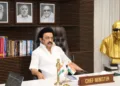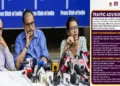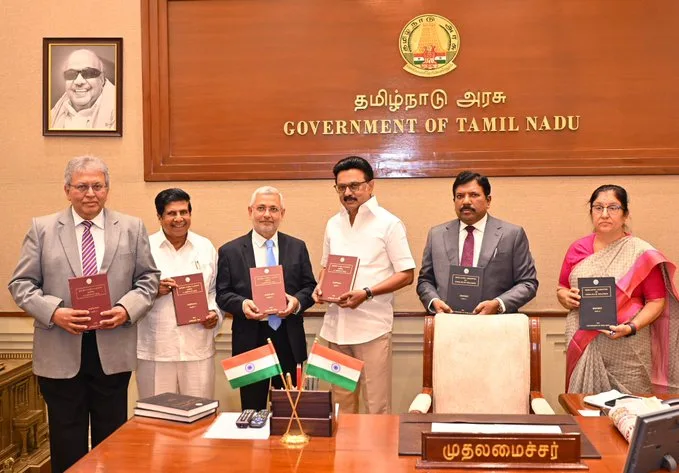
In poll-bound Tamil Nadu, the three-member high-level committee on Union government–state relations, established by the DMK government to study evolving federal dynamics, submitted the first part of its report to Chief Minister M. K. Stalin at the Secretariat in Chennai on February 16. The report is expected to be tabled during the ongoing Budget session of the State Assembly.
The panel, set up on April 15, 2025, is chaired by retired Supreme Court judge Justice Kurian Joseph, with former Indian Maritime University vice-chancellor and retired IAS officer K Ashok Vardhan Shetty, and former Tamil Nadu Planning Commission vice-chairman Dr M Naganathan as its members.
Described as a “non-partisan” initiative, the exercise marks the fourth major review of Union–state relations at the national level and the second such effort taken by the state government after the Rajamannar Committee (1969–71).
மாநிலங்களின் நியாயமான உரிமைகளைப் பாதுகாக்கவும், ஒன்றிய-மாநில அரசுகளுக்கு இடையேயான உறவுகளை மேம்படுத்திட உச்ச நீதிமன்ற மேனாள் நீதியரசர் திரு. குரியன் ஜோசப் அவர்கள் தலைமையில் அமைக்கப்பட்ட உயர்மட்ட குழு தனது அறிக்கையினை மாண்புமிகு தமிழ்நாடு முதலமைச்சர் திரு. @mkstalin அவர்களிடம்… pic.twitter.com/F7ChE4gx00
— CMOTamilNadu (@CMOTamilnadu) February 16, 2026
DMK has been clamouring for more powers to the state and more particularly autonomy and being free from the federal Union government set-up.
When one of its founders, CN Annadurai, mooted the separate Tamil Nadu state, Nehru warned him it would amount to sedition and that if they pursued it, rules would follow. After that, till Anna breathed his last, it was kept on the back burner. But on and off, its leaders like DMK MP A Raja and others would mention in their speeches, implying that they have not given up that demand.
The current CM MK Stalin has been accusing the Centre of not giving or delaying funds to TN. He even refused to call it the Central government but repeatedly said, with a narrative, that it is only the Union.
One of its ally leaders wanted Tamil Nadu to have external affairs, judiciary, home, taxation portfolios with independent decision-making authority.
Before the 2021 state assembly polls, over 180 political outfits, mostly letter pad and little known, allegedly attended an online meeting in which a Union of India like the USA model was discussed and decided to carry out that agenda.
At a time when the Indian government is trying for “one nation one election, one ration card”, the DMK in Tamil Nadu is working quite opposite to this by taking up the once discarded ‘separate state’ or ‘statehood’ with countries like US, European Union or erstwhile USSR.
DMK previously used the slogan “Dravida Nadu belongs to Dravidians” to promote separatist ideas. “Dravidian Liberation Day” was also observed on a particular day.
Former Union Minister Murasoli Maran put forth this argument in his 1965 book “Why We Need Dravidian”. Dravidar Kazhagam had mooted the separate “Dravida Nadu”.
DMK’s first election manifesto laid emphasis on secession and called for the Constitution to be amended to prove the right of states to secede.
Earlier, the Sarkaria Commission (1983–88) and the Punchhi Commission (2007–10) debated this issue in detail and came out with recommendations.
According to media reports, the latest review was necessitated by significant constitutional, fiscal and institutional changes that have taken place since those commissions submitted their recommendations.
It has been backbreaking work over the last three months, with nearly 1,20,000 words, 408 printed pages, and 12–14 hours of work every day.
It is learnt that Part I of the report, prepared in both English and Tamil, contains 10 chapters covering aspects of federal governance, including decentralisation and state autonomy, constitutional amendments, territorial integrity of states, language policy, the role of governors, delimitation, elections, education, health and the Goods and Services Tax framework.
The report presents a detailed assessment of contemporary challenges and offers “concrete and actionable” recommendations aimed at restoring state central relations while strengthening cooperative federalism within the constitutional framework. Two additional parts of the report, each comprising 10 chapters, are currently under preparation.
A state government release says: “In a first-of-its-kind move, the Tamil version of the report will be released under an open-access framework after it is tabled in the Tamil Nadu Legislative Assembly. Individuals and institutions will be permitted to print, reproduce or distribute the Tamil text from the official PDF, provided proper attribution is maintained and no alterations are made.”
It said: “The objective is not to weaken the Union, but to right-size it, enabling it to focus on genuinely national responsibilities while restoring to the states the autonomy essential for effective governance and aligning authority with responsibility. A Union that diffuses its energies across functions better performed by states and local bodies risks distraction from the larger national challenges that only it can address.”
The earlier Rajamannar Committee had recommended the creation of an inter-state council for coordination among states and broader devolution of funds from the Centre. It also mooted the transfer of several subjects such as oil resources from the Union list to the state list.
Nationally, the Sarkaria and Punchhi Commissions also reviewed Centre–state relations and proposed significant recommendations.
Critics argue that there is a systemic effort by the breaking India forces to portray Southern states, particularly Tamil Nadu, as victims of Central government policies. They say this includes producing documents to strengthen the anti-Central government narrative for the last five decades by Dravidian parties.
They further allege that separatism has been slowly injected, particularly led by the DMK and supported by its allies and proxies. The Congress party is seen as aligning with it when electorally convenient.
In an apparent effort to reinforce this narrative ahead of 2025, the DMK constituted this three-member high-level committee to examine relations between the Union government and Tamil Nadu. The Part 1 report of the committee is aimed at shaping voter perceptions ahead of the upcoming Assembly elections in the state.