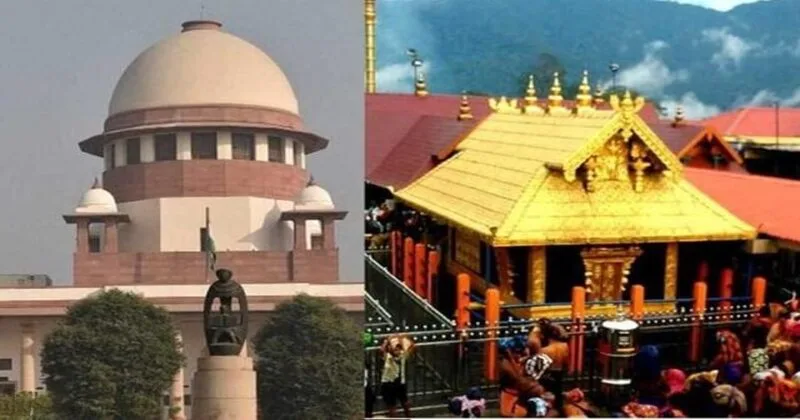
New Delhi: The Sabarimala women’s entry issue, which has deeply shaped Kerala’s political discourse and social landscape, has once again come under active consideration by the Supreme Court of India. The apex court will hear review petitions, including those challenging the verdict permitting women’s entry into Sabarimala, on Monday. The matters will be taken up by a bench headed by Chief Justice Justice Suryakant. Significantly, the Sabarimala case has returned to the Supreme Court’s active list after a gap of nearly seven years. It has been placed 44th on Monday’s cause list, underscoring its renewed urgency and national importance.
The dispute was referred to a larger nine-judge Constitution Bench in 2019, but hearings were stalled following the outbreak of COVID-19. Chief Justice Suryakant is now the only sitting judge who was part of that earlier bench. When the present three-judge bench takes up the matter on Monday, clarity is expected on when arguments before the larger bench may finally commence. With Kerala moving closer to Assembly elections, the case’s reappearance before the court carries major political implications. Parties across the spectrum are closely watching developments, particularly to see what position the state government, earlier a supporter of women’s entry, will adopt under the changed circumstances.
On September 28, 2018, a Constitution Bench led by Dipak Misra delivered a landmark judgment allowing women of all ages to enter Sabarimala. The court ruled that excluding women on the basis of menstruation violated constitutional guarantees of equality and dignity. Justice Indu Malhotra was the sole dissenter on the five-judge bench, maintaining that courts should refrain from intervening in matters of religious faith and long-held practices.
Among the central questions now before the court are the constitutional question between religious freedom and gender equality. Another key issue is whether Ayyappa devotees at Sabarimala can be recognised as a distinct religious denomination deserving special protection. Every observation from the Supreme Court on Monday is expected to reverberate strongly through Kerala’s political landscape, potentially influencing narratives and alliances as the state heads into a crucial election season.