India–US Trade Agreement: The arrival of Bharat’s moment
June 4, 2026
  • Read Ecopy
  • Circulation
  • Advertise
  • Careers
  • About Us
  • Contact Us
Android AppiPhone AppArattai
Organiser
  • ‌
  • Bharat
    • Assam
    • Bihar
    • Chhattisgarh
    • Jharkhand
    • Maharashtra
    • View All States
  • World
    • Asia
    • Europe
    • North America
    • South America
    • Africa
    • Australia
  • Editorial
  • International
  • Opinion
  • RSS @ 100
  • More
    • Op Sindoor
    • Analysis
    • Sports
    • Defence
    • Politics
    • Business
    • Economy
    • Culture
    • Special Report
    • Sci & Tech
    • Entertainment
    • G20
    • Azadi Ka Amrit Mahotsav
    • Vocal4Local
    • Web Stories
    • Education
    • Employment
    • Books
    • Interviews
    • Travel
    • Law
    • Health
    • Obituary
  • Subscribe
    • Subscribe Print Edition
    • Subscribe Ecopy
    • Read Ecopy
  • ‌
  • Bharat
    • Assam
    • Bihar
    • Chhattisgarh
    • Jharkhand
    • Maharashtra
    • View All States
  • World
    • Asia
    • Europe
    • North America
    • South America
    • Africa
    • Australia
  • Editorial
  • International
  • Opinion
  • RSS @ 100
  • More
    • Op Sindoor
    • Analysis
    • Sports
    • Defence
    • Politics
    • Business
    • Economy
    • Culture
    • Special Report
    • Sci & Tech
    • Entertainment
    • G20
    • Azadi Ka Amrit Mahotsav
    • Vocal4Local
    • Web Stories
    • Education
    • Employment
    • Books
    • Interviews
    • Travel
    • Law
    • Health
    • Obituary
  • Subscribe
    • Subscribe Print Edition
    • Subscribe Ecopy
    • Read Ecopy
Organiser
  • Home
  • Bharat
  • World
  • Operation Sindoor
  • Editorial
  • Analysis
  • Opinion
  • Culture
  • Defence
  • International Edition
  • RSS @ 100
  • Magazine
  • Read Ecopy
Home World North America USA

India–US Trade Agreement: The arrival of Bharat’s moment

The India–US trade agreement must be viewed against the backdrop of unprecedented global economic pressure. Over the past year, the United States under President Donald Trump deployed tariffs as an instrument of strategic coercion. Across continents, punitive duties were imposed and negotiations were conducted through psychological, economic and political pressure. Several nations recalibrated swiftly; some capitulated quietly

Dr Jagmohan Singh RajuDr Jagmohan Singh Raju
Feb 15, 2026, 08:00 pm IST
in USA, World, Opinion, Business, Economy
Follow on Google News
Representative Image

Representative Image

FacebookTwitterWhatsAppTelegramEmail

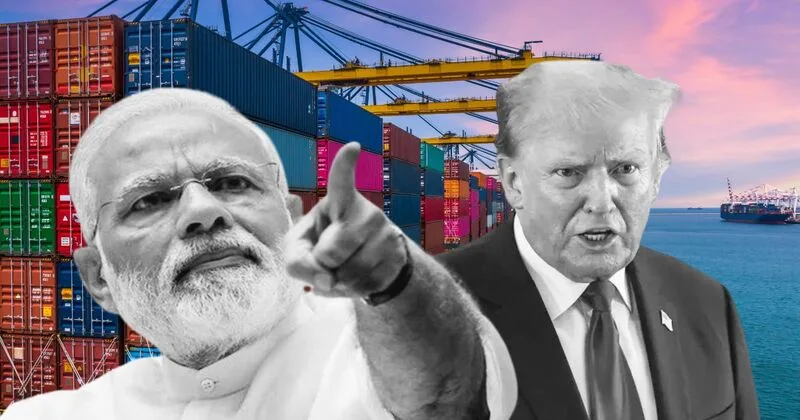
The India–US trade agreement must be viewed against the backdrop of unprecedented global economic pressure. Over the past year, the United States under President Donald Trump deployed tariffs as an instrument of strategic coercion. Across continents, punitive duties were imposed and negotiations were conducted through psychological, economic and political pressure. Several nations recalibrated swiftly; some capitulated quietly.

A Test of Pressure, A Moment of Resolve

India, too, faced extraordinary pressure. Tariff threats escalated sharply—at one stage rising toward 50 per cent. The signal was unmistakable: open markets, concede ground, or face economic consequences.

Under the leadership of Prime Minister Narendra Modi, Bharat chose neither panic nor submission. It chose a strategy. It did not dismantle its red lines. It did not barter long-term sovereignty for short-term relief. Instead, while engaging the United States firmly, Bharat accelerated strategic partnerships elsewhere—concluding the “mother of all deals” with the European Union and advancing agreements with the United Kingdom. These were not symbolic gestures; they fundamentally altered the leverage equation. They demonstrated that Bharat was not dependent on a single trade axis and that it possessed diversified economic options in a rapidly resetting global order.

In doing so, Bharat signalled something the world had begun to recognise: it would negotiate, but it would not kneel.

Agriculture and the Assertion of Sovereignty

Nowhere was the pressure sharper than in agriculture. For decades, American negotiators have sought expanded access to Bharat’s agricultural markets. Given the scale and subsidy architecture of American agribusiness, opening staple sectors would have exposed millions of small and marginal farmers to destabilising competition. Such exposure would not merely have been economic—it would have touched social stability and national food security.

That line was not crossed.

Wheat remains protected. Rice remains protected. Dairy remains protected. The Minimum Support Price framework remains intact. Public procurement remains intact. Buffer stock mechanisms remain intact. Despite sustained external pressure, Bharat did not open its core agricultural markets. This was not tactical obstinacy; it was a sovereign decision rooted in first principles.

For Bharat, food sovereignty is national security. Agriculture is not simply an economic sector—it is civilisational continuity, rural dignity and social equilibrium intertwined. Atmanirbhar Bharat was never about isolationism; it was about strengthening internal capacity so that engagement with the world becomes a sovereign choice rather than a compulsion. The present agreement reflects precisely that maturity. Bharat protected what is strategic and engaged where it enhances national strength.

In this domain, the United States ultimately had to adjust. The red lines held.

The Global Supply Chain Reset and the China+1 Opportunity

Yet to see the agreement only through the lens of agriculture would be to miss its larger significance. The global economic order is undergoing a structural reset. Supply chains are diversifying as corporations and governments pursue the China+1 strategy to reduce overdependence on a single manufacturing hub. This reconfiguration is not episodic; it represents a long-term rebalancing of global production.

In this reordering, Bharat stands uniquely placed. With demographic scale, political stability, digital transformation and rapidly expanding infrastructure, Bharat is emerging as the most credible China+1 manufacturing destination. However, manufacturing expansion requires more than domestic reform. It demands predictable trade frameworks and strategic economic partnerships.

Under the leadership of Prime Minister Narendra Modi, Bharat has combined internal reform with calibrated external engagement. Production-linked incentives, infrastructure modernisation, logistics corridors and digital governance have strengthened domestic capacity. The trade agreement complements this internal consolidation by signalling policy stability and strategic clarity to global investors and supply-chain planners.

Food security insulated. Strategic sectors protected. Manufacturing opportunity expanded.

Agricultural stability and industrial ambition are not contradictions; they are complementary pillars of Viksit Bharat. By safeguarding its agricultural backbone while deepening economic engagement, Bharat strengthens both internal resilience and external positioning.

From Submissive India to Confident Bharat

Critics have attempted to portray this agreement as capitulation under American pressure. Such claims collapse under examination. The staple crops remain insulated. MSP remains untouched. Dairy remains shielded. Procurement remains intact. Sovereign policy space remains preserved.

Faced with aggressive tariff tactics, Bharat did not dismantle its agricultural safeguards. Faced with demands to open sensitive sectors, it held firm. Faced with geopolitical uncertainty, it diversified its economic partnerships. The final agreement reflects equilibrium, not subordination.

What we are witnessing is deeper than a trade settlement. It is the evolution from a reactive India to a self-assured Bharat. For decades, India often found itself responding to global pressures within constrained frameworks. Today, Bharat shapes its engagements. It protects its civilisational core while positioning itself within a transforming global order.

The world is beginning to reckon with what Bharat represents: strategic autonomy without isolation, openness without surrender, growth anchored in sovereignty. In an era of fractured geopolitics and volatile supply chains, Bharat is emerging as a stabilising economic pole.

This moment, however, demands continued reform. Diversification into oilseeds and pulses, expansion of fisheries and agri-processing, manufacturing competitiveness, skilling and logistics integration remain essential. Trade stability provides the runway; reform provides the thrust. If Bharat leverages this stability to accelerate structural transformation, the present agreement will be remembered as a turning point in the journey toward Viksit Bharat.

Nations arrive at defining moments through resilience under pressure. Bharat absorbed economic coercion without capitulating. It defended agriculture without retreating from global engagement. It diversified partnerships without compromising sovereignty. It negotiated from strength and secured its red lines.

This agreement therefore represents more than commerce.

It marks the arrival of Bharat’s moment—confident, self-reliant and ready to shape the global economic order.

 

Topics: IndiaUSAEconomyTradeTariffsIndia-US trade deal
ShareTweetSendShareSend
✮ Subscribe Organiser YouTube Channel. ✮
✮ Join Organiser's WhatsApp channel for Nationalist views beyond the news. ✮
Previous News

IIT Patna Professor’s paper claims ‘Rape is structured in Brahmanical Hinduism’, sparks massive outrage

Next News

‘Caste by birth remains same even after marriage or conversion’: Allahabad HC verdict in SC/ST act case sparks debate

Related News

As fuel shortages rippled across Asia, New Delhi expanded supplies to its neighbours while Beijing sought to turn energy security into strategic influence.

The Hormuz Test: How India’s energy assistance outshines China’s conditional approach

India heralds Mega Rafale Deal: Writes to France for 114 jets; Impetus for national security & defence indigenisation

European Commission President Ursula von der Leyen, Chinese President Xi Jinping and US President Donald Trump

Trade Barriers, AI Battles and Military Containment: The European-US strategic front against China takes shape

Govt Revises Immigration Rules: Foreigners must renew registration within 180 days; Digitisation push for redressal

Myanmar President U Min Aung Hlaing and Prime Minister Narendra Modi

PM Modi pushes for democracy in Myanmar; Naypyidaw vows action against insurgents threatening India’s national security

Myanmar President U Min Aung Hlaing and Prime Minister Narendra Modi

India-Myanmar boosts trade via Rupee-Kyat mechanism; Pushes connectivity projects as gateway to Southeast Asia

Load More

Latest News

Padma Bhushan awardee and noted industrialist Kumar Mangalam Birla Kumar Mangalam Birla addressing the Samapana Samaroh (Valedictory Function) of the Rashtriya Swayamsevak Sangh Karyakarta Vikas Varg – Dwitiya at Nagpur, on June 4, 2026

“RSS always stood by the society and nation”, Kumar Mangalam Birla at RSS Karyakarta Vikas Varg 2 in Nagpur

Arunachal Pradesh seals all 15 illegal Mosques; Bandh called off by APIYO

MK Stalin with Sonai Gandhi; MK Stalin with Rahul Gandhi (File Photos) (Left to Right)

Tamil Nadu: DMK says no to INDIA Alliance meet in Delhi, blames Congress for political backstabbing

Union Finance Minister Nirmala Sitharaman

Karnataka: All-Women team powers Yadgir’s groundnut revolution; Nirmala Sitharaman inaugurates NABARD Unit

Keralam: Jamaat-e-Islami event features Hamas and Muslim Brotherhood ideologues, raises concerns over Political Islam

Representative Image (This is an AI Generated image)

Uttar Pradesh CM Abhyudaya Scheme: Apply for free civil services, JEE and NEET coaching from June 5

House worth Rs 2 crore of drug peddler bulldozed in J&K

Anti-narcotics campaign in J&K: Police demolish Rs 2 crore residential property linked to drug peddler Sheikh Tasaduq

As fuel shortages rippled across Asia, New Delhi expanded supplies to its neighbours while Beijing sought to turn energy security into strategic influence.

The Hormuz Test: How India’s energy assistance outshines China’s conditional approach

Demographic changes in Bharat’s border districts have raised concerns about migration, security, and social cohesion

Demographic Shift in Border Areas of Bharat: The dangerous design

FIR filed against the Islamists in the Love Jihad case in Bhopal

Love Jihad again in Bhopal: Minor Hindu girl forced to drink beer, trapped and pressured to convert by Islamists

Load More
  • Privacy
  • Terms
  • Cookie Policy
  • Refund and Cancellation
  • Delivery and Shipping

© Bharat Prakashan (Delhi) Limited.
Tech-enabled by Ananthapuri Technologies

  • Home
  • Search Organiser
  • Bharat
    • Assam
    • Bihar
    • Chhattisgarh
    • Jharkhand
    • Maharashtra
    • View All States
  • World
    • Asia
    • Africa
    • North America
    • South America
    • Europe
    • Australia
  • Editorial
  • Operation Sindoor
  • Opinion
  • Analysis
  • Defence
  • Culture
  • Sports
  • Business
  • RSS @ 100
  • Entertainment
  • More ..
    • Sci & Tech
    • Vocal4Local
    • Special Report
    • Education
    • Employment
    • Books
    • Interviews
    • Travel
    • Health
    • Politics
    • Law
    • Economy
    • Obituary
  • Subscribe Magazine
  • Read Ecopy
  • Advertise
  • Circulation
  • Careers
  • About Us
  • Contact Us
  • Policies & Terms
    • Privacy Policy
    • Cookie Policy
    • Refund and Cancellation
    • Terms of Use

© Bharat Prakashan (Delhi) Limited.
Tech-enabled by Ananthapuri Technologies