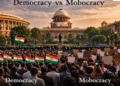
Indian democracy has long been admired for its ideological diversity, tolerance and its civilizational tradition of dialogue. Debate, disagreement and dissent have never been viewed as threats in this system; rather, they have been regarded as its greatest strengths. Constructive argument, policy-based disagreement and respectful opposition form the backbone of a vibrant democracy. However, in recent times, a worrying transition is visible—where meaningful debate is increasingly giving way to disruption and political competition often abandons decorum.
In a democratic polity, political competition is not only inevitable but also essential. It compels governments to remain accountable and responsive and it allows alternative visions to emerge. Yet, the purpose of such competition is public service, not personal triumph. When elections shift focus from development, governance and policy vision to personal attacks, political vendetta and rhetorical excesses, democratic dignity suffers. The growing reliance on accusations, half-truths and sensational language—particularly amplified through digital and social media—has diluted the quality of political discourse. Instead of informed debate, noise often dominates, replacing persuasion with provocation.
Equally important is the role of the opposition, which functions as the constitutional conscience of democracy. A strong opposition ensures scrutiny, transparency and balance in governance. Its responsibility lies in questioning policies, exposing shortcomings and articulating public concerns with reason and evidence. Unfortunately, when opposition politics becomes personality-driven rather than policy-oriented, its constructive role weakens. Emotional outbursts, repeated disruptions and confrontational posturing increasingly overshadow logical argumentation. Parliament and State Legislatures, envisioned as the highest forums of deliberation, often witness stalemates that obstruct legislative work and erode public trust in democratic institutions.
The responsibility to preserve democratic decorum does not rest solely with the opposition. The ruling party, entrusted with authority by the people, bears a greater moral obligation to model restraint, inclusiveness and tolerance. Power must be exercised with humility. Viewing criticism as hostility or dissent as disloyalty undermines democratic ethos. A mature democracy thrives when the ruling establishment recognises the opposition not as an obstacle, but as an indispensable partner in governance. Such an approach strengthens dialogue, improves policy outcomes and fosters broader national consensus.
At the same time, opposition for the sake of opposition serves neither democracy nor the public interest. Constructive engagement demands that positive initiatives be supported irrespective of political affiliations, while genuine shortcomings are critiqued with facts and reason. Democratic opposition is not obstructionism; it is informed resistance guided by national interest.
At the heart of this entire democratic process lies the wisdom of the electorate. An aware, discerning and responsible citizenry is the strongest safeguard against political degeneration. When indecent conduct, misinformation and divisive rhetoric are rewarded—either through votes or social endorsement—the quality of politics inevitably declines. Political actors often follow public sentiment; therefore, citizens must consciously promote dignity, truthfulness and civility in political life.
Ultimately, democracy is not defined merely by the act of voting, but by the character of political engagement between elections. When debate degenerates into disruption and competition loses its ethical boundaries, democracy risks drifting towards disorder. India’s democratic strength will be judged not only by economic indicators or global stature, but by its political maturity, its respect for dialogue and its unwavering commitment to fairness in competition and decorum in dissent.