The matter of politics and governance in the present world is the most important one because welfare and progress of people depends on the right political systems and proper governance. Are the political systems in the present world really delivering? Are they administering their people well enough to establish liberty, equality, equity, freedom and justice ? Are they promoting peace, progress and prosperity?
A mere look at the circumstances and condition of the current global population will tell you that the present political systems are far from perfect. Democracies all over the world today are characterized by the following features—
- Multi party system
- Optional voting with a choice of NOTA(none of the above in the electoral roll)
- Complete absence of right to recall elected representatives
The above are the very reasons why democracies in the present world are imperfect and do not deliver. It is not difficult to see that money and muscle power play a dominant role in elections. Multi party candidates bring multiple ideologies none of which are fully aligned with national ethos, fairness, equity and truth. Why? Because dharma is one and universal and a system of election of government based on dharma can give only one ideology with broad, well defined principles in line with the unique roots and cultural ethos of the country in question.
The next important reason is there is the imperative need of a system in which the non performing elected representatives can be recalled by their dissatisfied electorate. The third and equally important feature of an ideal democracy is that election of leaders is based on the franchise of all, not just those who take the trouble of going to the polling booth and cast their vote. So, in the ideal system, voting is compulsory. Every citizen has to cast his or her vote.
Viewed in the backdrop of the above ideal democracy described in Vedas, we can see how many so called democratic countries of the present world have systems close to the ideal. Let us now turn our attention to other forms of government prevalent today. Dictatorship exists in very few countries today. These are —Thailand, Sudan, Myanmar and Mali. These are small and geopolitically insignificant countries. Dictatorship vests all power in a single individual. He is not driven or guided by any set ideology and there are no persons in the political system who can exercise moral authority on him. This kind of government is severely constrained by its structure to effect the progress of its country.
The other form of government is Communism. Notable countries where communist regime exists today are—China, Russia, Laos, Vietnam and Cuba. And in these countries also, communist policy shows differences in structure and shade. Basically communist ideology was premised on atheism, egalitarianism and control. But China shows streaks of capitalism and North Korea of dictatorship in its polity. The rise of the former USSR and its subsequent break up into Russia and the erstwhile satellite states is a recent episode of global political history.
Popular social antipathy towards communism and its freedom throttling ideology is too evident in China and also Hong Kong. Russia today looks like a poor shadow of the former USSR — in economic and geopolitical strength. And North Korea and Cuba appear to be anything but progressive states, cowed down by the purist communist ideology that curbs freedom and growth of the individual.
What do we infer from the above discussion?
The countries of the world are not following ideal or proper systems of governance. No wonder that exploitation and injustice show themselves in the stark disparity of wealth and the rise of peace disruptive processes. What is the prognosis for the future? These systems of governance are generating economic and political hegemony, unfair disparity of wealth, social unrest, communal strife and military conflicts between nations and a host of related problems. In all probability, these problems are going to continue into the future.
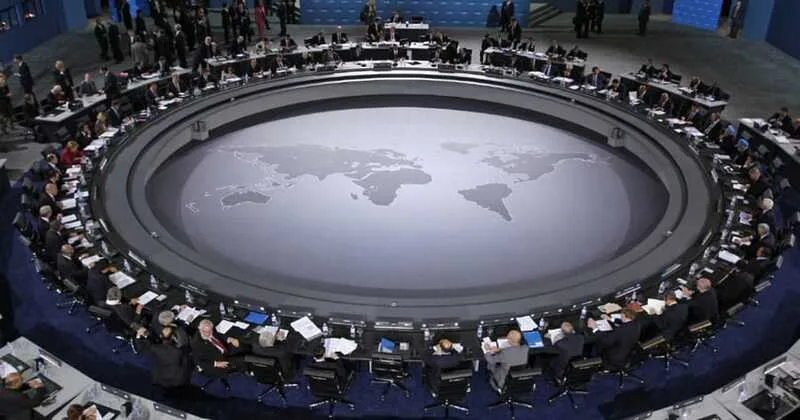
Unless there is equity, fairness and peace among the citizens, progress and prosperity cannot come. And progress and prosperity of one nation brought by depredation or exploitation of another nation means sinking of the other country into regression and poverty. This is not overall progress. True, open depredations of countries have ceased upon the end of colonial rule but the systems and practices of the present world also cause exploitation of the poor and weak countries by the rich and powerful ones. The UNO as a post World War II agency is increasingly becoming infamous for succumbing to the pressures of powerful and rich permanent members of its Security Council. Decisions of the UNO as a watchdog and peacekeeping institution are frequently being viewed as biased in favour of rich and powerful countries who regularly fund its agencies. Under UNO’s umbrella, we have witnessed an unprecedented nuclear arms race over the last 78 years and the present world only seems to be sitting on a powder keg. It is unfortunate and is defeating the purpose for which the UNO was created.
Under the above circumstances , global peace looks like a utopian dream
But we can still do a lot towards salvaging the present tense situation. If we reform the structure of democracies of the few populous and powerful nations of the world in line with the conceptual principles described above in this chapter, we can do a lot to assuage the tension. We can bring about ideological, attitudinal and policy changes on the part of these nations to fall in line with the divine principles of universal dharma. This will bring about a sea change in the geopolitical scenario. The huge amounts of funds spent on armaments will be diverted towards development and mitigation of environmental pollution and degradation, which are definitely the most important issues confronting us today.
There are 167 countries in the world which have democratic regimes. Modern political scholars classify these democracies as working democracies, deficient democracies or hybrid democratic regimes. The defining parameters are electoral processes, civil liberties, functioning of government, political participation and political culture. The right to recall elected representatives exists in only 28 countries and that too in a grossly limited way and at lower levels of democratic hierarchy. Similarly, partyless democracy also exists in very few countries in a limited way but it has delivered good results everywhere. Political pundits have devised ways to improve democracies based on bettering these parameters. Attempts on these lines have not yielded good results.
A Pew Research Center survey was conducted among 41,953 respondents in 38 countries from February to May 2017. The survey reveals that large numbers in many nations would accept political systems that are inconsistent with liberal democracy. For example, when queried about a system in which experts, not elected representatives, make key decisions based on what they think is best for the country, a median of 49 per cent across these 38 countries stated this would be a good way to run their nation. This only validates the analysis as aforesaid about the ineffectiveness of the current imperfect democratic systems and indirectly truth of the principles of ideal democracy expounded in Vedic scriptures.
While it is true that wars have regularly occurred through the course of global history, humans are always free to exercise a rational and prudent choice in all matters. Events are not always predetermined. Our future will be fashioned by our present actions. We are free to perform appropriate karmas to carve out a healthy and happy future. And we have the eternal divine principles of dharma with us for guidance.