New Delhi: The government on Thursday clarified that recent changes to the White House fact sheet on the proposed interim India–US trade deal reflect the “shared understanding” already outlined in the joint statement issued by both countries earlier this month. The clarification came after the fact sheet, released several days after the February 7 joint statement, triggered debate because some passages appeared to diverge from what had originally been agreed. Responding to the concerns, Randhir Jaiswal, spokesperson of India’s Ministry of External Affairs, said the amendments were consistent with the framework jointly negotiated by India and the United States. He added that both sides would now move ahead with implementing the framework and finalising the interim agreement.
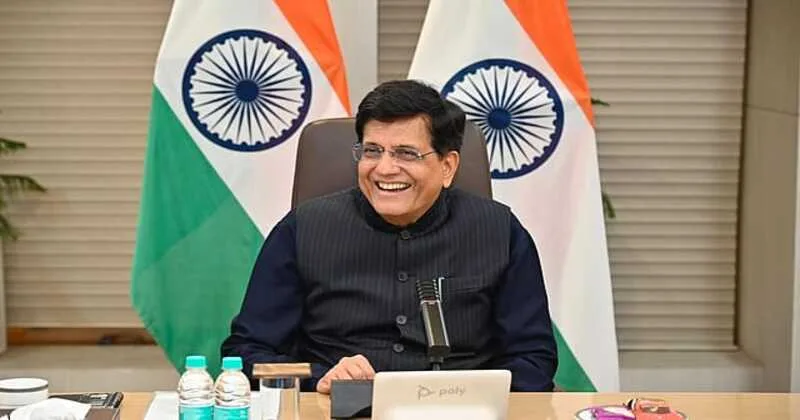
Commerce Minister Piyush Goyal also sought to reassure stakeholders, particularly in the textile sector. He announced that India would receive concessional duty access for garments manufactured using the US yarn and cotton, mirroring benefits already available to Bangladesh under its trade arrangement with Washington. Explaining the mechanism, Goyal said that when raw materials are sourced from the US, converted into fabric, and then exported as finished garments, they would attract zero reciprocal tariffs. India, he said, would be extended the same facility once the interim agreement is finalised, with details visible in the final text.
His comments follow unease among Indian textile exporters after Bangladesh secured a 19% reciprocal tariff rate from the US, along with exemptions for garments produced using the US cotton and man-made fibre. India’s reciprocal tariff currently stands at 18%, prompting questions over whether Dhaka’s additional concessions could translate into a competitive pricing advantage. Goyal stressed that the deal had been carefully structured to safeguard domestic interests. He said that approximately 90–95% of agricultural products grown by Indian farmers, from millets to meat, remain outside the scope of the US agreement. Only those items already imported by India, and which would not harm farmers, had been opened in a calibrated manner after detailed assessment, he said.
According to the Minister, the arrangement could also support Indian farmers by enabling processed agricultural products to access overseas markets in countries with which India has free trade agreements, including the US, the European Union, Switzerland, and Norway. Goyal emphasised that the emerging pact balances protection of sensitive sectors with expansion of export opportunities, especially in labour-intensive areas such as textiles and apparel. He expressed confidence that the agreement would strengthen India’s export competitiveness while preserving core domestic priorities.
His reassurance is expected to ease industry concerns. Earlier, the Global Trade Research Initiative had noted that even in Bangladesh’s case, the benefit is likely limited, as tariff exemptions apply only to the value of US-origin raw materials, which make up just a small portion of Bangladesh’s total garment imports. Officials maintain that the revised fact sheet simply aligns with the original bilateral understanding and that the focus now is on completing the interim deal and translating the framework into concrete outcomes for both economies.