The root of the disease of untouchability is embedded in this belief of the common people that it is a part of religion and that violating it would be a great sin. This distorted notion itself is that basic cause, due to which for centuries, even after the dedicated efforts of many social reformers and religious teachers, this harmful tradition is still sitting entrenched in the minds of the common people today. Many great personalities like Guru Nanak Dev Ji, Acharya Ramanuj, Basaveshwar, Shankardev, Swami Dayanand, Narayana Guru, Gandhi ji and Veer Savarkar have made tireless efforts to erase this stigma placed on the forehead of Hindu society. Yet this polluted stain still exists.
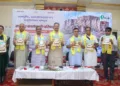
In this social evil arising from false religious belief, it is inherent that in the view of the general public, the traditionally recognised heads of mutts accepted as religious preachers should themselves come forward to present the remedy for this irreligious conduct. In this direction, in the year 1969, a proper beginning was made at the Udupi (Karnataka) conference of the Vishva Hindu Parishad. In it, all Hindu sects such as Shaiva, Veer Shaiva, Madhva, Vaishnava, Jain, Buddhist, Sikh etc. were represented.
In the conference, by unanimous consent, a resolution was passed and the entire Hindu world was called upon that, in accordance with the guidance of revered Acharyas and religious gurus, they should remove untouchability from all their religious and social rituals.
Instruction–guidance of religious teachers
The historic instruction of the revered religious teachers is as follows: “For achieving the objective of organising the entire Hindu society by stringing it in the thread of indivisible oneness, and for stopping the disintegration inspired by the feeling and tendency of touchable–untouchable, Hindus across the world should maintain the feeling of unity and equality in their mutual behaviour.”
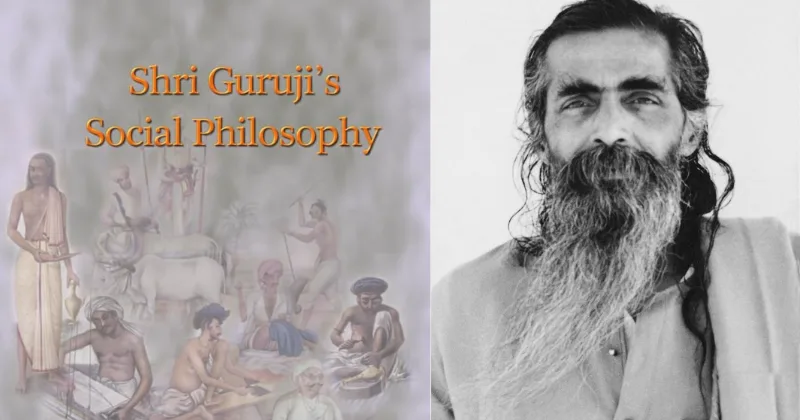
Undoubtedly, the acceptance of this resolution can be considered a step of revolutionary importance in the history of Hindu society. It was a golden moment of the victory of true religious spirit over a distorted tradition. (Shri Gu. Sa. Vol. 11, pp. 237–238)
Emphasise unity, ignore differences
For this, programmes such as devotional singing–kirtan or narrations of the stories of the Ramayana and Mahabharata etc. can be organised, where all Hindus, inspired by equal brotherly feeling in the pure stream of true love for religion, forgetting the distinctions of untouchable–touchable etc., gather together.
Service projects can be started for the promotion of literacy, health, sports etc. For this purpose, modern audio–visual equipment can also be adopted in a useful manner. But the central point of all these activities should be to influence the heart, to emphasise unifying noble tendencies, and to ignore differences of opinion.
It is precisely because of practising this golden principle word for word that in the Sangh there is not even the name of differences of caste-group, sect, language or any other kind. Lakhs of swayamsevaks coming from every field of society rise, sit, eat, drink and play together. They do not even bother to know which caste community the swayamsevak sitting next to them belongs to. (Shri Gu. Sa. Vol. 11, pp. 242–243)