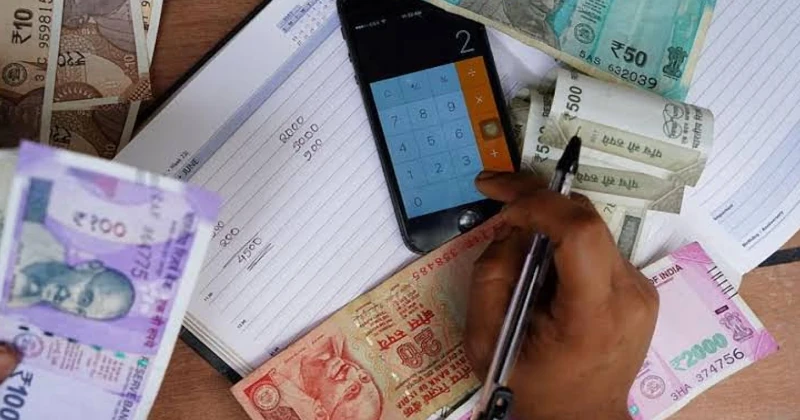
New Delhi: Household savings have staged a significant recovery, rising to 21.7 per cent of India’s GDP in 2024-25 from 20 per cent in 2022-23, as the Centre credited higher incomes, tax relief and regulatory interventions by the Reserve Bank of India (RBI) for strengthening household finances.
Responding to a question in the Rajya Sabha on August 4, Minister of State for Finance Pankaj Chaudhary said household savings, including physical savings, increased from Rs 52.25 lakh crore in 2022-23 to Rs 69.01 lakh crore in 2024-25, according to the revised GDP series with 2022-23 as the base year released by the Ministry of Statistics and Programme Implementation.
“The Government and the RBI have undertaken measures to enhance incomes and consequently higher savings for strengthening household financial security,” Chaudhary said.
The government attributed the improvement to a combination of fiscal support and tighter financial regulation. Among the key measures highlighted was the income tax exemption for annual incomes up to Rs 12 lakh, which the Centre said has boosted disposable incomes, enabling greater consumption, savings and asset creation.
The minister also pointed to GST rate rationalisation, ease of doing business initiatives, employment generation programmes, skilling efforts and infrastructure development as factors supporting income growth across households and small businesses.
On the regulatory front, the RBI’s decision in November 2023 to increase risk weights on select categories of consumer credit and lending to non-banking financial companies (NBFCs) was cited as a step to strengthen the resilience of the financial system amid rising unsecured lending.
Chaudhary further referred to the RBI’s Developmental and Regulatory Policies announced on February 6, 2026, under which banks and other regulated entities have been directed to ensure that third-party financial products sold through their branches are suited to customers’ financial needs and risk appetite, signalling tighter consumer protection norms.
Household savings rise to 21.7% of GDP in FY25: Govthttps://t.co/0TVyTOtP5b
via NaMo App pic.twitter.com/0r57yRDk2i
— PMO India (@PMOIndia) August 5, 2026
The government also highlighted the rapid adoption of artificial intelligence and machine learning across India’s financial sector. Banks are increasingly deploying AI-driven systems for credit underwriting, fraud detection and investment decisions, prompting regulators to tighten oversight.
To address emerging cyber risks, the RBI has instructed scheduled commercial banks to strengthen safeguards against AI-enabled threats. It has also established an inter-disciplinary **Standing Committee on Cyber Security, while the Indian Computer Emergency Response Team (CERT-In) has issued advisories on AI-related cyber risks.
In separate replies in Parliament, Chaudhary said the Deposit Insurance and Credit Guarantee Corporation (DICGC) had settled claims worth Rs 18,931.40 crore relating to 488 banks as of March 31, 2026.
He also disclosed that the Centre collected approximately Rs 32.05 lakh crore through cesses and surcharges during the last five financial years. Of this, around Rs 21.38 lakh crore was transferred to designated cess and reserve funds against cess collections of Rs 18.88 lakh crore during the period.
The government maintained that the combined impact of tax reforms, financial sector regulation and sustained public investment is helping improve household financial resilience, even as regulators tighten oversight of credit growth and emerging technology risks in the banking system.