India–US trade framework signals tariff relief for India
June 4, 2026
  • Read Ecopy
  • Circulation
  • Advertise
  • Careers
  • About Us
  • Contact Us
Android AppiPhone AppArattai
Organiser
  • ‌
  • Bharat
    • Assam
    • Bihar
    • Chhattisgarh
    • Jharkhand
    • Maharashtra
    • View All States
  • World
    • Asia
    • Europe
    • North America
    • South America
    • Africa
    • Australia
  • Editorial
  • International
  • Opinion
  • RSS @ 100
  • More
    • Op Sindoor
    • Analysis
    • Sports
    • Defence
    • Politics
    • Business
    • Economy
    • Culture
    • Special Report
    • Sci & Tech
    • Entertainment
    • G20
    • Azadi Ka Amrit Mahotsav
    • Vocal4Local
    • Web Stories
    • Education
    • Employment
    • Books
    • Interviews
    • Travel
    • Law
    • Health
    • Obituary
  • Subscribe
    • Subscribe Print Edition
    • Subscribe Ecopy
    • Read Ecopy
  • ‌
  • Bharat
    • Assam
    • Bihar
    • Chhattisgarh
    • Jharkhand
    • Maharashtra
    • View All States
  • World
    • Asia
    • Europe
    • North America
    • South America
    • Africa
    • Australia
  • Editorial
  • International
  • Opinion
  • RSS @ 100
  • More
    • Op Sindoor
    • Analysis
    • Sports
    • Defence
    • Politics
    • Business
    • Economy
    • Culture
    • Special Report
    • Sci & Tech
    • Entertainment
    • G20
    • Azadi Ka Amrit Mahotsav
    • Vocal4Local
    • Web Stories
    • Education
    • Employment
    • Books
    • Interviews
    • Travel
    • Law
    • Health
    • Obituary
  • Subscribe
    • Subscribe Print Edition
    • Subscribe Ecopy
    • Read Ecopy
Organiser
  • Home
  • Bharat
  • World
  • Operation Sindoor
  • Editorial
  • Analysis
  • Opinion
  • Culture
  • Defence
  • International Edition
  • RSS @ 100
  • Magazine
  • Read Ecopy
Home World North America USA

India–US trade framework signals tariff relief, export gains and calibrated market access for India

The interim India–US trade framework marks a strategic step toward deeper economic integration, aiming to lower tariffs, strengthen supply chains, and expand market access while protecting key domestic interests. Designed as a calibrated opening, the deal seeks to balance export gains and consumer benefits with safeguards for Indian farmers and producers

Dr Vishnu AravindDr Vishnu Aravind
Feb 10, 2026, 01:00 pm IST
in USA, Bharat, World, International Edition
Follow on Google News
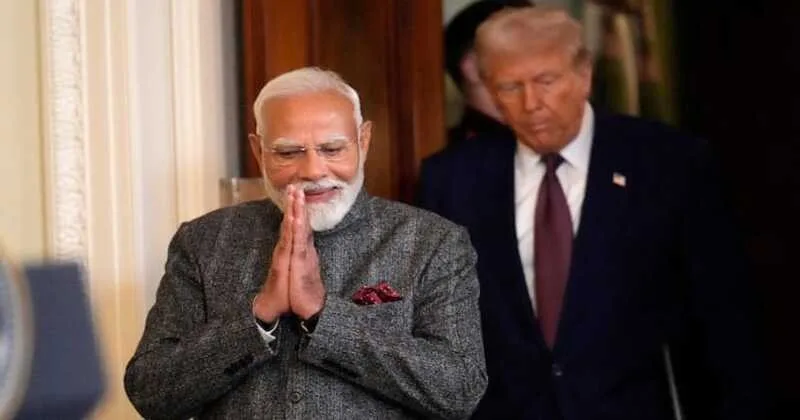
Prime Minister Narendra Modi and Donald Trump

Prime Minister Narendra Modi and Donald Trump

FacebookTwitterWhatsAppTelegramEmail

The United States and India have released an interim framework for a long-term trade agreement, marking a significant step toward deeper economic cooperation between the world’s two largest democracies. The framework signals a shared intent to lower tariffs in select areas, reshape energy and agricultural ties, and strengthen supply-chain collaboration at a time when both countries are seeking to reduce dependence on volatile global markets.

For India, the evolving trade arrangement is being positioned as a calibrated opening—one that balances access to the vast US market with safeguards for domestic farmers and processors. While negotiations involved firm positions on both sides, the outcome reflects New Delhi’s effort to protect sensitive sectors while extracting tangible gains for exporters and consumers.

Calibrated market access and farm-sector balancing

The joint statement accompanying the framework indicates that India resisted broad efforts to open its agricultural market, maintaining a cautious approach toward farm imports. At the same time, it agreed to lower barriers on a limited set of agricultural products, ensuring that liberalisation remains targeted rather than sweeping. One notable element is India’s expected approval for imports of protein-rich distillers dried grains with solubles (DDGS) from the US. DDGS, a by-product of ethanol production from corn and other grains, is already present in surplus quantities in the Indian market. Additional imports could further increase availability, particularly benefiting India’s nearly $30-billion poultry industry. Feed accounts for roughly 60–70 per cent of poultry production costs, and higher supplies of DDGS could help reduce dependence on more expensive feed ingredients, improving margins for producers and supporting affordable protein for consumers.

However, the framework also recognises domestic sensitivities. Rising DDGS availability could weigh on oilmeal demand, particularly soyameal, placing pressure on oilseed prices. Indian farmers have already been shifting acreage from soybean and peanuts to corn and rice, despite government efforts to expand oilseed cultivation and reduce import dependence. Further DDGS inflows may intensify this trend. At the same time, domestic ethanol producers, already grappling with idle capacity and slowing demand after India achieved its 20 per cent biofuel blending target, could face reduced earnings from DDGS sales in the local market.
Concerns around edible oil imports have been addressed through safeguards. While the prospect of duty-free soyoil imports from the U.S. has raised questions, the framework limits such access to a tariff-rate quota. Imports within the quota will enjoy concessional treatment, while volumes beyond it will attract standard duties, ensuring protection for domestic processors and oilseed growers.

Industrial inputs, horticulture and export gains

The agreement also touches on key industrial and horticultural commodities. India currently levies an 11 per cent duty on cotton imports, and duty-free access for US cotton could influence domestic prices. Yet the impact is expected to remain contained, as the concession applies only to extra-long staple cotton and is restricted by a quota. Although India is the world’s second-largest cotton producer, it does not produce enough extra-long staple varieties required by the textile industry, relying on imports from the US, Egypt, Brazil and Australia to meet demand.

Also Read: From Tragedy to Triumph: How Eastern UP overcame decades of child deaths from Japanese Encephalitis under CM Yogi

In horticulture, the framework reflects India’s dual priority of consumer access and farmer protection. India ranks as the world’s fifth-largest apple producer, but domestic output does not fully meet rising demand driven by population growth and higher incomes. The country imports around 500,000 metric tonnes of apples annually from Iran, Turkey, Afghanistan, the US and Chile. Under the proposed trade terms, U.S. apples will enter at a concessional duty of 25 per cent, alongside a minimum import price of Rs 80 per kg. This effectively blocks very low-priced imports and shields Indian growers from price shocks. Consumption of dry fruits such as walnuts, almonds and pistachios has also been rising steadily. Since domestic production of these items remains limited, concessional imports under the trade framework are unlikely to disrupt local farming interests while helping meet consumer demand.

On the export front, India stands to gain significantly. The US has agreed to grant duty-free access to Indian tea, coffee, spices and fruits, enhancing competitiveness for these products in a high-value market. Additionally, the reduction of US import duties on rice to 18 per cent is expected to support exports of both premium basmati and non-basmati varieties, strengthening farm incomes and export revenues. Overall, the interim framework reflects India’s strategy of selective openness, leveraging trade to boost exports and lower costs where beneficial, while retaining policy tools to protect vulnerable sectors. As negotiations move toward a final agreement, the structure laid out so far positions the trade deal as a net positive for India’s economy, agriculture and long-term supply-chain resilience.


 

Topics: India-US trade dealIndia US tariffsInterim trade frameworkIndian exports to USDDGS imports IndiaIndian agriculture safeguardsPoultry industry IndiaCotton imports policy
ShareTweetSendShareSend
✮ Subscribe Organiser YouTube Channel. ✮
✮ Join Organiser's WhatsApp channel for Nationalist views beyond the news. ✮
Previous News

Spain: Historic meeting brings together seventeen Hindu organisations to advance official recognition of Sanatan Dharma

Next News

Tirupati Laddu Adulteration Row: Swami Srinivasanda alleges major lapses under Jagan Mohan regime

Related News

US Dy Secy Christopher Landau praises India as a rising global power as New Delhi and Washington move closer to sealing a landmark trade deal

US Deputy Sec of State Landau calls India ‘Great Power,’ says US keen to join its rise as trade deal nears finish line

Representative Image

India–US Trade Agreement: The arrival of Bharat’s moment

Union Minister of Commerce and Industry Piyush Goyal

India’s textile exports to receive Bangladesh-equivalent tariff relief in US deal : Piyush Goyal

LoP Rahul Gandhi speaks to the media as he shows a copy of the 'unpublished' memoir of former Army chief General M M Naravane outside the Parliament House in New Delhi

Hidden Agenda? Rahul Gandhi’s Penguin book controversy and German trip spark questions amid US deal & BRICS

India's Prime Minister Narendra Modi and the US President Donald Trump

India–US Interim Trade Deal: No duty relief on pulses, $500 billion buy softened as Washington corrects fact sheet

Prime Minister Narendra Modi and the US President Donald Trump

India–US Interim Trade Deal: Bigger exports, stronger supply chains, firm protection for farmers

Load More

Latest News

B. Nagendra, Congress MLA and former minister in Karnataka

Karnataka: CBI files chargesheets against Nagendra, Congress leader, ex-minister, 29 others in Valmiki Corporation scam

Representative Image (This is an AI generated image)

From Class 10 to Ayurvedic Doctor: Central Sanskrit University unveils new pathway to BAMS

Heera Group founder Nowhera Shaik (File Photo)

Telangana: ED arrests Nowhera Shaik’s aide in Heera Group Sharia-compliant Rs 3000 Cr investment scam

Governor of Karnataka Thaawarchand Gehlot administered the Oath of Office and Secrecy to Chief Minister D.K. Shivakumar on June 3, 2026

DK Shivakumar takes oath as Karnataka CM, invokes Ajjayya in ceremony

TMC Leader Abhishek Banerjee attacked in Sonarpur

The Judgement Beyond the Ballot: Bengal’s Sonarpur, political memory, and accountability

Change of Guard in Punjab BJP: Challenges, opportunities and the road ahead

Sacrilege, state interference and the Sikh question in Punjab

After Schools, Vande Mataram Must For West Bengal Madarsas

West Bengal Madrasas Sing Vande Mataram: 1,600 madrasas comply with state govt order despite opposition criticism

Image of Dawood Aide Huzaifa, who is believed to be a close associate of Munna Jhingada

Dawood aide Huzaifa held in Mumbai crackdown; Probe focuses on Pakistan-linked recruitment network

Islamists to Launch Keralam’s First Sharia Gym in Palakkad — No Music, Hijab Must; A ‘Taliban’-Inspired Fitness Club

Load More
  • Privacy
  • Terms
  • Cookie Policy
  • Refund and Cancellation
  • Delivery and Shipping

© Bharat Prakashan (Delhi) Limited.
Tech-enabled by Ananthapuri Technologies

  • Home
  • Search Organiser
  • Bharat
    • Assam
    • Bihar
    • Chhattisgarh
    • Jharkhand
    • Maharashtra
    • View All States
  • World
    • Asia
    • Africa
    • North America
    • South America
    • Europe
    • Australia
  • Editorial
  • Operation Sindoor
  • Opinion
  • Analysis
  • Defence
  • Culture
  • Sports
  • Business
  • RSS @ 100
  • Entertainment
  • More ..
    • Sci & Tech
    • Vocal4Local
    • Special Report
    • Education
    • Employment
    • Books
    • Interviews
    • Travel
    • Health
    • Politics
    • Law
    • Economy
    • Obituary
  • Subscribe Magazine
  • Read Ecopy
  • Advertise
  • Circulation
  • Careers
  • About Us
  • Contact Us
  • Policies & Terms
    • Privacy Policy
    • Cookie Policy
    • Refund and Cancellation
    • Terms of Use

© Bharat Prakashan (Delhi) Limited.
Tech-enabled by Ananthapuri Technologies