Islamabad: Pakistan’s decision to withdraw from its Twenty20 World Cup cricket match with India, citing political differences, has sparked widespread controversy. Reports suggest that the Pakistan Cricket Board was compelled to boycott the match following intervention by senior officials in the Pakistani government. At the same time, Pakistan’s warm reception of Ajay Banga, the chief of the World Bank, has become a major talking point in economic circles.
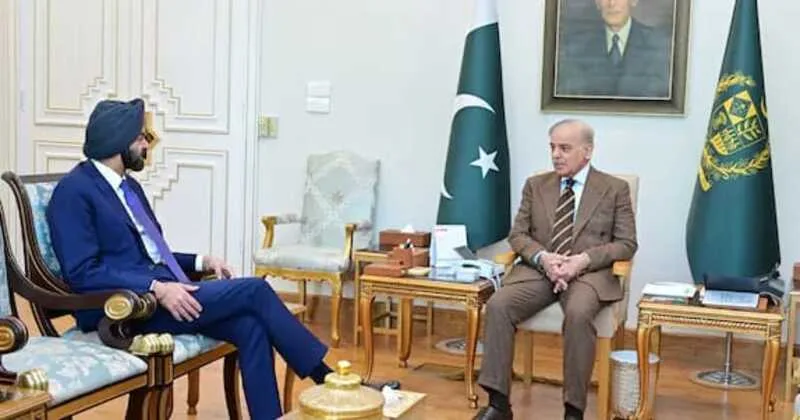
Analysts say Islamabad is willing to set aside political differences with India as it urgently seeks financial support from international agencies. Banga arrived in Pakistan on a four-day official visit. During his trip, he travelled to Khushab in Punjab, where his ancestors had lived before Partition. Pakistani authorities welcomed him by presenting revenue records related to his family’s ancestral properties. He also visited gurdwaras in the country. In addition, Banga held meetings with Pakistani Prime Minister Shehbaz Sharif and Finance Minister Muhammad Aurangzeb. Discussions reportedly focused on Pakistan’s plan to secure nearly $20 billion in financial assistance from the World Bank over the next decade.
Shehbaz Sharif’s remarks on seeking foreign aid have also triggered criticism at home. In recent days, he stated that he and Army Chief Asim Munir were approaching countries around the world for financial assistance “with bowed heads.” He acknowledged that taking loans hurts national self-respect and described the process as humiliating. These comments were followed by Pakistan’s renewed efforts to obtain World Bank funding, further intensifying domestic debate.
Pakistan is increasingly dependent on foreign assistance as its economy continues to struggle. Estimates suggest the country’s total debt stands at around $150 billion, with approximately 18 per cent owed to the World Bank. The International Monetary Fund recently approved a $7 billion loan package to help Pakistan stabilise its economy. However, the bailout came with strict conditions, including boosting government revenue and identifying alternative sources of financing.
Meanwhile, Pakistan’s attempts to privatise Pakistan International Airlines have failed to attract investors, highlighting the depth of the country’s financial troubles. As Islamabad balances political posturing with economic necessity, critics argue that the contrast between boycotting sporting ties with India and extending a grand welcome to the World Bank chief exposes Pakistan’s growing dependence on international aid amid a deepening fiscal crisis.