The Supreme Court on Wednesday (Feb 4) issued notice on petitions challenging the Special Intensive Revision (SIR) of electoral rolls in West Bengal, including one filed by the Mamata Banerjee-led state government, even as the Chief Minister personally appeared before the Bench to allege large-scale wrongful deletion of voters. A Bench led by the Chief Justice heard arguments amid tight timelines, observing that the revision exercise could not be indefinitely extended and stressing that mechanisms existed to ensure that no genuine voter was excluded.
However, the sharp opposition mounted by the West Bengal government has raised a fundamental question: what makes Bengal different from the rest of the country? Special Intensive Revisions have been conducted in multiple states over the years to clean up electoral rolls, remove duplicate and bogus entries, and ensure voter integrity. If such exercises are routine elsewhere, why is the Trinamool Congress portraying it as an existential threat only in West Bengal?
Senior Advocate Shyam Divan, appearing for the petitioners, cited figures claiming that 32 lakh voters were marked as “unmapped” and over 1.36 crore entries flagged for logical discrepancies. Yet the Election Commission of India countered these claims, stating that notices with reasons were being issued, authorised agents were allowed to respond, and the state government had failed to provide sufficient officers to assist the process despite repeated requests. The Bench itself noted that linguistic and transliteration discrepancies are common across India and cannot, by themselves, invalidate the exercise.
What remains unaddressed is why the Trinamool Congress government appears so determined to stall scrutiny of electoral rolls in a state that has long faced allegations of illegal infiltration from across the Bangladesh border. Border districts in West Bengal have repeatedly featured in reports of demographic shifts, forged documents, and voter list manipulation. The Centre has also been seeking land from the state for years to complete border fencing, requests that have faced prolonged delays. If infiltration is not a concern, why the resistance to fencing and voter verification?
The issue also revives memories of West Bengal’s violent electoral record. From booth capturing and intimidation to post-poll violence, elections in the state have repeatedly been marred by vandalism, attacks on opposition workers, and allegations of administrative complicity. Seventy-five years after Independence, should India’s democracy still tolerate a state where elections require extraordinary security deployment and where routine electoral housekeeping triggers constitutional confrontation?
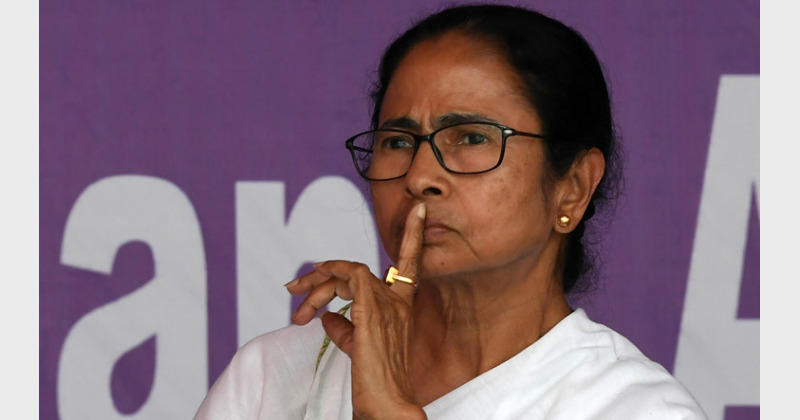
Addressing the court, Mamata Banerjee alleged that the SIR disproportionately affects women, migrants and the poor, and questioned why the exercise was being conducted now. Yet similar revisions in other states did not provoke comparable alarm. If the Chief Minister insists Bengal is being “singled out,” the obvious counter-question follows: what is Bengal hiding that others are not?
The Supreme Court, while issuing notice, directed the state government to submit a list of Group B officers to assist the Election Commission, signalling that institutional cooperation not political confrontation is the expectation. As the matter is set for further hearing, the larger issue lingers beyond legal arguments: how long will West Bengal remain an exception to national norms of electoral integrity, border security, and rule of law and why does its ruling party resist every attempt to normalise it?