Supreme Court issues notice on Mamata’s plea against SIR in Bengal—but the question remains, what is she afraid of?
June 25, 2026
  • Read Ecopy
  • Circulation
  • Advertise
  • Careers
  • About Us
  • Contact Us
Android AppiPhone AppArattai
Organiser
  • ‌
  • Bharat
    • Assam
    • Bihar
    • Chhattisgarh
    • Jharkhand
    • Maharashtra
    • View All States
  • World
    • Asia
    • Europe
    • North America
    • South America
    • Africa
    • Australia
  • Editorial
  • International
  • Opinion
  • RSS @ 100
  • More
    • Op Sindoor
    • Analysis
    • Sports
    • Defence
    • Politics
    • Business
    • Economy
    • Culture
    • Special Report
    • Sci & Tech
    • Entertainment
    • G20
    • Azadi Ka Amrit Mahotsav
    • Vocal4Local
    • Web Stories
    • Education
    • Employment
    • Books
    • Interviews
    • Travel
    • Law
    • Health
    • Obituary
  • Subscribe
    • Subscribe Print Edition
    • Subscribe Ecopy
    • Read Ecopy
  • ‌
  • Bharat
    • Assam
    • Bihar
    • Chhattisgarh
    • Jharkhand
    • Maharashtra
    • View All States
  • World
    • Asia
    • Europe
    • North America
    • South America
    • Africa
    • Australia
  • Editorial
  • International
  • Opinion
  • RSS @ 100
  • More
    • Op Sindoor
    • Analysis
    • Sports
    • Defence
    • Politics
    • Business
    • Economy
    • Culture
    • Special Report
    • Sci & Tech
    • Entertainment
    • G20
    • Azadi Ka Amrit Mahotsav
    • Vocal4Local
    • Web Stories
    • Education
    • Employment
    • Books
    • Interviews
    • Travel
    • Law
    • Health
    • Obituary
  • Subscribe
    • Subscribe Print Edition
    • Subscribe Ecopy
    • Read Ecopy
Organiser
  • Home
  • Bharat
  • World
  • Operation Sindoor
  • Editorial
  • Analysis
  • Opinion
  • Culture
  • Defence
  • International Edition
  • RSS @ 100
  • Magazine
  • Read Ecopy
Home Politics

Supreme Court issues notice on Mamata’s plea against SIR in Bengal—but the question remains, what is she afraid of?

As the Supreme Court issues notice on West Bengal Chief Minister Mamata Banerjee’s plea against the Special Intensive Revision (SIR) of electoral rolls, uncomfortable questions arise over what the Trinamool Congress government is attempting to shield. With several states having already conducted similar exercises, Bengal’s resistance has once again put the spotlight on infiltration, voter integrity, and the state’s troubled electoral history

WEBDESKWEBDESK
Feb 5, 2026, 08:30 am IST
in Politics, Bharat, West Bengal
Follow on Google News
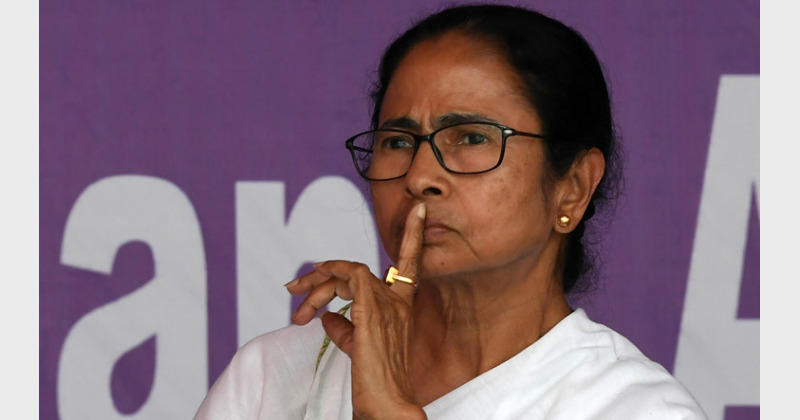
Mamata Banerjee, CM, Bengal

Mamata Banerjee, CM, Bengal

FacebookTwitterWhatsAppTelegramEmail

The Supreme Court on Wednesday (Feb 4) issued notice on petitions challenging the Special Intensive Revision (SIR) of electoral rolls in West Bengal, including one filed by the Mamata Banerjee-led state government, even as the Chief Minister personally appeared before the Bench to allege large-scale wrongful deletion of voters. A Bench led by the Chief Justice heard arguments amid tight timelines, observing that the revision exercise could not be indefinitely extended and stressing that mechanisms existed to ensure that no genuine voter was excluded.

However, the sharp opposition mounted by the West Bengal government has raised a fundamental question: what makes Bengal different from the rest of the country? Special Intensive Revisions have been conducted in multiple states over the years to clean up electoral rolls, remove duplicate and bogus entries, and ensure voter integrity. If such exercises are routine elsewhere, why is the Trinamool Congress portraying it as an existential threat only in West Bengal?

Senior Advocate Shyam Divan, appearing for the petitioners, cited figures claiming that 32 lakh voters were marked as “unmapped” and over 1.36 crore entries flagged for logical discrepancies. Yet the Election Commission of India countered these claims, stating that notices with reasons were being issued, authorised agents were allowed to respond, and the state government had failed to provide sufficient officers to assist the process despite repeated requests. The Bench itself noted that linguistic and transliteration discrepancies are common across India and cannot, by themselves, invalidate the exercise.

What remains unaddressed is why the Trinamool Congress government appears so determined to stall scrutiny of electoral rolls in a state that has long faced allegations of illegal infiltration from across the Bangladesh border. Border districts in West Bengal have repeatedly featured in reports of demographic shifts, forged documents, and voter list manipulation. The Centre has also been seeking land from the state for years to complete border fencing, requests that have faced prolonged delays. If infiltration is not a concern, why the resistance to fencing and voter verification?

The issue also revives memories of West Bengal’s violent electoral record. From booth capturing and intimidation to post-poll violence, elections in the state have repeatedly been marred by vandalism, attacks on opposition workers, and allegations of administrative complicity. Seventy-five years after Independence, should India’s democracy still tolerate a state where elections require extraordinary security deployment and where routine electoral housekeeping triggers constitutional confrontation?

Addressing the court, Mamata Banerjee alleged that the SIR disproportionately affects women, migrants and the poor, and questioned why the exercise was being conducted now. Yet similar revisions in other states did not provoke comparable alarm. If the Chief Minister insists Bengal is being “singled out,” the obvious counter-question follows: what is Bengal hiding that others are not?

The Supreme Court, while issuing notice, directed the state government to submit a list of Group B officers to assist the Election Commission, signalling that institutional cooperation not political confrontation is the expectation. As the matter is set for further hearing, the larger issue lingers beyond legal arguments: how long will West Bengal remain an exception to national norms of electoral integrity, border security, and rule of law and why does its ruling party resist every attempt to normalise it?


Topics: Illegal Infiltrationelectoral roll revisionMamata BanerjeeTrinamool CongressSupreme CourtWest bengal elections
ShareTweetSendShareSend
✮ Subscribe Organiser YouTube Channel. ✮
✮ Join Organiser's WhatsApp channel for Nationalist views beyond the news. ✮
Previous News

Why not firing a shot in Ladakh was India’s biggest strategic win; Know how manufactured narrative is debunked

Next News

Ghaziabad triple suicide: Inside the ‘Korean love game’ that allegedly drove three sisters to death

Related News

Kakoli Ghosh Dastidar and Sagarika Ghose

TMC internal rift: Kakoli Ghosh Dastidar hits back at Sagarika Ghose saying, ‘What about team of thieves you belong?’

Supreme Court of India

‘RTI activism has become business’: SC denies anticipatory bail, questions activist’s authority to monitor road project

TMC chief and former CM of Bengal Mamata Banerjee

Mamata’s Damage-control Exercise? TMC reshuffle comes as rebel leaders reject Banerjee family’s leadership

Police Search Abhishek Banerjee’s Home, ED Raids Madan Mitra Properties in Twin Blow to TMC

Fresh Trouble for TMC in Bengal: Police search Abhishek Banerjee’s home, ED raids Madan Mitra properties in twin blow

Yusuf Pathan, Saayoni Ghosh, Shatrughan Sinha among 20 TMC rebel list signatories

TMC Rebellion Deepens: Rebel MPs to meet speaker Om Birla, seek recognition as ‘Real Trinamool Congress’

The AMU Judgment: Why the Supreme Court must revisit Article 30

Load More

Latest News

RSS struggle to defend the Constitution during the Emergency

Samvidhan Hatya Diwas: Revisiting RSS’s role in defending India’s Constitution & democratic freedoms during 1975-77

Fresh plea in Odisha High Court seeks CBI probe into Swami Laxmanananda murder case amid missing Naidu Commission report

Swami Laxmanananda Murder Case: Fresh plea in Odisha HC cites missing Naidu Commission report, seeks CBI inquiry

For the first time, NCERT adds Emergency to class 9 curriculum, highlights suspension of rights and democratic struggles

NCERT includes Emergency chapter in class 9 textbook, describes 1975-77 period as a major challenge to Indian democracy

Delhi HC adjourns Jawad Siddiqui’s plea seeking 6-week interim bail

Al-Falah Trust Case: ED opposes interim bail for chairman Jawad Ahmad, cites risk of concealing Rs 493 cr proceeds

Twin earthquakes devastate Venezuela

Venezuela Earthquake 2026: Powerful 7.5 & 7.2 magnitude tremors leave the country in ruins; State of emergency declared

Pakistan’s Defence Minister, Khawaja Muhammad Asif

Pakistan Defence Minister Khwaja Asif sparks fury in POJK, labels Mirpuris &  Rawalakot residents ‘Non-Kashmiris’

Sunil Ambekar (Akhil Bharatiya Prachar Pramukh Rashtriya Swayamsevak Sangh addressing the gathering in Patna

The Emergency taught us that a vigilant society is essential to protect democracy: Sunil Ambekar ji

Punjab Moga Massacre 1989: When Khalistani terrorists turned an RSS shakha into a killing field

From sovereign satellite networks to human spaceflight, India is building the foundations of a globally competitive space power

India eyes a $45 billion space economy by 2033: AnanthSat-1’s 2029 launch heralds the private satellite age

Emergency and RSS- The resistance years: Sangh, society and restoration of democracy

Load More
  • Privacy
  • Terms
  • Cookie Policy
  • Refund and Cancellation
  • Delivery and Shipping

© Bharat Prakashan (Delhi) Limited.
Tech-enabled by Ananthapuri Technologies

  • Home
  • Search Organiser
  • Bharat
    • Assam
    • Bihar
    • Chhattisgarh
    • Jharkhand
    • Maharashtra
    • View All States
  • World
    • Asia
    • Africa
    • North America
    • South America
    • Europe
    • Australia
  • Editorial
  • Operation Sindoor
  • Opinion
  • Analysis
  • Defence
  • Culture
  • Sports
  • Business
  • RSS @ 100
  • Entertainment
  • More ..
    • Sci & Tech
    • Vocal4Local
    • Special Report
    • Education
    • Employment
    • Books
    • Interviews
    • Travel
    • Health
    • Politics
    • Law
    • Economy
    • Obituary
  • Subscribe Magazine
  • Read Ecopy
  • Advertise
  • Circulation
  • Careers
  • About Us
  • Contact Us
  • Policies & Terms
    • Privacy Policy
    • Cookie Policy
    • Refund and Cancellation
    • Terms of Use

© Bharat Prakashan (Delhi) Limited.
Tech-enabled by Ananthapuri Technologies