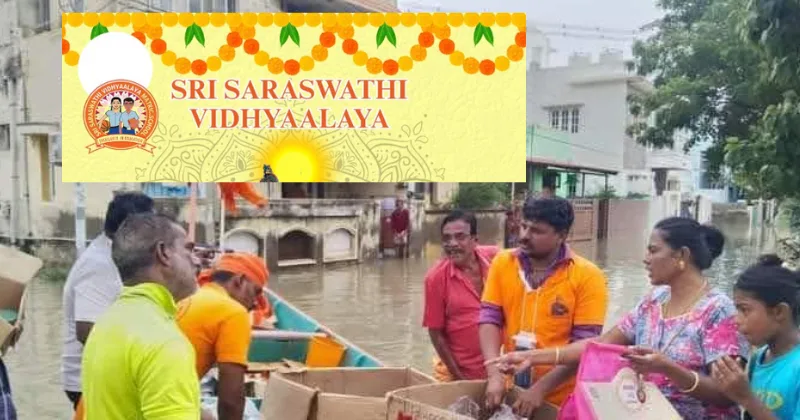
A Tamil Nadu-based private school, Sri Saraswati Vidyalaya, has moved the Madras High Court challenging a show cause notice issued by the Directorate of School Education (Private Schools) for allowing the Seva Bharati’s camp on the school premises. Justice D Bharatha Chakravarthy has ordered notice in the plea.
The private school in Cuddalore approached the High Court challenging a show cause notice issued by the State education authorities after it allowed a Seva Bharathi, an RSS-inspired organisation, to conduct a camp on its premises during the Christmas holidays. After hearing arguments, Justice Bharatha Chakravarthy issued notice to the State and the education department, directing them to file a response, and posted the matter for the next hearing on February 17.
Sri Saraswathi Vidyalaya filed a writ petition questioning the December 30, 2025 notice issued by the Directorate of School Education (Private Schools), which alleges violation of Rule 9(jj) of the Tamil Nadu Recognised Private Schools (Regulation) Rules, 1974. The said rule bars non-students or non-staff from using school buildings or playgrounds for drills or training.
The petitioner school stated that it allowed the use of its playground between December 24 and 30, 2025, during the Christmas vacation, when the school was closed. The camp, organised by Seva Bharathi had about 50 participants and was conducted in an orderly manner without disrupting academic activities. The school said local police visited on the first day, questioned the organisers, and pressured the school not to allow similar activities in the future.
The petition contended that Seva Bharathi camps are neither religious nor political, and that participants of all faiths join for discipline, character-building, patriotism, physical fitness, and yoga. It added that Rule 9(jj) applies only on school days and not during vacations, and that the Tamil Nadu Recognised Private Schools Act, 1973 does not prohibit non-academic or religious activities on school premises.
Terming the notice “arbitrary, malicious and without jurisdiction,” the school management alleged that similar circulars were issued across Tamil Nadu, threatening withdrawal of recognition and aid. The petition seeks quashing of the notice as unconstitutional. Advocates G Babu, Nelson, J Rajesh, and Rekamai appeared for the school.
Successive Dravidian governments have been anathema to the RSS. Every year, for the annual path sanchalan or route march, the RSS has to approach courts to get permission. During Vinayaka Chathurthi, Hindu Munnani and VHP have had to face impracticable restrictions for installation and immersion of murtis.
The DMK government has been using executive orders, police directives, and departmental circulars to limit RSS activities in government offices, schools, and public spaces. Critics point out that there is no bar on political parties holding meetings in Christian-run colleges and schools.
In September 2024, the School Education Department issued a circular instructing headmasters not to allow any external events on school premises without prior permission. Local authorities have since applied this rule to prevent RSS shakhas and other non-school activities in government campuses. In government offices, Ayudha pooja or Saraswathi pooja is not allowed.
In October 2025, 39 RSS members were detained in Porur, Chennai, for holding a shakha inside a government school without permission. In another case, 47 workers were detained for trying to organise a Vijayadashami event in a government institution. These actions indicate how the DMK is afraid of the growth of the RSS.
In 2022, Sakthi International School correspondent Ravikumar was targeted for having ties with the Rashtriya Swayamsevak Sangh (RSS). The RSS training programme for the Kaniyamoor Panchayat, Chinnasalem, was held in the school. Later, Naxals vandalised the school and its vans to settle their ire over the management’s closeness to the RSS.
The Tamil Nadu government has prohibited the RSS from holding shakhas, training camps, or public meetings on government land, in buildings, or in aided institutions.
In February 2023, the Higher Education Department issued a notification barring student organisations affiliated with the RSS, such as the ABVP, from conducting political or ideological activities on campuses without prior permission. Vice-Chancellors and principals were directed to ensure that the secular ethos of universities such as Anna University and Madras University is maintained.
A couple of years ago, on Gandhi Jayanti, the DMK government denied permission for RSS route marches across the State, citing law-and-order concerns. The Madras High Court later allowed limited marches.
Despite the Supreme Court and High Court allowing special poojas as part of the Ayodhya Ram murti pranpratishta, the DMK government disallowed such events and removed pandals, mikes, and screens.
In Kancheepuram, Minister Nirmala Sitharaman’s programme faced such actions. In Thiruparankundram, the DMK government did not allow the lighting of a lamp despite High Court orders, but allowed Muslims to celebrate sandal paste celebrations and hoisting of flags at the temple sthala vruksha. Critics say these are part of minority appeasement measures.
In 2024 alone, 15 such events were cancelled in Chennai. The government also extended these restrictions to “quasi-government” premises such as temples managed by the Hindu Religious and Charitable Endowments Department. Between 2023 and 2025, over 100 RSS event permissions were denied across Tamil Nadu.