The National Council of Churches in India (NCCI) has moved the Supreme Court challenging the constitutional validity of anti-conversion laws enacted by twelve Indian states, reopening a long-settled legal debate at a time when multiple regions are witnessing a surge in complaints related to illegal and inducement-based religious conversions.
On February 2, the NCCI filed a writ petition contesting anti-conversion legislation enforced in Odisha, Chhattisgarh, Madhya Pradesh, Arunachal Pradesh, Gujarat, Himachal Pradesh, Jharkhand, Uttarakhand, Uttar Pradesh, Karnataka, Haryana and Rajasthan. The petition comes amid intensified state action against conversion rackets allegedly operating under the garb of charity, healing prayers and marriage.
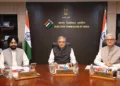
A bench comprising Chief Justice of India Surya Kant and Justice Joymalya Bagchi took cognisance of the plea and tagged it with other pending petitions related to religious conversion laws. Issuing notices to the Centre and all 12 states, the court directed them to file counter-affidavits within four weeks and ordered that the matter be placed before a three-judge bench due to its constitutional importance.
“Issue notice. Let a copy be served on the Advocate Generals of the states as well. Having regard to the importance of the matter, it shall be placed before a three-judge bench,” the court observed.
The NCCI claims to represent over 14 million Christians in India and comprises 32 member churches, 17 regional Christian councils, 18 all-India organisations and seven related agencies. It is being represented by senior advocate Meenakshi Arora, who alleged that the anti-conversion laws have resulted in “rampant abuse” and encouraged what she described as “state-enabled vigilantism.”
Arguing before the court, Arora claimed that the laws are structured in a manner that allegedly incentivises third-party complaints, leading to arrests even without prima facie evidence. She asserted that statutory terms such as “conversion,” “allurement,” “inducement” and “undue influence” are vague and overbroad, granting unchecked discretion to authorities and allegedly criminalising routine religious activities.
She further contended that prayer meetings, charitable work and even interfaith marriages are being targeted through expansive interpretations of the law, while vigilante groups act as “de facto enforcers.” The plea also challenges provisions that place the burden of proof on the accused and allow unrelated third parties to lodge complaints, which the petitioner claims violates basic principles of criminal jurisprudence.
Significantly, the NCCI has sought an interim stay on the implementation of all impugned laws and requested directions restraining police authorities from making arrests or pursuing investigations under Sections 3 and 5 of the respective Acts. It has also sought a blanket stay on all criminal proceedings arising out of FIRs registered under these provisions.
However, the Centre has mounted a strong and unequivocal rebuttal. Solicitor General of India Tushar Mehta, appearing for the Union government, told the court that the Centre’s response is ready and would be filed shortly. He categorically rejected the petitioner’s claims and reminded the court that the constitutional validity of anti-conversion laws has already been upheld by a five-judge Constitution Bench.
Citing the landmark 1977 judgment in Rev. Stainislaus vs State of Madhya Pradesh, Mehta underlined that the Supreme Court had conclusively ruled that Article 25 of the Constitution guarantees freedom of conscience and the right to profess, practice and propagate religion, but does not confer a fundamental right to convert another person.
The Constitution Bench had held that the word “propagate” means the right to transmit or spread one’s religious beliefs, not to forcibly or fraudulently convert others. It had upheld both the Madhya Pradesh Dharma Swatantraya Adhiniyam, 1968, and the Orissa Freedom of Religion Act, 1967, rejecting arguments strikingly similar to those raised by the NCCI.
The present plea also follows an earlier petition filed by the Catholic Bishops’ Conference of India challenging the Rajasthan Prohibition of Unlawful Religious Conversion Act, 2025, on which the Supreme Court had issued notice in December 2025.
Organiser has consistently played a pivotal role in documenting and exposing the ground realities of missionary-led religious conversions in India, treating the issue not as an abstract ideological debate but as a lived social crisis unfolding in tribal, rural and economically vulnerable regions. Through sustained ground reports, victim testimonies, FIR-based investigations and field interviews, Organiser has highlighted how conversions are often driven not by free conscience but by inducement, coercion, misinformation and exploitation of distress, ranging from false promises of miraculous healing and education to monetary incentives and marriage-based pressure.
We have repeatedly warned that such conversion networks fracture indigenous cultural identities, weaken social cohesion, and create long-term civilisational disruption, particularly among tribal communities whose traditional belief systems are systematically eroded. By connecting local incidents to larger funding patterns, foreign missionary networks and legal loopholes, Organiser has found that illegal conversion is not merely a religious issue but a national, constitutional and social concern, one that demands both legal clarity and societal vigilance.
As the Supreme Court prepares to hear the matter in detail, the case has reignited a fundamental constitutional question: does freedom of religion protect individual belief alone, or can it be stretched to legitimise organised, inducement-driven conversions?
With several states asserting that anti-conversion laws are essential to protect social harmony and individual autonomy, and church bodies pushing for dilution of these safeguards, the verdict is expected to have a decisive impact on how India confronts what many describe as a growing and systematic threat of illegal missionary conversions.