Menstruation, dignity and the right to life
June 24, 2026
  • Read Ecopy
  • Circulation
  • Advertise
  • Careers
  • About Us
  • Contact Us
Android AppiPhone AppArattai
Organiser
  • ‌
  • Bharat
    • Assam
    • Bihar
    • Chhattisgarh
    • Jharkhand
    • Maharashtra
    • View All States
  • World
    • Asia
    • Europe
    • North America
    • South America
    • Africa
    • Australia
  • Editorial
  • International
  • Opinion
  • RSS @ 100
  • More
    • Op Sindoor
    • Analysis
    • Sports
    • Defence
    • Politics
    • Business
    • Economy
    • Culture
    • Special Report
    • Sci & Tech
    • Entertainment
    • G20
    • Azadi Ka Amrit Mahotsav
    • Vocal4Local
    • Web Stories
    • Education
    • Employment
    • Books
    • Interviews
    • Travel
    • Law
    • Health
    • Obituary
  • Subscribe
    • Subscribe Print Edition
    • Subscribe Ecopy
    • Read Ecopy
  • ‌
  • Bharat
    • Assam
    • Bihar
    • Chhattisgarh
    • Jharkhand
    • Maharashtra
    • View All States
  • World
    • Asia
    • Europe
    • North America
    • South America
    • Africa
    • Australia
  • Editorial
  • International
  • Opinion
  • RSS @ 100
  • More
    • Op Sindoor
    • Analysis
    • Sports
    • Defence
    • Politics
    • Business
    • Economy
    • Culture
    • Special Report
    • Sci & Tech
    • Entertainment
    • G20
    • Azadi Ka Amrit Mahotsav
    • Vocal4Local
    • Web Stories
    • Education
    • Employment
    • Books
    • Interviews
    • Travel
    • Law
    • Health
    • Obituary
  • Subscribe
    • Subscribe Print Edition
    • Subscribe Ecopy
    • Read Ecopy
Organiser
  • Home
  • Bharat
  • World
  • Operation Sindoor
  • Editorial
  • Analysis
  • Opinion
  • Culture
  • Defence
  • International Edition
  • RSS @ 100
  • Magazine
  • Read Ecopy
Home Bharat

Menstruation, Dignity and the Right to Life

The availability of gender-segregated, functional and hygienic toilets with water, disposal mechanisms and privacy is equally crucial, particularly in schools, colleges, workplaces and public spaces. Menstrual health education must be integrated into school curricula and community programmes to dismantle myths, normalise conversations and empower young girls with accurate knowledge about their bodies

RajnandaniRajnandani
Feb 3, 2026, 10:10 pm IST
in Bharat, Analysis, Law, Health
Follow on Google News
Representative Image

Representative Image

FacebookTwitterWhatsAppTelegramEmail

The recent historic judgment delivered by the Supreme Court of India, recognising menstrual health and hygiene(MHH) as an intrinsic part of the Right to Life under Article 21 of the Constitution, marks a transformative moment in the journey toward gender justice and social equity. By affirming menstrual health as a fundamental right, the Court has placed women’s and girls’ dignity, health, education and equality at the very core of constitutional protection. This decision is not merely a legal pronouncement; it is a powerful social statement that challenges decades of silence, stigma and systemic neglect surrounding menstruation in India.

Menstruation has been treated as taboo for centuries, leading to secrecy, exclusion and discrimination against women and girls. Such stigma has restricted their opportunities and mobility, while unsafe practices continue due to misinformation. Limited open dialogue and weak institutional responsibility have led millions to suffer indignity and exclusion despite menstruation being a universal biological process. Before this landmark interpretation under Article 21, menstrual health and hygiene in India existed largely within the realm of welfare schemes, fragmented policies and administrative discretion, rather than as a clearly enforceable right.

Government interventions were typically addressed through programmes in health, sanitation or education, without a unified constitutional framework that guaranteed dignity and accountability. Access to sanitary products, toilets and awareness depended heavily on geography, budgetary priorities and local implementation, leaving millions of girls and women vulnerable to neglect. In the absence of explicit constitutional recognition, menstrual health was often treated as a secondary or “soft” issue, overshadowed by broader development goals and the lack of legal enforceability meant that systemic gaps especially in schools and public institutions remained largely unchallenged.

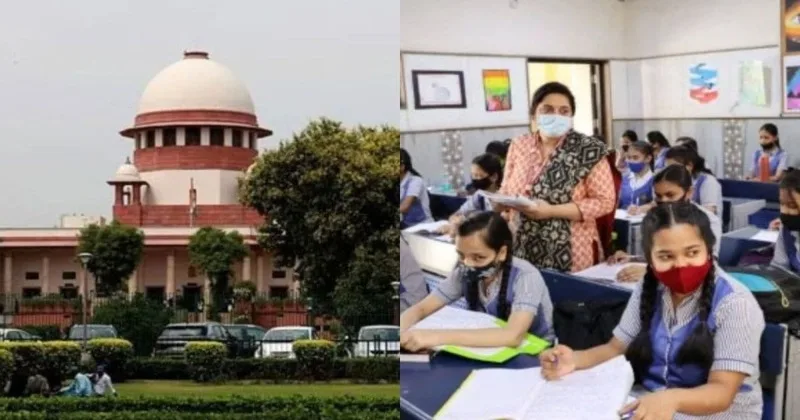
By viewing menstrual health through the lens of constitutional rights, the Supreme Court has reframed it as an issue of public concern, human dignity and state responsibility. This change has major implications for policy and social attitudes, obliging the state to create conditions for safe, hygienic and dignified menstrual management. The Court rightly emphasised that the absence of safe, accessible and hygienic menstrual management facilities particularly in schools amounts to a violation of dignity and equality. Millions of girls across India are forced to miss school during their menstrual cycles due to the lack of clean toilets, sanitary products, water facilities, privacy and awareness.

In many cases, this leads to frequent absenteeism, poor academic performance and eventually school dropouts. The judgment recognises that when girls are compelled to manage menstruation in unsafe or humiliating conditions, their right to education is directly compromised, reinforcing cycles of gender inequality and poverty. Importantly, the Court’s observations acknowledge that menstrual health is closely linked to physical well-being, mental health, privacy and bodily autonomy. Unsafe practices increase health risks and emotional distress. Bringing menstrual hygiene under Article 21 affirms that a dignified life is impossible without basic health facilities for women and girls.

An organised approach involving policy formulation, administrative systems and social awareness to ensure that menstrual health rights are translated into reality on the ground. The responsibility does not lie with a single institution but requires collective effort across education, health, women and child development, sanitation and local governance frameworks. To fulfil the constitutional mandate articulated by the Court, it is essential that every girl and woman has access to free or affordable biodegradable sanitary products, ensuring both health safety and environmental sustainability.

The availability of gender-segregated, functional and hygienic toilets with water, disposal mechanisms and privacy is equally crucial, particularly in schools, colleges, workplaces and public spaces. Menstrual health education must be integrated into school curricula and community programmes to dismantle myths, normalise conversations and empower young girls with accurate knowledge about their bodies. The judgment also highlights the importance of supportive and responsive systems, including emergency provisions such as spare uniforms, innerwear and first aid. The judgment emphasises the need for supportive school systems, such as emergency provisions for uniforms and first aid. These measures help preserve dignity and encourage attendance by addressing practical menstrual needs.

The norms that have long controlled and silenced women’s bodies. By recognising menstrual health as a right rather than a privilege, the Court has affirmed that equality cannot exist without dignity, and dignity cannot exist where natural biological processes are treated as shameful. This judgment also aligns with India’s constitutional vision of a just, inclusive, and compassionate society, where the state actively works to remove structural barriers faced by marginalised groups. Menstrual health intersects with caste, class, geography, and disability, making it a critical issue of social justice. Addressing it holistically contributes to broader national goals of gender equality, human development and educational advancement.

Also Read: Islamist teacher Jan Mohammad used school to brainwash, force namaz and conversions of students in Mathura

As India moves forward, this ruling provides an opportunity to build a future where menstruation is no longer a reason for exclusion, silence, or missed dreams. It reminds us that when a girl’s dignity is protected, her education flourishes; when her education flourishes, society progresses. Realising the spirit of this judgment will require sustained political will, adequate funding, effective implementation and active public participation. Ultimately, this historic decision demands action from each of us. Advocate for menstrual dignity in your communities, support policies that guarantee access to hygiene products and facilities and hold institutions accountable for upholding these rights. Only through collective, sustained effort can we ensure every woman and girl in India lives, learns and thrives with confidence, safety and dignity.


Topics: HealthArticle 21VerdictMenstrual HygieneSupreme Court
Rajnandani
Rajnandani
Research Scholar at Banasthali Vidyapith [Read more]
ShareTweetSendShareSend
✮ Subscribe Organiser YouTube Channel. ✮
✮ Join Organiser's WhatsApp channel for Nationalist views beyond the news. ✮
Previous News

Tamil Nadu: MK Stalin’s minority appeasement at IUML meet sparks row

Next News

Italian envoy to India welcomes trade deal with the US; Hails it as a “very positive development”

Related News

Prime Minister Narendra Modi at the Yoga Day celebrations in Kolkata

International Yoga Day: PM Modi hails Bengal’s spiritual heritage; Advocates yoga for healthy ageing & mental wellness

The wisdom of sattvik food: Nourishing inner balance

Supreme Court of India

‘RTI activism has become business’: SC denies anticipatory bail, questions activist’s authority to monitor road project

The AMU Judgment: Why the Supreme Court must revisit Article 30

Tamil Nadu Assembly (File Photo)

Tamil Nadu speaker drops action against 21 rebel AIADMK MLAs after EPS withdrawal, targets 4 who joined TVK

Indian surgeon conducts world’s longest cardiac telesurgery; Made-in-India robot echoes indigenous medical prowess

Load More

Latest News

President Droupadi Murmu confers the Padma Shri on former civil servant R.V.S. Mani on June 23, 2026.

Former MHA official RVS Mani honoured with Padma Shri for contributions to internal security

Tamil Nadu: Temple funds only for temple property; TVK govt concedes before Madras High Court

Keralam’s former Industries Secretary, Mohammed Haneesh IAS (Right Side)

Keralam Cashew Scam: Former Industries Secretary Md Haneesh apologises before High Court after contempt proceedings

Tamil Nadu: Assembly Speaker directs all bureaucrats to strictly follow warrant of precedence after Mayor-MLA row

Kamakhya Mandir

Kamakhya Mandir’s Ambubachi Mela: The ancient tradition that honours the menstruation of mother Earth

Amazon in dock for mocking Hindu Gods

Amazon File: From Ganesha to Aryabhata-Has Amazon India become a platform for Anti-Hindu narratives?

The West Bengal Budget 2026–27 aims to drive growth through infrastructure, industry, innovation and welfare

Reimagining Bengal: How the West Bengal Budget 2026–27 seeks to balance growth, welfare & economic transformation

Pratiraksha is Gujarat Police's Aadhaar-based verification platform designed to identify illegal workers and prevent identity fraud in industrial sectors

Pratiraksha: How Gujarat police uses Aadhaar verification to secure industrial workforce against identity fraud

Israel-Iran crisis has highlighted not only shifting dynamics of West Asia but also growing confidence of India's foreign policy

India, Israel and the rise of strategic autonomy in an era of global geopolitical realignment

Saleem and Jaleel arrested in forced religious conversion case

Karnataka Conversion Case: Forced conversion of Hindu woman and minor son sparks outrage; Saleem and Jaleel arrested

Load More
  • Privacy
  • Terms
  • Cookie Policy
  • Refund and Cancellation
  • Delivery and Shipping

© Bharat Prakashan (Delhi) Limited.
Tech-enabled by Ananthapuri Technologies

  • Home
  • Search Organiser
  • Bharat
    • Assam
    • Bihar
    • Chhattisgarh
    • Jharkhand
    • Maharashtra
    • View All States
  • World
    • Asia
    • Africa
    • North America
    • South America
    • Europe
    • Australia
  • Editorial
  • Operation Sindoor
  • Opinion
  • Analysis
  • Defence
  • Culture
  • Sports
  • Business
  • RSS @ 100
  • Entertainment
  • More ..
    • Sci & Tech
    • Vocal4Local
    • Special Report
    • Education
    • Employment
    • Books
    • Interviews
    • Travel
    • Health
    • Politics
    • Law
    • Economy
    • Obituary
  • Subscribe Magazine
  • Read Ecopy
  • Advertise
  • Circulation
  • Careers
  • About Us
  • Contact Us
  • Policies & Terms
    • Privacy Policy
    • Cookie Policy
    • Refund and Cancellation
    • Terms of Use

© Bharat Prakashan (Delhi) Limited.
Tech-enabled by Ananthapuri Technologies