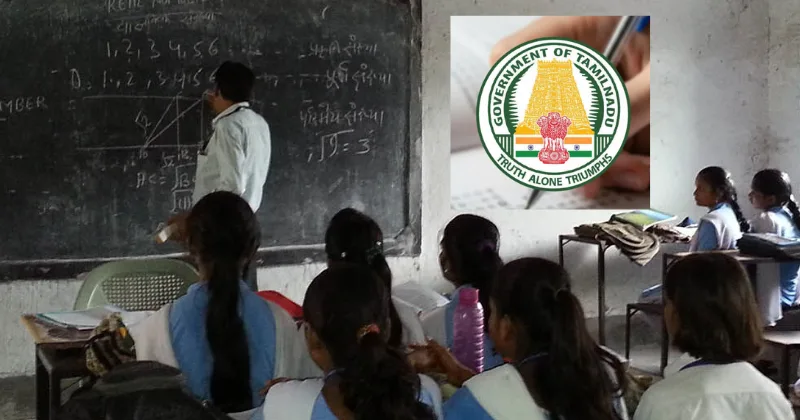
Despite lowering the minimum marks before declaring results, nearly 2.27 lakh or 50 per cent of graduate teacher aspirants could not score the required marks to become eligible. It is yet another reflection of the quality or standard of education in Tamil Nadu under the DMK government.
Under the RTE Act, those who want to take up the teaching profession in middle and graduate teaching posts should clear the Teachers’ Eligibility Test (TET) across the country. It is a compulsory requirement.
The Tamil Nadu Teachers’ Recruitment Board conducts the TN TET examinations. In September 2025, the Supreme Court made it mandatory for teachers who joined after the RTE Act came into force.
The Tamil Nadu government has filed a review petition in the Supreme Court (SC) challenging the September 2025 order that mandates the Teacher Eligibility Test (TET) for all in-service teachers, arguing that it is unfair to teachers appointed before 2010. The petition is pending.
In this background, the TN TRB conducted examinations on November 15 and 16. For those who want to teach from Classes 1 to 5 (secondary grade), candidates wrote the first paper.
In that examination, 92,417 candidates appeared. For Classes 6 to 8, the graduate teachers’ examination (second paper) saw 3,31,900 candidates. For both first and second papers together, 4,24,317 aspirants appeared.
For the general category, out of 150 marks, candidates should score a minimum of 90 marks.
For OBC, OBC Muslims, SC and physically challenged categories, the minimum is 82.5 marks, and for the ST category, it is 60 marks.
A Government Order (GO) was published on January 28, giving benefit to already joined/working teachers, reducing the minimum marks by five.
Accordingly, for MBC candidates it is 75 marks and 60 per cent for SC/ST candidates. Though the GO was issued in January, it applies retrospectively to candidates who wrote the examinations in November.
இவங்கதான் நம்முடைய இளைய சமுதாயத்தை கட்டமைக்க போறவங்க.
என்னத்த சொல்ல! pic.twitter.com/ECSWKBJ9TZ
— Sowdha Mani (@SowdhaMani7) February 1, 2026
The results were declared on January 31. In the first paper, 45,469 candidates cleared the examination, while 46,948 could not secure the required marks. This means nearly half of those who sat for the examination — 49.2 per cent — failed.
In the TET second paper, 14,604 candidates passed, while 2,27,295 candidates failed. One candidate’s result was withheld. Nearly 31.52 per cent of candidates passed the TET, while 69 per cent failed.
Last year, nearly 85,000 candidates who wrote the postgraduate TET examination for recruitment miserably failed in the compulsory Tamil language paper, which came as a real shocker for lovers of Tamil and for those concerned about the quality of education imparted to students in the state.
In October last year, to fill 1,996 posts of postgraduate teachers, physical education directors, computer teachers and others, the PG TET examination was conducted on October 12. As many as 2.36 lakh postgraduates appeared for the examination. The results were announced on November 28.
In the PG TET examination, candidates are required to answer questions carrying a total of 50 marks. Those who score 40 per cent, that is, 20 marks, are declared eligible. Only then are their subject papers considered for valuation. This means failure in Tamil results in automatic disqualification, as subject papers are not evaluated. Nearly 36 per cent of candidates — around 85,000 — failed in the Tamil language paper.
As a result, their other subject papers were not taken up for evaluation and they were eliminated from the recruitment test. Even if they scored good marks in other subject papers, they were required to secure the minimum marks in the Tamil paper.
In 2019, out of 1,62,316 candidates, only 551 cleared the first paper, a pass percentage of 0.33. In the second paper, out of 3,79,735 candidates, only 316 passed (0.08 per cent). In 2022, 1,53,533 candidates wrote the first paper, but only 21,543 passed the examination (14.03 per cent). In the second paper, out of 2,54,224 candidates, only 15,430 cleared it (6.07 per cent). In the current year, the pass percentage has shown improvement.