
Why BJP’s Welfare Architecture Puts the Family at the Centre
June 6, 2026
  • Read Ecopy
  • Circulation
  • Advertise
  • Careers
  • About Us
  • Contact Us
Android AppiPhone AppArattai
Organiser
  • ‌
  • Bharat
    • Assam
    • Bihar
    • Chhattisgarh
    • Jharkhand
    • Maharashtra
    • View All States
  • World
    • Asia
    • Europe
    • North America
    • South America
    • Africa
    • Australia
  • Editorial
  • International
  • Opinion
  • RSS @ 100
  • More
    • Op Sindoor
    • Analysis
    • Sports
    • Defence
    • Politics
    • Business
    • Economy
    • Culture
    • Special Report
    • Sci & Tech
    • Entertainment
    • G20
    • Azadi Ka Amrit Mahotsav
    • Vocal4Local
    • Web Stories
    • Education
    • Employment
    • Books
    • Interviews
    • Travel
    • Law
    • Health
    • Obituary
  • Subscribe
    • Subscribe Print Edition
    • Subscribe Ecopy
    • Read Ecopy
  • ‌
  • Bharat
    • Assam
    • Bihar
    • Chhattisgarh
    • Jharkhand
    • Maharashtra
    • View All States
  • World
    • Asia
    • Europe
    • North America
    • South America
    • Africa
    • Australia
  • Editorial
  • International
  • Opinion
  • RSS @ 100
  • More
    • Op Sindoor
    • Analysis
    • Sports
    • Defence
    • Politics
    • Business
    • Economy
    • Culture
    • Special Report
    • Sci & Tech
    • Entertainment
    • G20
    • Azadi Ka Amrit Mahotsav
    • Vocal4Local
    • Web Stories
    • Education
    • Employment
    • Books
    • Interviews
    • Travel
    • Law
    • Health
    • Obituary
  • Subscribe
    • Subscribe Print Edition
    • Subscribe Ecopy
    • Read Ecopy
Organiser
  • Home
  • Bharat
  • World
  • Operation Sindoor
  • Editorial
  • Analysis
  • Opinion
  • Culture
  • Defence
  • International Edition
  • RSS @ 100
  • Magazine
  • Read Ecopy
Home Politics

Family Over Individual: The Ideological Core and Design of BJP’s Welfare Architecture

The BJP’s welfare model places the family at the centre, marking a clear ideological departure from individual-centric Western policy frameworks. Clean drinking water is delivered to homes, not persons. Clean cooking fuel addresses the health and dignity of the entire family, not just an income bracket

Lakshmi RanjithLakshmi Ranjith
Feb 3, 2026, 07:30 am IST
in Politics, Bharat, Analysis, RSS in News
Follow on Google News
FacebookTwitterWhatsAppTelegramEmail

The BJP government’s welfare architecture marks a decisive ideological departure from the individual-centric frameworks that have long dominated Western liberal and socialist policy thinking. If we have been following the government’s architecture, we can notice that at its core lies a civilisational assertion rooted in the philosophy of Pandit Deendayal Upadhyaya. And that is the family, not the atomised individual, is the foundational unit of society, culture, and the nation.

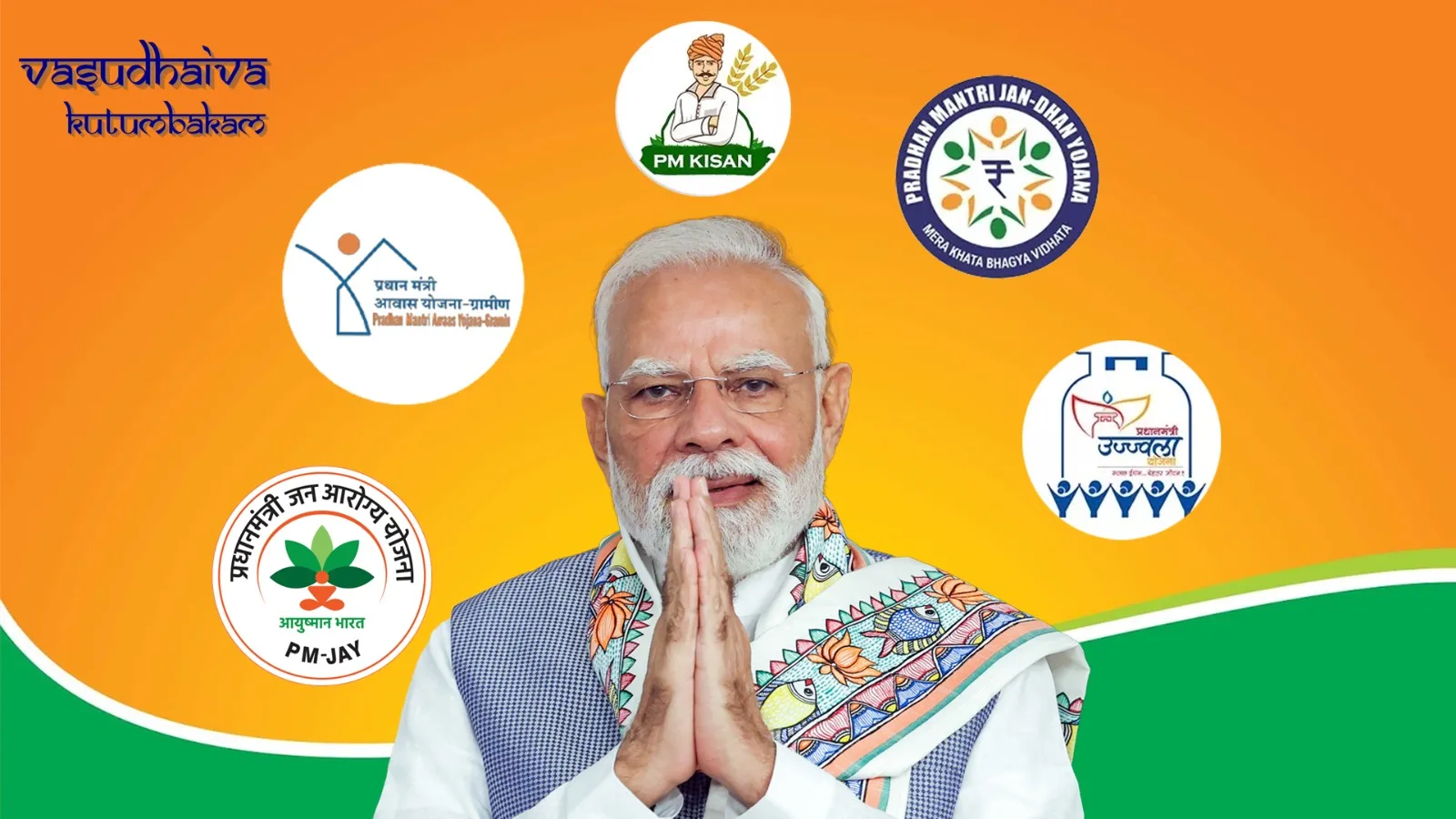
The BJP’s governance model consciously pushes back against this trajectory. Under PMAY 2.0, eligible families get financial assistance or interest subsidy on home loans. Priority is given to women, senior citizens and economically weaker sections – here we can see that the scheme is not designed around isolated beneficiaries but around households. Additionally, other flagship schemes such as Jal Jeevan Mission, Ujjwala, and Swachh Bharat follow a comparable framework where a family is in the focus rather than an individual. Clean drinking water is delivered to homes, not persons. Clean cooking fuel addresses the health and dignity of the entire family, not just an income bracket. Sanitation is framed as a household and community responsibility, not an individual entitlement.

Swachh Bharat Mission strengthens this idea by focusing on sanitation at the household level rather than on individuals. Toilets, waste management, and hygiene are treated as shared responsibilities within the family, shaping daily habits, social behaviour, and overall community health. Taken together, these approaches show a policy design that views the family as the main unit of social change.

Family more than individual in flagship schemes

It is not an accidental policy design but an ideological clarity. By focusing on families, the state reinforces mutual responsibility rather than replacing it. Welfare should support people in living with dignity and self-respect, not replace family ties or social relationships. As envisioned by Pandit Deendayal Upadhyaya ji, the family is the first place where a person learns social values, including duty, cooperation, and respect between different generations.

Those criticising him are the people who are enable to understand its philosophical intent. Integral Humanism does not oppose individual freedom. Instead, it links freedom with duty and responsibility (dharma).

Why Does the BJP Government Focus on Families?

This stands in contrast to Western models of extreme individualism that Pandit Deendayal Upadhyaya had warned against. He argued that excessive emphasis on individual freedom weakens family bonds, erodes mutual responsibility. In such systems, families lose their functional role, leaving care responsibilities to governments rather than relationships rooted in duty and affection.

Pandit Deendayal Upadhyaya’s Integral Humanism instead promotes Dharma — duty-based living — where family obligations form the moral training ground for social and national responsibility. From this perspective, welfare is not charity dispensed to isolated individuals but support extended to families that sustain social harmony through mutual cooperation.

By emphasising family-centric welfare, the Modi government is advancing a deeper civilisational argument that India’s social stability lies not in dismantling traditional bonds but in strengthening them through modern state support. Development, in this framework, is not merely economic upliftment but the restoration of social harmony through empowered families.

In positioning the family as the bridge between the individual and the nation, the BJP is not merely administering schemes; it is reasserting a distinctly Bharatiya idea of society. This is governance informed by philosophy, not just policy — an attempt to build an integrated Bharat where progress flows through families, not around them.

A Deliberate Shift Away from Extreme Individualism

Pandit Deendayal Upadhyaya believed that Bharat should be seen as one family, an integrated nation. He did not support dividing people or land into separate sections. His philosophy focused on unity within diversity, which closely reflects Bharatiya culture. Because of this thinking, he opposed extreme individualism.

According to Pt. Upadhyaya, too much focus on individual freedom weakens family bonds. It leads parents and children to ignore their duties towards each other and depend on the government instead. He believed, this made families in the West weak and meaningless. That is why he did not want Bharatiyas to become dependent on the state and stressed the importance of dharma.

Unlike Western ideas, Pt. Upadhyaya encouraged Indians to follow duty-based family responsibilities. He believed that without a sense of duty, both the family and the nation would decline. He also stressed respect, responsibility, and devotion towards the motherland. This focus on moral and spiritual duty is the core idea of his philosophy of Integral Humanism.

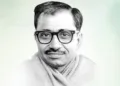
Pandit Deendayal Upadhyaya was the leader of the Bharatiya Jana Sangh since its very inception in 1951 to 1968 when he breathed his last. Along with being a deep philosopher and thinker, he was also a committed organiser and leader who set high standards of integrity and dignity in public life.

Since the formation of the Bharatiya Janata Party, his ideas have guided its ideology and provided moral direction. His political philosophy offers a complete way of life and presents an alternative framework for politics and governance that aligns with human needs and the natural environment.

Vasudhaiva Kutumbakam

The BJP government’s focus on families comes from the idea of Vasudhaiva Kutumbakam, which means the world is one family. This view places the family at the centre of social life, where values, responsibility, and care for others are first learned. By focusing on families rather than isolated individuals, governance seeks to strengthen social bonds and shared duties. This approach is based on the belief that strong families form the foundation of a stable society and a resilient nation.


Topics: Pandit Deendayal UpadhyayaSwachh Bharat MissionVasudhaive Kutumbakam
Lakshmi Ranjith
Lakshmi Ranjith
A digital journalist with over 18 years of experience in mainstream media, she began her career in television news before expanding into print, social media, and digital platforms. She has travelled extensively across India to cover elections, political developments, and major business events, reporting on issues ranging from politics and governance to business and social affairs. Her key strengths include sharp analysis of national and state politics, as well as international relations. Over the years, she has worked with The Times of India, Google, News24 Digital, MMTV, TV News, and the Ministry of Information & Broadcasting. She currently serves as Assistant News Editor at Organiser, overseeing digital platforms. She is Committed to continuous learning; she maintains high editorial standards and a strong commitment to ethical journalism in a rapidly evolving media landscape. [Read more]
ShareTweetSendShareSend
✮ Subscribe Organiser YouTube Channel. ✮
✮ Join Organiser's WhatsApp channel for Nationalist views beyond the news. ✮
Previous News

The Battle of Umberkhind: How 1,000 Marathas “Mugged” 20,000 Mughals in a mountain squeeze-play

Next News

The Great Border Betrayal: Judiciary shatters Mamata’s decade of obstructionism to secure Bharat’s frontiers

Related News

BJP Sthapna Diwas: Bharatiya Janata Party’s journey of ideology, dedication, and national transformation

Karnataka High Court stays move to cancel ‘Ekatma Manava Darshana’ conference; victory for freedom of expression

West Asian War: Wave of uncertainty

GOBARdhan turning India’s waste into wealth and rewriting the rural economy of Swachh Bharat

GOBARdhan: Turning waste into wealth and transforming the rural economy of Swachh Bharat

A representative image

Decentralisation to digitalisation: Budget charts new rural growth blueprint

Tribute to Pandit Deendayal Upadhyaya on his death anniversary: A guiding spirit for ideal journalism

Load More

Latest News

Keralam Chief Minister V.D. Satheeshan

Jamaat-e-Islami Hind Team Meets CM Satheeshan, Senior Ministers, fuel debate over influence in UDF government

Singapore acts against China-linked posts targeting Indian community, cites threat to social harmony

Singapore Invokes OCHA: Facebook, YouTube and X ordered to block anti-Indian content originating from China

Editors of the HAF Wikipedia page run propaganda and disinformation campaign against the organisation, India and Hindu cultural ethos

Wikipedia fuels propaganda against Hindu American Foundation: How anonymous writers demonise Hindu rights group?

Israel to Install Statue of Chhatrapati Shivaji Maharaj; Israel’s Consul General in Mumbai, Yaniv Revach, met Maharashtra Chief Minister Devendra Fadnavis and sough his support in this regard

Chhatrapati Shivaji Maharaj’s legacy to reach Israel; Statue to be installed as symbol of India-Israel friendship

IIGH Public Policy Seminar: Women’s dignity, safety & equal opportunity discussed

Representative Image

Decoding Hezbollah: How the terror group built a massive arsenal against Israel

Representative Image

Plastic, Traffic and Landslides: How rising tourist footfall is posing threat to the mountainous region

The Green Realignment: Why the US-India trade pact is a battle for climate and supply chain security

Sanatan Dharma teaches that spiritual growth is built through simple daily actions performed with sincerity, discipline, and devotion

Living Sanatan Dharma Every Day: 24 traditional habits that inspire a meaningful and virtuous life    

Indian Army to train 5 lakh personnel in drone operations; Scripting strategic edge in next gen battlefield tactics

Load More
  • Privacy
  • Terms
  • Cookie Policy
  • Refund and Cancellation
  • Delivery and Shipping

© Bharat Prakashan (Delhi) Limited.
Tech-enabled by Ananthapuri Technologies

  • Home
  • Search Organiser
  • Bharat
    • Assam
    • Bihar
    • Chhattisgarh
    • Jharkhand
    • Maharashtra
    • View All States
  • World
    • Asia
    • Africa
    • North America
    • South America
    • Europe
    • Australia
  • Editorial
  • Operation Sindoor
  • Opinion
  • Analysis
  • Defence
  • Culture
  • Sports
  • Business
  • RSS @ 100
  • Entertainment
  • More ..
    • Sci & Tech
    • Vocal4Local
    • Special Report
    • Education
    • Employment
    • Books
    • Interviews
    • Travel
    • Health
    • Politics
    • Law
    • Economy
    • Obituary
  • Subscribe Magazine
  • Read Ecopy
  • Advertise
  • Circulation
  • Careers
  • About Us
  • Contact Us
  • Policies & Terms
    • Privacy Policy
    • Cookie Policy
    • Refund and Cancellation
    • Terms of Use

© Bharat Prakashan (Delhi) Limited.
Tech-enabled by Ananthapuri Technologies