
Why BJP’s Welfare Architecture Puts the Family at the Centre
October 5, 2026
  • Read Ecopy
  • Circulation
  • Advertise
  • Careers
  • About Us
  • Contact Us
Android AppiPhone AppArattai
Organiser
  • ‌
  • Bharat
    • Assam
    • Bihar
    • Chhattisgarh
    • Jharkhand
    • Maharashtra
    • View All States
  • World
    • Asia
    • Europe
    • North America
    • South America
    • Africa
    • Australia
  • Editorial
  • International
  • Opinion
  • RSS @ 100
  • More
    • World Hindu Congress 2026
    • Op Sindoor
    • Analysis
    • Sports
    • Defence
    • Politics
    • Business
    • Economy
    • Culture
    • Special Report
    • Sci & Tech
    • Entertainment
    • G20
    • Azadi Ka Amrit Mahotsav
    • Vocal4Local
    • Web Stories
    • Education
    • Employment
    • Books
    • Interviews
    • Travel
    • Law
    • Health
    • Obituary
  • Subscribe
    • Subscribe Print Edition
    • Subscribe Ecopy
    • Read Ecopy
  • ‌
  • Bharat
    • Assam
    • Bihar
    • Chhattisgarh
    • Jharkhand
    • Maharashtra
    • View All States
  • World
    • Asia
    • Europe
    • North America
    • South America
    • Africa
    • Australia
  • Editorial
  • International
  • Opinion
  • RSS @ 100
  • More
    • World Hindu Congress 2026
    • Op Sindoor
    • Analysis
    • Sports
    • Defence
    • Politics
    • Business
    • Economy
    • Culture
    • Special Report
    • Sci & Tech
    • Entertainment
    • G20
    • Azadi Ka Amrit Mahotsav
    • Vocal4Local
    • Web Stories
    • Education
    • Employment
    • Books
    • Interviews
    • Travel
    • Law
    • Health
    • Obituary
  • Subscribe
    • Subscribe Print Edition
    • Subscribe Ecopy
    • Read Ecopy
Organiser
  • Home
  • Bharat
  • World
  • Operation Sindoor
  • Editorial
  • Analysis
  • Opinion
  • Culture
  • Defence
  • International Edition
  • RSS @ 100
  • Magazine
  • Read Ecopy
Home Politics

Family Over Individual: The Ideological Core and Design of BJP’s Welfare Architecture

The BJP’s welfare model places the family at the centre, marking a clear ideological departure from individual-centric Western policy frameworks. Clean drinking water is delivered to homes, not persons. Clean cooking fuel addresses the health and dignity of the entire family, not just an income bracket

Lakshmi RanjithLakshmi Ranjith
Feb 3, 2026, 07:30 am IST
inPolitics, Bharat, Analysis, RSS in News
Follow on Google News
Facebook
Twitter
WhatsAppTelegramEmail

The BJP government’s welfare architecture marks a decisive ideological departure from the individual-centric frameworks that have long dominated Western liberal and socialist policy thinking. If we have been following the government’s architecture, we can notice that at its core lies a civilisational assertion rooted in the philosophy of Pandit Deendayal Upadhyaya. And that is the family, not the atomised individual, is the foundational unit of society, culture, and the nation.

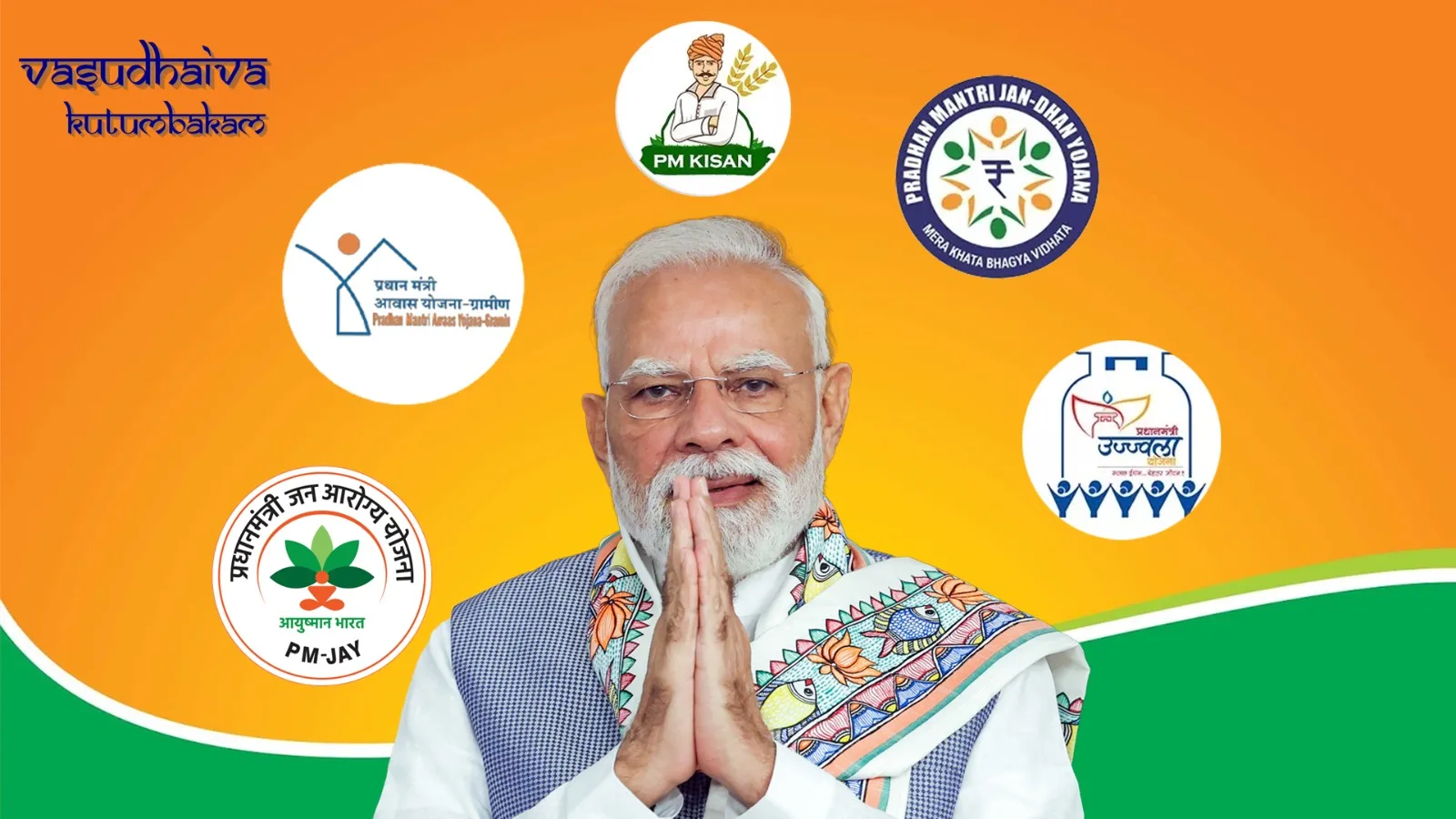
The BJP’s governance model consciously pushes back against this trajectory. Under PMAY 2.0, eligible families get financial assistance or interest subsidy on home loans. Priority is given to women, senior citizens and economically weaker sections – here we can see that the scheme is not designed around isolated beneficiaries but around households. Additionally, other flagship schemes such as Jal Jeevan Mission, Ujjwala, and Swachh Bharat follow a comparable framework where a family is in the focus rather than an individual. Clean drinking water is delivered to homes, not persons. Clean cooking fuel addresses the health and dignity of the entire family, not just an income bracket. Sanitation is framed as a household and community responsibility, not an individual entitlement.

Swachh Bharat Mission strengthens this idea by focusing on sanitation at the household level rather than on individuals. Toilets, waste management, and hygiene are treated as shared responsibilities within the family, shaping daily habits, social behaviour, and overall community health. Taken together, these approaches show a policy design that views the family as the main unit of social change.

Family more than individual in flagship schemes

It is not an accidental policy design but an ideological clarity. By focusing on families, the state reinforces mutual responsibility rather than replacing it. Welfare should support people in living with dignity and self-respect, not replace family ties or social relationships. As envisioned by Pandit Deendayal Upadhyaya ji, the family is the first place where a person learns social values, including duty, cooperation, and respect between different generations.

Those criticising him are the people who are enable to understand its philosophical intent. Integral Humanism does not oppose individual freedom. Instead, it links freedom with duty and responsibility (dharma).

Why Does the BJP Government Focus on Families?

This stands in contrast to Western models of extreme individualism that Pandit Deendayal Upadhyaya had warned against. He argued that excessive emphasis on individual freedom weakens family bonds, erodes mutual responsibility. In such systems, families lose their functional role, leaving care responsibilities to governments rather than relationships rooted in duty and affection.

Pandit Deendayal Upadhyaya’s Integral Humanism instead promotes Dharma — duty-based living — where family obligations form the moral training ground for social and national responsibility. From this perspective, welfare is not charity dispensed to isolated individuals but support extended to families that sustain social harmony through mutual cooperation.

By emphasising family-centric welfare, the Modi government is advancing a deeper civilisational argument that India’s social stability lies not in dismantling traditional bonds but in strengthening them through modern state support. Development, in this framework, is not merely economic upliftment but the restoration of social harmony through empowered families.

In positioning the family as the bridge between the individual and the nation, the BJP is not merely administering schemes; it is reasserting a distinctly Bharatiya idea of society. This is governance informed by philosophy, not just policy — an attempt to build an integrated Bharat where progress flows through families, not around them.

A Deliberate Shift Away from Extreme Individualism

Pandit Deendayal Upadhyaya believed that Bharat should be seen as one family, an integrated nation. He did not support dividing people or land into separate sections. His philosophy focused on unity within diversity, which closely reflects Bharatiya culture. Because of this thinking, he opposed extreme individualism.

According to Pt. Upadhyaya, too much focus on individual freedom weakens family bonds. It leads parents and children to ignore their duties towards each other and depend on the government instead. He believed, this made families in the West weak and meaningless. That is why he did not want Bharatiyas to become dependent on the state and stressed the importance of dharma.

Unlike Western ideas, Pt. Upadhyaya encouraged Indians to follow duty-based family responsibilities. He believed that without a sense of duty, both the family and the nation would decline. He also stressed respect, responsibility, and devotion towards the motherland. This focus on moral and spiritual duty is the core idea of his philosophy of Integral Humanism.

Pandit Deendayal Upadhyaya was the leader of the Bharatiya Jana Sangh since its very inception in 1951 to 1968 when he breathed his last. Along with being a deep philosopher and thinker, he was also a committed organiser and leader who set high standards of integrity and dignity in public life.

Since the formation of the Bharatiya Janata Party, his ideas have guided its ideology and provided moral direction. His political philosophy offers a complete way of life and presents an alternative framework for politics and governance that aligns with human needs and the natural environment.

Vasudhaiva Kutumbakam

The BJP government’s focus on families comes from the idea of Vasudhaiva Kutumbakam, which means the world is one family. This view places the family at the centre of social life, where values, responsibility, and care for others are first learned. By focusing on families rather than isolated individuals, governance seeks to strengthen social bonds and shared duties. This approach is based on the belief that strong families form the foundation of a stable society and a resilient nation.


Topics: Pandit Deendayal UpadhyayaSwachh Bharat MissionVasudhaive Kutumbakam
Lakshmi Ranjith
Lakshmi Ranjith
A digital journalist with over 18 years of experience in mainstream media, she began her career in television news before expanding into print, social media, and digital platforms. She has travelled extensively across India to cover elections, political developments, and major business events, reporting on issues ranging from politics and governance to business and social affairs. Her key strengths include sharp analysis of national and state politics, as well as international relations. Over the years, she has worked with The Times of India, Google, News24 Digital, MMTV, TV News, and the Ministry of Information & Broadcasting. She currently serves as Assistant News Editor at Organiser, overseeing digital platforms. She is Committed to continuous learning; she maintains high editorial standards and a strong commitment to ethical journalism in a rapidly evolving media landscape. [Read more]
Share
Tweet
SendShareSend
✮ Subscribe Organiser YouTube Channel. ✮
✮ Join Organiser's WhatsApp channel for Nationalist views beyond the news. ✮
Previous News

The Battle of Umberkhind: How 1,000 Marathas “Mugged” 20,000 Mughals in a mountain squeeze-play

Next News

The Great Border Betrayal: Judiciary shatters Mamata’s decade of obstructionism to secure Bharat’s frontiers

Related News

A representative image

The New Plastic Economy: How Indian cities are moving from waste collection to recycling

RSS Sarsanghchalak Dr Mohan Bhagwat

Bridge the social gaps between maximum and minimum: RSS Sarsanghchalak Dr Mohan Bhagwat in Yavatmal

Representative Image

From Waste to Resource: How five Indian initiatives are giving plastic a second life

Swachh Bharat Mission-Gramin has turned rural sanitation into a people-led movement focused on lasting cleanliness and waste management

Swachh Bharat Mission: How rural India turned sanitation into a sustainable people’s movement

PM Modi joins youngsters at Bhajan Clubbing in Delhi

When Gen Z meets bhakti: PM Modi fuels the ‘bhajan clubbing’ revolution in Delhi

Pandit Deendayal Upadhyaya

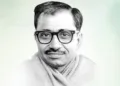
Pandit Deendayal Upadhyaya: Navigating the thorny path of red assault towards the goal of Antyodaya

Load More

Latest News

Captain Smit Machchhar Recovering Well: BAPS Abu Dhabi Holds Special Prayers for Heroic Indian Pilot

Captain Smit Machchhar recovering well: BAPS Abu Dhabi holds special prayers for heroic Indian Pilot of Flydubai

Ashok Singhal's Birth Centenary Program, held at the state level, in Ranchi

Jharkhand: Ashok Singhal’s contributions to Hindu awakening remembered at birth centenary programme in Ranchi

Imran Khan at 74: From cricket glory to a prison cell, Pakistan’s decades-old Military dictatorship continues

Assam Police STF busts Pakistan spy network in Guwahati ; Bihar Man arrested

Assam Police STF busts Pakistan spy network in Guwahati, arrests Bihar man Abhishek Kumar

Victorious candidates of ABVP

Gauhati University Students’ Polls:  ABVP registered victory in 6 seats

Violent Students Protest in France

France Students Protest Turns Violent: Teachers attacked & buildings vandalised; Far-left support fuels political fury

Twenty-Five Years of Seva: The Untold Story of Prime Minister Narendra Modi organised by UP Government in Lucknow

Namo Seva: Ankahi Kahaniyan — Celebrating 25 years of Prime Minister Narendra Modi’s public service

Tamil Nadu: Navy sailor arrested in Coimbatore for allegedly leaking sensitive defence information to Pakistan

Representative Image

The Indian Express Exposed: How misleading narratives, selective facts & omitting Islamist offenders distort the truth?

Central Coalfields Transforming Itself for a New India

From 50 MT to 87.5 MT: How central coalfields rebuilt itself for a new India!

Load More
  • Privacy
  • Terms
  • Cookie Policy
  • Refund and Cancellation
  • Delivery and Shipping

© Bharat Prakashan (Delhi) Limited.
Tech-enabled by Ananthapuri Technologies

  • Home
  • Search Organiser
  • Bharat
    • Assam
    • Bihar
    • Chhattisgarh
    • Jharkhand
    • Maharashtra
    • View All States
  • World
    • Asia
    • Africa
    • North America
    • South America
    • Europe
    • Australia
  • Editorial
  • Operation Sindoor
  • Opinion
  • Analysis
  • Defence
  • Culture
  • Sports
  • Business
  • RSS @ 100
  • Entertainment
  • More ..
    • Sci & Tech
    • Vocal4Local
    • Special Report
    • Education
    • Employment
    • Books
    • Interviews
    • Travel
    • Health
    • Politics
    • Law
    • Economy
    • Obituary
  • Subscribe Magazine
  • Read Ecopy
  • Advertise
  • Circulation
  • Careers
  • About Us
  • Contact Us
  • Policies & Terms
    • Privacy Policy
    • Cookie Policy
    • Refund and Cancellation
    • Terms of Use

© Bharat Prakashan (Delhi) Limited.
Tech-enabled by Ananthapuri Technologies