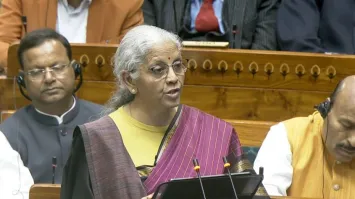
The Union Budget 2026-27 has laid out a significant roadmap for strengthening India’s traditional healthcare systems, with Finance Minister Nirmala Sitharaman announcing the creation of five new regional AYUSH medical hubs and three new All India Institutes of Ayurveda.
The proposals signal a renewed policy focus on integrating traditional systems of medicine with modern healthcare infrastructure, while also reinforcing India’s cultural and medical heritage rooted in Ayurveda, Yoga, Unani, Siddha and Homoeopathy (AYUSH).
Five regional AYUSH medical hubs proposed
As part of a new centrally supported scheme, the government will assist States in setting up five regional AYUSH medical hubs across the country. These hubs are envisioned as comprehensive healthcare centres that will bring together AYUSH treatment facilities with modern diagnostic services and post-treatment rehabilitation infrastructure.
According to the Budget proposal, the hubs will enable integrated patient care by combining preventive, curative and rehabilitative approaches. They are also expected to strengthen regional health ecosystems and improve access to alternative and complementary medicine, particularly in underserved areas.
Three new All India Institutes of Ayurveda
In addition to the regional hubs, Sitharaman announced the establishment of three new All India Institutes of Ayurveda. These institutions will serve as centres of excellence for education, research and clinical practice in Ayurveda, on the lines of existing national institutes.
The move is aimed at standardising education, boosting research output and improving global credibility of Ayurveda as a scientifically validated system of medicine.
Why AYUSH matters for India
The expanded focus on AYUSH reflects its growing importance in India’s healthcare strategy. Traditional systems of medicine have long played a role in preventive care, lifestyle disease management and wellness, areas that are increasingly critical as India grapples with rising non-communicable diseases.
AYUSH is also seen as a cost-effective and culturally rooted healthcare option, especially in rural and semi-urban regions. By integrating AYUSH with modern diagnostics and rehabilitation, the government aims to bridge the gap between traditional wisdom and contemporary medical science.
Beyond healthcare delivery, the sector holds strategic economic value. AYUSH-based industries, including pharmaceuticals, wellness tourism, nutraceuticals and herbal products, have strong export potential, enhancing India’s soft power and global health footprint.
Employment and research boost
The new hubs and institutes are expected to generate employment for doctors, therapists, researchers, nurses and allied health professionals trained in both traditional and modern systems. They are also likely to catalyse research, innovation and standard-setting in traditional medicine.
With Budget 2026, the government has positioned AYUSH not just as an alternative system, but as an integral component of India’s future-ready healthcare framework, blending tradition, science and sustainability.