
The Bhairav Light Commando Battalion represents a bold step in the Indian Army’s ongoing modernization, blending agility, precision, and rapid‑response capability to meet the demands of contemporary battlefields. First unveiled publicly at the 77th Republic Day Parade in 2026, the Bhairav Battalion stole the spotlight as a symbol of India’s evolving combat doctrine and future‑ready force structure.
What is the Bhairav Battalion?
The Bhairav Battalion is a light commando unit raised by the Indian Army in late October 2025 as part of a broader push to bridge the operational gap between conventional infantry units and elite Special Forces.
Unlike standard infantry battalions, which typically number around 800 soldiers, each Bhairav unit consists of roughly 250 highly trained personnel drawn from multiple arms, including infantry, artillery, signals, and air defence. Their compact size and cross‑functional composition make them exceptionally agile and responsive.
The creation of Bhairav battalions is rooted in the Indian Army’s strategic assessment that future conflicts will increasingly involve sub‑conventional warfare, hybrid threats, and rapidly evolving technologies. These scenarios demand forces that can act faster than traditional infantry but are more flexible and numerous than elite Special Forces.
The name “Bhairav” draws inspiration from the fierce and protective aspect of Bhagwan Shiva, symbolising controlled aggression and righteous power, qualities the Army seeks to embed in these units.
Roles and Capabilities
Bhairav battalions are designed for rapid deployment and high‑impact missions, including:
* Deep reconnaissance and intelligence gathering
* Rapid precision strikes in hostile territory
* Disruption and tactical raids beyond the front lines
* Hybrid warfare tasks, such as counter‑drone operations and electronic warfare
* Immediate response operations, where time is critical
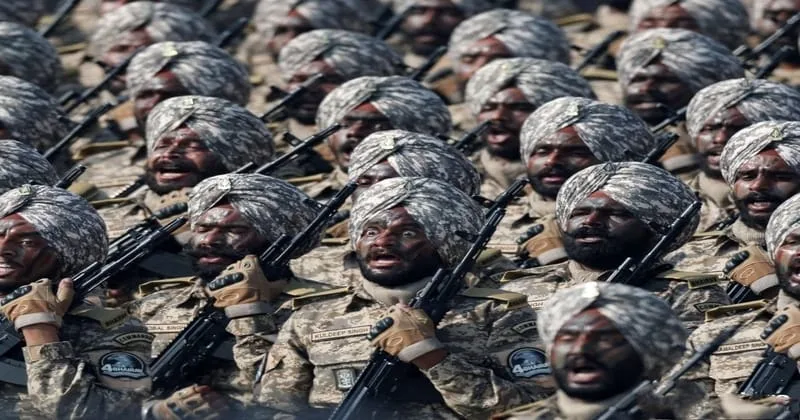
Their training emphasises both physical readiness and mastery of modern battlefield technology, from tactical drones and ISR systems to communication and stealth techniques. During operations, Bhairav soldiers often use face paint camouflage to evade advanced facial recognition and AI‑based surveillance, an example of adapting to technological challenges.
Operational deployment and future plans
Following their initial raising in late 2025, several Bhairav battalions have already been deployed in field exercises and preparatory operations. Defence officials have indicated plans to raise up to 25 such battalions over the coming months, with multiple units becoming fully operational along sensitive border sectors.
The battalions are also being integrated within the Army’s broader modernisation goals, including enhancements in drone platoons, artillery firepower, and combined arms brigades, all aimed at strengthening India’s deterrence posture along border areas with China and Pakistan.
The Bhairav Battalion’s first public appearance came on Republic Day 2026, where the 4 Bhairav Battalion of the Sikh Light Infantry Regiment marched down Kartavya Path in New Delhi as part of a new “Phased Battle Array Formation”, a parade format designed to mimic realistic battlefield movement.
Their presence alongside advanced indigenous systems like the Suryastra Universal Rocket Launcher underscored India’s shift from purely ceremonial displays to demonstrations of operational readiness and combat‑oriented capability.
Experts view the Bhairav Battalion as a crucial middle tier of combat capability: more versatile than conventional infantry but less niche than Special Forces, filling a gap that modern conflict often exposes. Their blend of mobility, technology, and local terrain knowledge, often drawing on soldiers recruited from regions they operate in, enhances both tactical effectiveness and strategic deterrence.
As the Indian Army continues its transformation, the Bhairav Battalion stands out as a flagship of future‑oriented ground warfare, ready to confront the evolving challenges of a complex security environment.